Online Reporter
Online Reporter
FINANCE, Economic Development, and Investment Minister, Professor Mthuli Ncube has reiterated the need for reforms in the global financial architecture saying Africa requires cheaper, long-term and concessionary commercial capital.
Prof Ncube made these remarks on Wednesday in Cape Town, South Africa where he is attending the G20 Finance Ministers meeting.Although Zimbabwe is not a G20 member, it is representing the Southern African Development Community (SADC) in its capacity as the current chair.
He chairs the Committee of Finance Ministers for SADC.
In addition to participating in the main sessions, Prof. Ncube is expected to attend other strategic side events, including bilateral meetings.
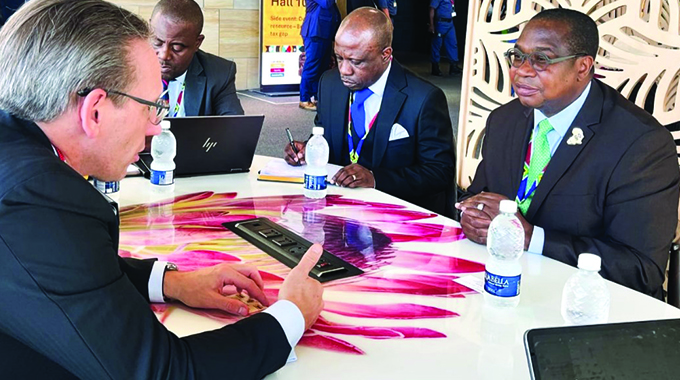
South Africa assumed the G20 Presidency from December 1, 2024, to November 2025.
In a message posted on the Treasury’s X account, reflecting on the first day of the meetings, Prof Ncube said, “We are here because Zimbabwe is the chair of SADC this year, and I chair the Committee of Finance Ministers for SADC.
“We are here to add the voice of SADC as we think through the critical issues that are bedeviling the world, be it climate response, disaster response, or reforms in the global financial architecture.”
He further noted that discussions also covered ways to strengthen multilateral development banks and multilateralism in general.
“But also, how can Africa exploit its critical energy minerals to develop? Can Africa get a just transition in terms of greening our economies? That is also a critical issue that is being discussed here.
“When you look at issues such as the global financial architecture reform, Africa needs a cheaper capital, a commercial capital, that is long-term, that is concessionary, as I have already said, that has got terms that Africa cannot afford,” added Prof Ncube.
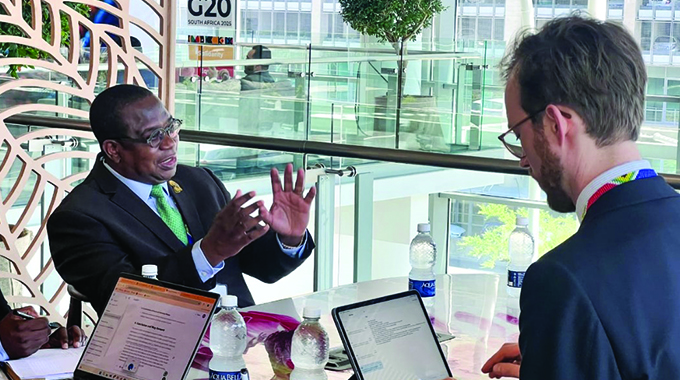
He stressed that some of this capital must be blended with commercial capital to encourage greater private-sector investment.
“The concessionary side of it is able to guarantee the commercial capital,” he explained.
The G20 was originally established as a meeting of Finance Ministers in response to the Asian financial crisis of 1997-99, with the aim of coordinating policies to promote international financial stability.
This initiative was later elevated to a Heads of State and Government Leaders Meeting in 2008 following the global financial crisis of 2007.
As a key global economic forum, the G20 plays a crucial role in shaping international policy and fostering economic stability.