


 Online Reporter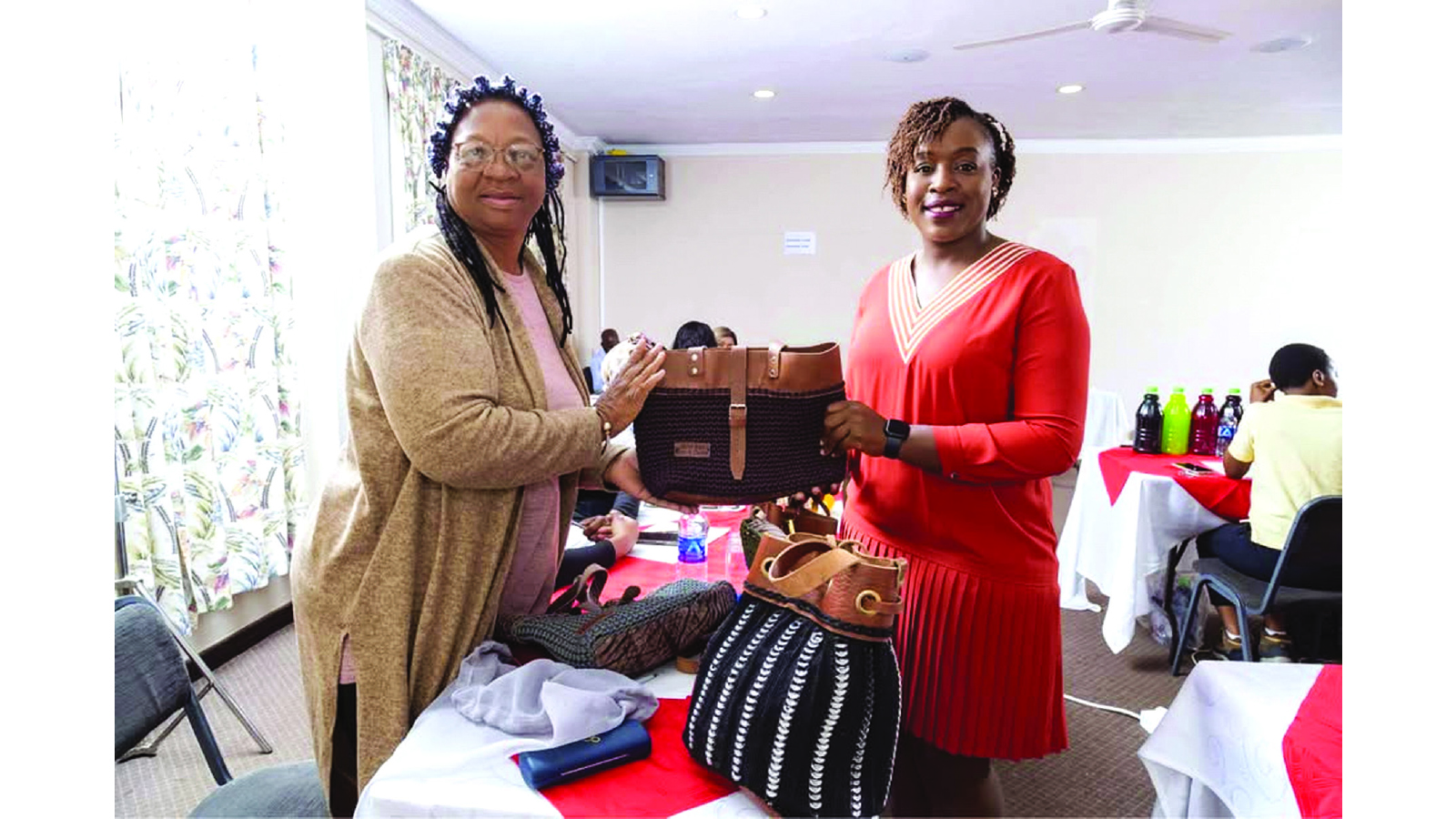
Tapiwanashe Mangwiro
ZIMBABWE is one of the few Sub-Saharan African countries showing consistent progress in closing gender disparities, according to the World Economic Forum’s 2025 Global Gender Gap Index.
Ranked 49th globally and eighth in Africa with an overall score of 74,7 percent, the country now outperforms the global average of 68,8 percent and most middle-income peers.
The National Competitiveness Commission of Zimbabwe (NCCZ), which coordinates the survey locally, said Zimbabwe’s sustained performance reflects years of deliberate policy action and growing private sector involvement in women’s economic inclusion.
At the core of the country’s success lies a combination of education parity at 99,6 percent and steady improvements in economic participation (now at 78,8 percent), placing Zimbabwe 15th globally on that sub-index.
The data points to education as Zimbabwe’s strongest pillar, where literacy rates and primary school enrolment show near full parity.
Programmes such as BEAM, STEM and the Girls’ Education Accelerator, run in partnership with UNICEF and the Global Partnership for Education, have helped reduce gender-based barriers such as early marriage and financial exclusion.
Economist Ms Gladys Shumbambiri-Mutsopotsi believes educational equality is not just a social win, but also an economic one.
“The near parity in education creates a larger pool of skilled women entering productive sectors,” she said.
“This changes the structure of the workforce and boosts total factor productivity, a key ingredient for competitiveness in regional and global markets.”
Zimbabwe’s education parity, she added, has ripple effects on human capital and innovation.
“When women are equally educated and participate in economic decision-making, there is greater adaptability and creativity across industries.”
Zimbabwe’s progress on the economic participation and opportunity pillar reflects how women have become an integral part of small and medium enterprise growth.
The Zimbabwe Women’s Microfinance Bank has been instrumental in financing female entrepreneurship, disbursing ZiG205 million in loans in 2024 to more than 4 000 beneficiaries, 85 percent of whom were women.
In addition, the bank opened over 11 000 savings accounts and financed 10 000 projects, strengthening the economic footprint of women-owned enterprises.
These interventions are helping many women transition from informal trading to formal business operations, directly contributing to tax revenue and formal employment.
According to Dr Prosper Chitambara, a development economist, such progress aligns with Zimbabwe’s broader productivity agenda.
“When women are empowered economically, household income and savings increase, leading to stronger domestic demand and investment,” he said.
“Gender equality is not charity; it is a growth multiplier. It expands the base of consumers, taxpayers and innovators.”
He said gender parity correlates with stronger resilience during economic shocks.
“Countries that prioritise inclusiveness tend to recover faster from downturns because their economic participation is broader and more diversified,” he added.
Beyond national development, Zimbabwe’s gender progress is shaping its regional competitiveness under the African Continental Free Trade Area (AfCFTA).
The AfCFTA Protocol on Women and Youth in Trade, adopted by member states to support the inclusion of women-led businesses in continental value chains, is emerging as a strategic advantage for countries that have invested in women economic empowerment.
Trade expert Mr Tsungayi Kaguru said Zimbabwe’s strong gender participation favourably positions it for intra-African trade expansion.
“The AfCFTA places inclusivity at the heart of trade liberalisation,” he said.
“With 78,8 percent economic participation parity, Zimbabwe has the capacity to leverage women-owned enterprises as drivers of export diversification.”
Mr Kaguru said the country’s challenge is no longer in its policy framework but in scaling practical trade facilitation measures for women exporters.
“Access to finance, logistics support and regional trade information must be improved,” he said. “Women traders form a large portion of cross-border commerce, yet they face higher transaction costs and limited formalisation support. Solving that could unlock immense value.”
He added that gender-aligned competitiveness goes beyond social equity.
“Countries that integrate women into value chains often record faster export growth and improved innovation in product design, packaging and marketing, areas where women-led enterprises are increasingly dominant,” he said.
Globally, gender equality is now viewed as a pillar of competitiveness, not merely a development goal.
The NCCZ report emphasises that bridging gender gaps boosts productivity, stimulates innovation and improves governance quality.
Economies with higher female participation are also more likely to attract responsible investment flows that value inclusivity and governance transparency.
In Zimbabwe’s case, the combination of strong educational outcomes and a widening base of financially active women could become a differentiator in attracting investors eyeing markets with sustainable human capital.
“The correlation between gender parity and competitiveness is undeniable,” added Ms Shumbambiri-Mutsopotsi.
“Investors increasingly screen countries for gender progress because it signals stability, diversity in management and growth potential.”
Market watchers, however, believe sustained momentum will depend on political will and private sector follow-through.
The Government’s gender frameworks and constitutional guarantees, such as Section 17 mandating gender balance in public life, need consistent implementation.
Despite commendable progress, Zimbabwe’s gender story remains uneven.
Political empowerment continues to lag, at just 23 percent, reflecting fewer women in top decision-making roles.
However, even this sub-index has improved from below 10 percent in 2006, showing a long-term upward trend.
Experts argue that the next phase of competitiveness will depend on whether Zimbabwe can translate gender inclusion into policy influence.
“As the economy formalises and trade integration deepens, women must not only participate but also lead,” adds Dr Chitambara.
For the NCCZ, the broader takeaway is that gender parity is no longer a moral argument; it is an economic strategy.
As Zimbabwe looks to harness AfCFTA markets, its growing record in gender inclusion could serve as both a competitive edge and a model for inclusive growth across the region.



 Bongani Ndlovu