By Stephen Mukoyi
From delivery to responsible delivery
PROJECTS are often judged by familiar measures: whether they were completed on time, within budget, to the agreed scope and at the required quality.
These measures remain important, but they do not tell the whole story. A project can meet its schedule and financial targets while creating avoidable harm to workers, communities or the environment.
Equally, a project that delivers a new service, facility or system can create lasting value when it considers its wider social and environmental consequences from the outset.
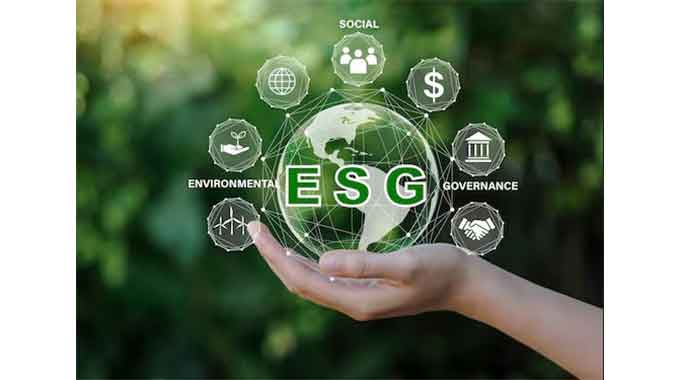
This is where Environmental, Social and Governance (ESG) considerations connect with project management.
ESG is a way of examining how an organisation affects the environment and society, and how responsibly it is directed and controlled. Project management provides the discipline, governance and practical tools to turn these considerations from broad statements of intent into decisions, actions and measurable outcomes.
The connection is straightforward: ESG describes important responsibilities and outcomes; project management organises the work required to achieve them. When the two are integrated, sustainability is not treated as a separate activity at the end of a project. It becomes part of how the project is selected, designed, funded, delivered, monitored and evaluated.
Why ESG belongs in project management
Projects change the way people live and work. Construction can affect land, water, energy use, waste and local communities. Technology projects can influence privacy, cybersecurity, accessibility, employment and the use of data. Procurement decisions can affect labour practices, supplier conduct and the resilience of supply chains. Even a project that appears purely technical can carry significant ESG implications.
Considering these issues early helps organisations identify risks before they become expensive problems. For example, selecting energy-efficient equipment may require a higher initial investment but reduce operating costs over time. Consulting affected communities during planning can reveal concerns that might otherwise cause delays, opposition or reputational damage. Assessing data privacy and accessibility during a digital project can prevent harm and costly redesign after launch.
ESG also creates opportunities. Projects can improve resource efficiency, strengthen inclusion, enhance safety, support local suppliers and build trust with customers and regulators. The goal is not to add paperwork for its own sake. It is to make better-informed decisions and deliver benefits that endure beyond project closure.
Connecting the dots across the project life cycle
1. **Initiation and business case. ** At the earliest stage, ask what problem the project is solving, who will benefit, who may be affected and what environmental or social impacts could arise. Include relevant ESG costs, benefits, assumptions and constraints in the business case. Consider whether the proposed solution supports the organisation’s strategy, legal obligations and stated commitments.
2. **Planning and design. ** Convert broad ESG intentions into practical requirements. These may include energy and water efficiency, waste management, safe working conditions, accessibility, data protection, ethical procurement or community engagement. Assign owners, define acceptance criteria and include appropriate activities, resources and costs in the schedule and budget. Engage specialists where the project’s impacts or regulatory obligations require them.
3. **Procurement and supplier management. ** ESG outcomes can be weakened if suppliers are assessed on price and delivery dates alone. Procurement criteria can also consider quality, environmental performance, labour practices, business ethics, local participation and supplier resilience. Requirements should be proportionate, transparent and capable of being verified. Contracts can specify evidence, reporting obligations and remedies for non-compliance.
4. **Execution and monitoring. ** Project teams should track ESG commitments alongside scope, schedule, cost, quality, risks and issues. Site inspections, supplier reports, stakeholder feedback and audit evidence can help show whether commitments are being met. When performance falls short, the project’s change-control and issue-management processes should drive corrective action rather than allowing ESG concerns to remain on a separate list.
5. **Closure and benefits realisation. ** Handover should include any ongoing environmental, safety, social or governance responsibilities. The closure report should record ESG performance, outstanding actions, lessons learned and ownership of continuing obligations. After implementation, review whether the expected benefits were actually realised and whether any unintended impacts need to be addressed.
Governance, accountability and measurement
Successful integration requires clear accountability. The project sponsor should ensure ESG issues are considered in the investment decision and remain visible to the appropriate governance forum. The project manager coordinates delivery and reporting, while business owners, procurement, risk, compliance, human resources, facilities, ICT, environmental specialists and other stakeholders contribute according to the nature of the project. Responsibility should be shared, but it should never be so widely distributed that nobody owns the outcome.
Measures must be relevant to the project rather than selected merely because they are easy to count. Possible indicators include energy consumption, water use, waste diverted from landfill, workplace incidents, accessibility compliance, local supplier participation, stakeholder complaints resolved, privacy controls completed and audit findings closed. Each measure needs a baseline where practical, a target, a data source, a reporting frequency and a named owner. The team should also distinguish between activities completed and outcomes achieved.
A dashboard can bring these indicators into project and portfolio reporting. A red or amber ESG indicator should receive the same disciplined attention as a schedule delay or budget overrun. Escalation thresholds should be agreed in advance, particularly where there is a risk of serious harm, legal non-compliance or reputational damage.
Practical challenges—and how to address them
Organisations may struggle with limited ESG expertise, incomplete data, competing deadlines or the belief that sustainable choices always cost more. Some benefits are difficult to quantify, and small projects may not justify the same level of assessment as major infrastructure or high-risk technology initiatives. These challenges call for proportionality, not inaction. Organisations can begin by introducing a short ESG screening checklist at project intake, identifying high-impact projects for deeper assessment and incorporating relevant criteria into standard templates. Training project managers and sponsors will build confidence, while lessons from completed projects can improve future estimates and controls. Where trade-offs arise, decisionmakers should document the options, evidence, affected stakeholders and rationale instead of treating ESG as an automatic pass-or-fail label. It is also important to avoid greenwashing: claims about sustainability must be accurate, evidence-based and proportionate to what has actually been achieved. A project should not be described as sustainable simply because it includes one environmentally friendly feature. Transparent reporting includes shortcomings and corrective action as well as successes.
Conclusion: Make ESG part of how projects are delivered
Project management and ESG are not competing agendas. They reinforce one another. Project management offers the structure to translate environmental, social and governance priorities into defined requirements, accountable owners, funded activities, risk responses and measurable benefits. ESG broadens the definition of project success by asking not only whether a project was delivered efficiently, but also whether it was delivered responsibly and created value that can be sustained.
The practical starting point is to ask better questions at project initiation, include relevant ESG criteria in planning and procurement, monitor performance during delivery and assess outcomes after handover. With leadership support and proportionate controls, every project can make a considered contribution—whether through safer work, more efficient resource use, fairer access to services, stronger governance or greater stakeholder trust.
Ultimately, connecting the dots means treating ESG not as a separate report or fashionable label, but as part of the everyday decisions that determine what a project delivers, how it delivers it and the legacy it leaves behind.
Author Disclaimer
This article was written by Stephen Mukoyi, an experienced Project Management Professional, in his own personal capacity. The views and opinions expressed in this article are those of the author and do not necessarily represent the views or position of his employer, clients, professional associations or any other organisation with which he may be associated.