admin
admin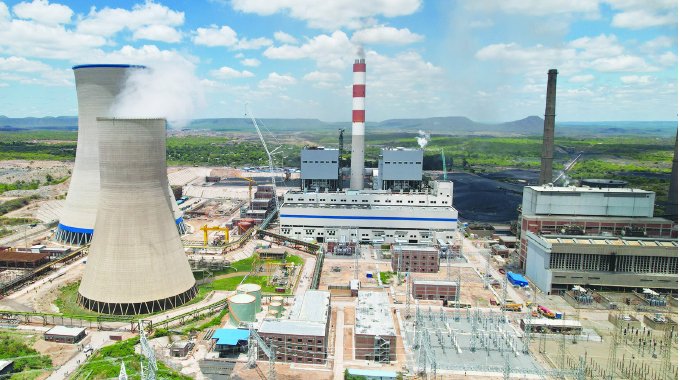
Blessings Chidakwa Zimpapers Elections Desk
IN 2018 there were several billboards festooned on the country’s arterial roads that boldly declared “Kujekesa nyika yese nemagetsi” (Lighting up the whole country with electricity).
For doomsayers it seemed a hopeless fancy, but with President Mnangagwa that promise has become a reality.
Back then, Zimbabweans were grappling with daily power outages, and it was beyond the imagination of many that the country would overcome those daily occurrences, especially as this was a regional challenge.
But President Mnangagwa had a plan, a plan well encapsulated in his party’s 2018 Election Manifesto that assured Zimbabweans that the country would be energy self-sufficient within five years.
In June of the same year, the President went on to commission the US$1 billion Hwange 7 and 8 power expansion project with 600 megawatt capacity, pledging that within his first tenure, the country would be energy self-sufficient.
“The party and Government will facilitate investments in the energy sector by both public institutions and Independent Power Producers in order to ensure consistent availability of efficient and affordable energy to all citizens,” he said back then.
Time is always the best judge, ever.
As the Second Republic says: “Our work is its manifesto”. Government has delivered on its electricity promise. Now homes have lights thanks to a cocktail of measures that were introduced by President Mnangagwa in 2018.
Behind the electricity success story is President Mnangagwa’s vision.
Last week(Thursday), President Mnangagwa commissioned the signature project Hwange Units 7 and 8 projects.
“The journey began in April 2018 when I visited China and I had a meeting with the President of China, my brother Xi Jinping. In that discussion, I had a list of over 10 projects, which I was shopping for his assistance and he chose to make a political decision to support us,” he said.
“Energy is a critical enabler for our industrialisation and modernisation. So today (Thursday), I’m wondering that when I came here in 2018, this was just plain when we came for ground breaking and now I can’t remember where I was standing.”
Hwange Thermal Power Station is performing at its best in as many years, generating about 740 megawatts. To illustrate the enormity of this feat, at one point its production levels once dropped to a mere 74 megawatts.
The continued improvement in power generation is helping Zimbabwe reduce electricity imports saving the much-needed forex in the country.
It is not only domestic consumers who now have guaranteed power supplies, but also industries and farmers are benefiting immensely from the power supply to respectively drive their industrial equipment and also irrigate their crops.
Increased power generation has also helped the country power old mines that have been revived under the Second Republic, the establishment of new mines, and expansion of existing mines such as Unki, Murowa Diamonds and Bikita Lithium, among others.
Zimbabwe, in its quest to become an upper-middle-class economy, has invested billions in the pivotal sector that drives modernisation and industrialisation.
This is driving increased industrial production as there is now guaranteed electricity supply, a key economic enabler and driver towards the realisation of Vision 2030.
Mr Reason Kafume, a Rusape businessperson, thanked President Mnangagwa for delivering on his election promises.
“In 2018, the President assured us of being self-sufficient in terms of energy. It was just a dream back then, but now electricity is now in abundance, which is what we all wanted. We are more than grateful,” he said.
A resident of Manyame suburb in Chitungwiza, Mrs Gladys Munhango, thanked the Second Republic for tackling the perennial electricity challenge.
“Most areas have been battling serious electricity challenges, in some cases going for 18 hours without electricity, but now we are enjoying steady power supplies. This is commendable and we salute our President for that feat,” she said.
A welder from Warren Park, Harare, Mr Brown Chitema, said the steady availability of electricity is a clear sign that the Second Republic is walking the talk on delivering electricity to the people and industry.
“Electricity supplies are now consistent these days. We are very happy with the situation. As welders we had suffered a lot under load shedding, sometimes being forced to work at night when electricity would be available, but that is now over.
“Our only plea, for now, is that Zesa should at least review downwards its tariffs which I feel are now beyond the reach of many people,” he said.
Mrs Gloria Magombo thanked the President for delivering on electricity, urging Zesa to constantly upgrade its payment system which has been giving customers a hard time during the first days of each month. “We appreciate the availability of electricity, our concern is that almost every month during the first five days we are having challenges in topping up our tokens. Zesa should upgrade its systems,” she said.
In the compendium of projects implemented by the Second Republic during the period 2018-2022, President Mnangagwa said his administration has for the past five years remained resolute in its determination to uplift the livelihoods of the people of Zimbabwe.
“The transformative agenda has hugely steered industry and commerce into production across all sectors of the economy, which include agriculture, mining, construction, transport, communication, manufacturing, and social services, among others.
“Notwithstanding the Covid-19 pandemic-induced lockdowns, illegal economic sanctions, climate change-induced disasters, and negative geo-political factors, the country has tenaciously continued to chart its developmental trajectory with significant milestones being registered on delivering people-centric programmes and projects,” he said.
Minister of State for Presidential Affairs and Monitoring Implementation of Government Programmes, Dr Joram Gumbo, said a total of 6 869 projects were implemented across the country.
“Delivering infrastructure was prioritised as a distinct strategy and key enabler for vibrant socio-economic growth and development,” he said.
Now with the water supply in Kariba, the source of the country’s hydro-power, having greatly improved, the electricity supply in the medium term has been ramped up, but still, the Second Republic has long-term projects in store.
As visionary as he is, the President is working out long-term solutions to the energy situation in the country including, but not limited to the Batoka Gorge hydropower station which is a 2,4GW run-of-the-river hydroelectric project on the Zambezi River with that output shared by Zimbabwe and Zambia.
The SADC region as a whole has been battling an energy deficit, which stands beyond 35 000 megawatts.



 Online Reporter