Debra Matabvu
Zimbabwe’s gold and foreign currency reserves are projected to rise to US$2,2 billion by year-end and nearly US$3 billion next year, significantly strengthening the asset cover underpinning the Zimbabwe Gold (ZiG) currency and moving the country closer to the international benchmark of three to six months of import cover.
The projected build-up represents a sharp acceleration in Zimbabwe’s external buffers, with reserves having already more than doubled from US$697 million in June last year to US$1,5 billion by June this year.
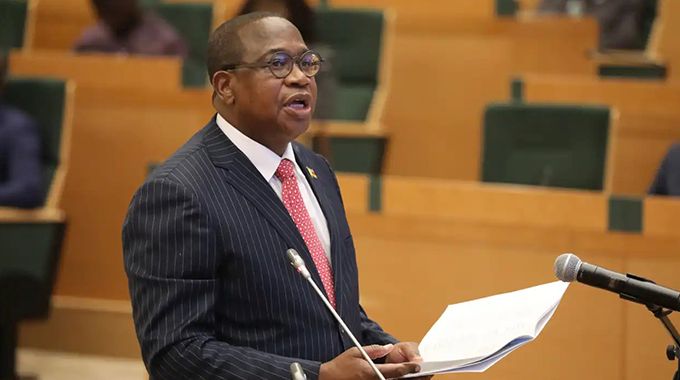
Finance Minister Professor Mthuli Ncube said the accumulation of reserves was strengthening the country’s external position while providing the Reserve Bank of Zimbabwe with greater capacity to cushion the economy against external shocks.
Speaking at the 2027 pre-Budget seminar in Bulawayo on Wednesday, Prof Ncube said usable reserves were projected to reach about US$2.2 billion this year before rising further to US$2.9 billion in 2027.
“Gold and foreign reserves rose from US$697 million (June 2025) to US$1.5 billion (June 2026), about 1.6 months of import cover,” Prof Ncube said.
“Usable reserves are projected at about US$2.2 billion in 2026 and US$2.9 billion in 2027. Reserves cover is about four times the ZiG reserve money. Reserves are also sufficient to cover the entire stock of ZiG Market Deposits.”
The latest figures point to a substantial strengthening of the reserve position since the introduction of the ZiG, whose value is supported by a basket of reserves that includes gold and foreign currency.
At US$1.5 billion in June, the country had 1.6 months of import cover, against the Government’s stated objective of building reserves to between three and six months of imports, in line with international benchmarks and SADC targets.
The continued accumulation of reserves is therefore expected to strengthen confidence in the local currency, improve Zimbabwe’s ability to meet external obligations and provide a larger buffer against external economic shocks.
Prof Ncube attributed part of the improvement to favourable conditions in international mineral markets, particularly gold, which remains a key component of Zimbabwe’s reserve accumulation strategy.
Gold was trading at around US$4 360 an ounce in September, with the Finance Minister saying the elevated prices represented an important opportunity for the country despite the metal’s susceptibility to market fluctuations.
“The significance of strong gold prices cannot be overstated,” he said.
“Gold is a source of export earnings, foreign currency and reserve accumulation. Higher prices therefore strengthen our external position and can provide support to the domestic currency.”
The Government is also looking to extract greater value from the country’s mineral resources as prices for other commodities improve.
Prof Ncube said platinum prices were forecast to rise by about 53 percent this year to around US$1 950 an ounce, a multi-year high, presenting another opportunity to increase mineral export earnings.
“This recovery presents another opportunity to strengthen mineral export earnings,” he said.
“As prices improve, our focus must be on maximising the value we derive from our mineral resources, particularly through increased production, local processing and beneficiation.”
Lithium is also emerging as an increasingly important pillar of Zimbabwe’s external sector, with domestic lithium exports reaching US$2,159 billion and accounting for 45,6 percent of total mineral exports excluding gold.
The minister said lithium had now overtaken platinum group metals in terms of its contribution to mineral exports, underlining the growing importance of the commodity to Zimbabwe’s foreign currency generation.
“This is a significant development that reinforces the growing contribution of lithium to Zimbabwe’s external sector,” Prof Ncube said.