Online Reporter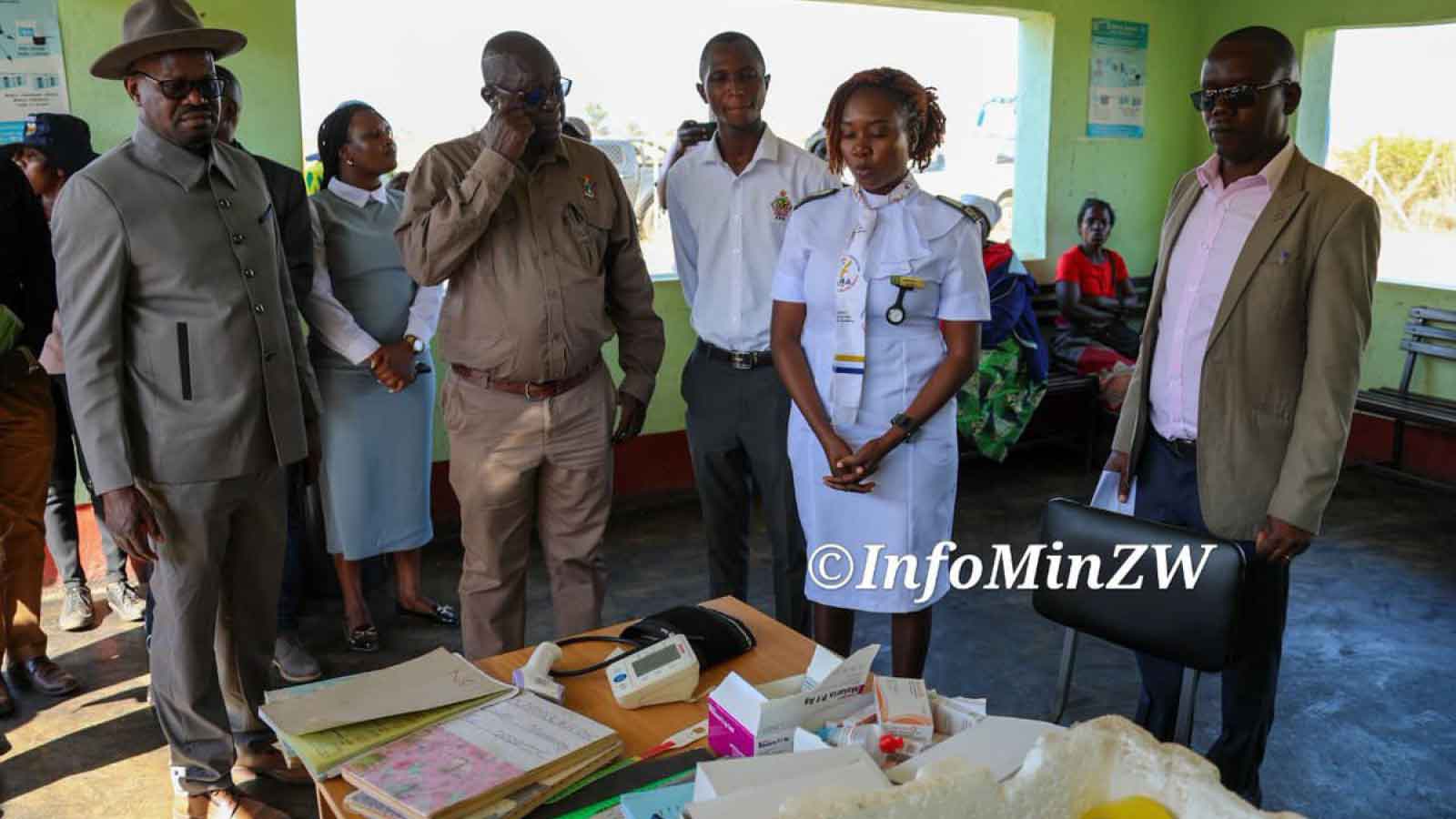
Fungai Lupande
Mashonaland Central Bureau
WHEN a bus carrying journalists on a media tour negotiated the final bend along a dusty road leading into Shamva’s resettlement and mining belt, an unexpected sight emerged on the horizon.
Against a backdrop of sprawling farms and mining claims stood a modern educational institution that appeared almost out of place in rural Zimbabwe.
The manicured lawns at Zvitokwe Primary School shimmered under the winter sun as sprinklers gently watered emerald-green grass.
For a moment, one could easily mistake the season for the height of the rainy period rather than the middle of winter.
It was already after 2pm when the delegation arrived, yet every pupil was exactly where they were supposed to be — seated neatly in classrooms, attentive and focused.
Not a single child wandered aimlessly around the grounds.
Discipline, order and purpose appeared woven into the fabric of the institution.
Another striking moment followed.
As Permanent Secretary for Information, Publicity and Broadcasting Services Mr Nick Mangwana stepped into one of the classrooms, learners rose in unison and greeted him with remarkable confidence and courtesy, displaying the kind of etiquette often associated with some of the country’s elite schools.
Yet this was no prestigious urban academy.
This was Zvitokwe Primary School, a US$1,2 million educational facility built by Canterbury Mining as part of its corporate social responsibility programme.
For Mr Mangwana, what stood before him represented more than bricks and mortar.
“This is what you can call a model of development,” he said.
He praised the community and local leadership for insisting that extractive industries give back to host communities before taking resources away.
“I think it’s a perfect model which we can take and roll out across the country,” he said.
Mr Mangwana noted that 14 schools and several clinics had already been built in the area using the same development philosophy.
“But here, we have a lot to learn,” he said.
Indeed, there was much to admire.
The school boasts flush toilets instead of traditional pit latrines, showers for pupils, internet connectivity through Starlink, teacher accommodation, technology-enabled classrooms and an irrigation system that keeps the grounds green throughout the year.
Mr Mangwana was in Mashonaland Central yesterday, alongside provincial Permanent Secretary Mr Timothy Maregere, where he led a media tour of a number of signature infrastructure projects, including the construction of a male hostel at Bindura University of Science Education (BUSE), Panvert (Pvt) Ltd in Glendale and Muyambuka Clinic.
The clinic has brought relief to the community, where people had to travel more than 12km to access health care services, but would be affected during the rainy season, as the flooding of the Mazowe River often cut off access completely.
One could easily mistake it for a private school in Harare rather than an institution located deep in Mashonaland Central’s mining district.
Representing Canterbury Mining, company secretary Mr Samuel Rusike described the project as a tangible demonstration of what responsible investment should look like.
The company, which is 80 percent owned by Dutch investors, responded to Zimbabwe’s “Open for Business” call and sought not only to invest in mining but also in the communities surrounding its operations.
“Inspired by President Emmerson Mnangagwa’s ‘Zimbabwe is Open for Business’ mantra, Dutch investors behind this mining venture in Shamva have embraced the country’s investment drive and positioned themselves as partners in national development,” said Mr Rusike.
He added that the President’s vision, infrastructure development and economic reforms inspired confidence and encouraged Canterbury Mine to join the winning team.
“We wanted corporate social responsibility that people can actually see and understand,” he said.
“We wanted to show that mining can profit communities and not only shareholders.”
The transformation has been remarkable.
Before the construction of Zvitokwe Primary School, learners attended nearby Nherera Primary School, where 17 teachers shared just three houses while pupils learned under inadequate conditions and poor infrastructure.
Today, Zvitokwe Primary School has capacity for 840 learners across 21 classrooms but currently enrolls 455 pupils, eliminating concerns over overcrowding.
Sixteen teachers each have their own classroom, while staff accommodation continues to expand.
The school has 17 modern flush toilets, bathrooms, an administration block, reliable electricity supply and internet access that is helping bridge the digital divide between rural and urban learners.
Academic performance is already beginning to reflect the improved learning environment.
According to headmaster Mr David Mapako, the school’s pass rate rose from 17,7 percent to 33,7 percent last year, while reading challenges among learners have been significantly reduced.
“There is no room for failure,” he said.
“We must continue improving until we are among the best performing schools.”
As Zimbabwe pursues rural industrialisation and equitable development, Zvitokwe Primary School stands as evidence that mining and community development need not exist in separate worlds. It is a demonstration of how strategic investment can transform communities while creating opportunities for future generations.



 Bongani Ndlovu