admin
admin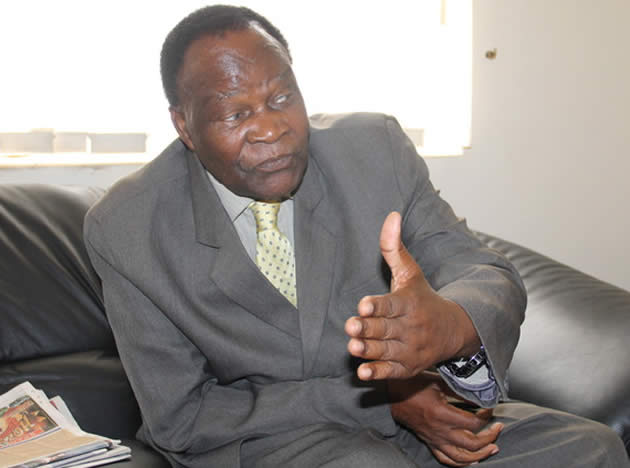
The interview Tichaona Zindoga
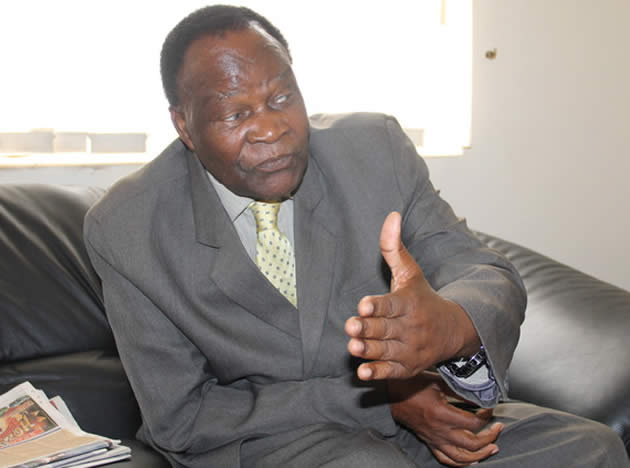
As the number of university and college graduates continues to rise amid a shrunk job market, one man, Josiah Dunira Hungwe (JH) believes Zimbabwe has the answer in his portfolio of Minister of State for Liaising on Psychomotor Activities In Education And Vocational Training. Cde Hungwe speaks to our Senior Political Reporter Tichaona Zindoga (TZ) on the new ministry and how it could empower graduates with life skills.
TZ: Cde Hungwe, can you tell our readers what are Psychomotor activities and what is the background to this philosophy?
JH: Psychomotor simply means doing; that is doing will be at the centre of education activities in the schools as we emphasise on practical and life skills in learning. This is in tune with the philosophy of the first Education minister Dzingai Mutumbuka who came from the bush to introduce “Education with production” which promoted the learning of practical subjects.
(Architect and Local Government, Public Works and National Housing deputy minister) Joel Biggie Matiza is a product of the system of education with production. Later the Nziramasanga Commission called for the vocationalisation of education. So we looked at this and what we could do about it. It is also in line with the Greek philosophy of productive learning where one’s knowledge is measured by whether one can make a chair, bake bread, work in leather . . . ; what one can do as opposed to cognitive knowledge emphasised in America or England.
At the centre of it all is that we must produce in schools from primary to tertiary level for the benefit of families and society. We must leave the cognitive domain to the practical aspect and create employment.
In Zimbabwe, we are saying the country has a literacy rate of over 90 percent but we have identified the missing link as people having degrees but can’t find jobs. What kind of education is that? We want to fill this yawning gap and we will allow line ministries to go on with their business and we help in organising better education.
TZ: What are the imperatives in your mandate?
JH: The key function is to liaise with all concerned stakeholders on strategies for enhancing manual and practical skills for all learners in order to develop citizens with the needed abilities. Liaison will enable effective consultation, participation, co-creation and co-ownership. We will also develop a policy to guide the proposed programme of action and a clear framework to guide multi-sectoral engagement and adoption.
We will define implementation or operationalisation models taking into consideration the roles of different stakeholders. We provide support and supervision for the production of key information that enables proper framing of vocational training or development of practical skills at all educational levels.
The ministry will support the establishment and operationalisation of sectoral and or regional employability and entrepreneurial centres of excellence, generate technical and financial resources for psychomotor activities, develop strategic partnerships and establish a multi-sector coordinating committee to support and facilitate uptake and agreements on regional and sectoral approaches.
We are also mandated to identify opportunities that mostly enable children from very poor backgrounds and special circumstances to participate. We will map idle resources in urban and peri-urban areas that could be used to enhance extra curriculum activities; seek technical and financial resources for resuscitation and retooling of facilities while partnering with private providers of vocational training education. The ministry will monitor and evaluate the uptake and best practice of this programme.
TZ: So what kind of a learner will emerge from this programme?
JH: We want to produce a typical Greek product: a person who can make a chair, repair a broken borehole and venture into the industrial sector and who is also entrepreneurial.
We will also emphasise on sport development. We will not churn out graduates without skills but who do something: that are practical-oriented?
TZ: What will be your strategies implementing this programme?
JH: The school curriculum will have to be restructured within line ministries in order to introduce things that Professor Nziramasanga advocated, that is, for doing (in learning). You see, even during the colonial era although black education was administered by the church, it used to focus on carpentry and building and working with leather. We want that system back. We want F2 schools like St John’s (Chikwaka) and Rakodzi in Marondera back.
TZ: I understand you were once a schools inspector and had interest in practical subjects . . .
JH: Oh yes, I was a teacher at Tafara during the years 1968-72 and we felt we needed to change the system of education and we advocated what we called the New Approach.
It was me and Joyce Childs and some teachers and heads and we had think-tanks in Matabeleland, Mashonaland and at the University (of Rhodesia). We wanted to stop pumping education into children. In this New Approach we called it: “Stop teaching, let the children learn” which emphasised on children discovering. We wanted a change for the better. Unfortunately, the programme fizzled out when I was promoted to schools inspector.
TZ: What have you been doing since you were appointed and what do you hope to achieve in the short term?
JH: I have been doing a lot of consultations in line with my mandate. I have held a meeting with Prof Nziramasanga and we discussed what he had wanted to do and what is missing and he told me. What he said should be done, should be done.
The International Labour Organisation phoned me and they revealed that they were funding psychomotor activities around the world. The World Bank sent somebody and we had a meeting and indicated that the World Bank was interested, and just like the ILO, they indicated the programme was sophisticated.
Various people have come up with what they think and voluntarily brought views about how we should go about the programme. Even professors from the University of Zimbabwe have come to me and indicated that what they are churning is not useful at all because there are no jobs.
There is a looming crisis regarding the unemployment in the country. Something has to be done and done urgently to avert an unemployment crisis. People must do things. We want to zero in on mining beneficiation and increase the number of people in employment. Even in agriculture there should beneficiation and value addition and this can only be achieved when people are trained in the relevant skills.
We are going to be building awareness of the programme — reminding line ministries of what they know already — and urging parents to change their mindsets on the issue of practical subjects. Some parents had this attitude that, “My child cannot be moulding bricks at school”; we want to change that.
We will have a three pronged approach in engaging the parent, the teacher and the media. Media will be important in the dissemination of information about our activities. We also need a clear and defined relationship with the private sector as the programme requires funding and to this end will engage World Bank, UNDP, ILO and Unicef.
TZ: Someone recently wrote that you were the right man for the job given what you had done in Masvingo, can you elaborate?
JH: I was governor for 16 years and during that time I read a lot of things about the institution of governor and what struck me about being a governor is that he must have a heart for the people. This is what made me pioneer a winter maize project to avert hunger for the people of Masvingo who were starving yet there where green fields of sugar cane. I believed I had to do something and I did. My heart bleeds when I see a graduate without a job so we must do something about it — not merely say. I want to act like the Greeks and Italians.


 Online Reporter