admin
admin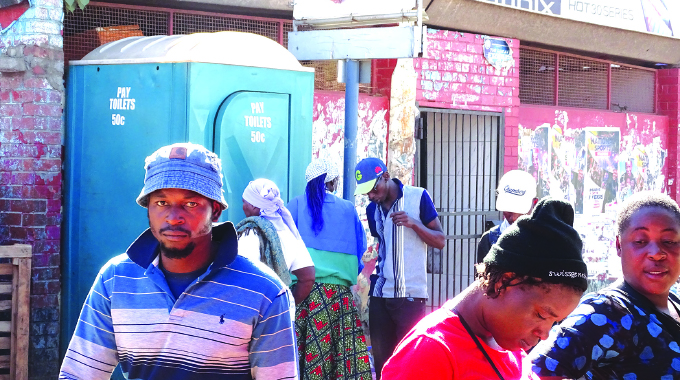
Gloria Muruva Herald Correspondent
Smelly alleys and walls have become the order of the day in Harare as council has failed dismally to deal with the public toilets menace.
For a long time, people intending to relieve themselves have confronted closed doors and turned to the walls or alleys and empty soft drink bottles.
In some cases, they are chucked out by cleaners even before they finish relieving themselves.
Men have also had to use public toilets in the presence of female cleaners, who sit inside once they finish cleaning the toilets.
While some people believe that the situation was better before, it has become increasingly difficult to use ablution facilities in recent months in the capital as most of them would either be extremely dirty or closed due to “water challenges”.
The few toilets that are working, although inconsistently, have been privatised and turned into pay toilets.
The charges range from US$0,50c to US$1 depending on how one intends to use the ablution facility.
Some of the public toilets that are not functional are in the Harare Gardens and at the corner of Leopold Takawira and Bank streets.
At Simon Vengayi Muzenda (formerly Fourth Street), only one toilet was working using the bucket system due to lack of running water.
Only the pregnant, disabled and elderly, are allowed to use them, with the rest of the people forced to use a private pay toilet nearby.
At the Copacabana and Charge Office bus termini, people were also using the bucket system due to water shortages being experienced in most residential areas in and around Harare.
In separate interviews, residents said they fear contracting water-borne diseases such as typhoid and dysentery, and even cholera which continues to rear its ugly head in some parts of the country.
On Thursday, Zimbabwe recorded 44 new cholera cases and one suspected death.
Mr Aaron Masendu, who was spotted intending to use the Simon Muzenda Street ablution facilities said: “It is now difficult for us. Council should urgently intervene before the city reports a major disease outbreak.
“This is a very crowded area with vendors, drivers, conductors and passers-by, yet there is no free toilet; my view is that this is a recipe for disaster.
“If you check around this area, people are engaging in open defecation and the risk of disease outbreaks is real.”
Mrs Kadmiel Moyo, a vegetable vendor, said the unavailability of running water at the entire terminus was a serious health hazard.
“It is unsafe considering that we sell vegetables here and will end up spreading disease like cholera. Flies are all over this place as you can see and it is a situation requiring urgent redress.
“It will be better if we would have at least three council toilets with running water so that people can use freely,” she said.
Mr Tatenda Gundu, a commuter omnibus driver who operates from the Charge Office terminus, said: “Our health is under threat, yet we still have to use the dirty toilets because we have no choice. It is not a pleasant sight, but circumstances force us to get in.”
Contacted for comment, Harare City Council spokesperson Mr Stanley Gama said: “We distribute what (the amount of water) we have. For example, during weekends, we don’t have water in the central business district, so we will be distributing it in places like Mabvuku and other areas, so our water (supply) is very limited.”
Harare Residents Trust director, Mr Precious Shumba, said Harare City Council needs to take the health of its citizens seriously.
“Residents expect to find their public toilets open and accessible up to around 9pm when most people leave the central business district.
“The Harare City Council needs to upgrade its public toilets so that they have back-up water storage facilities, or it must provide water bowsers to give maximum convenience to users,” he said.
Mr Shumba said public health was largely compromised by inefficiencies in the maintenance and upkeep of public toilets.
Run by the opposition since 2000, Harare has lost its glamour as the councillors’ focus on looting available resources such as land and money in the form of rates collected for water and other taxes.
President Mnangagwa has since rallied all councils, especially urban ones, to action so that they provide decent services to residents.


 Online Reporter