Andrew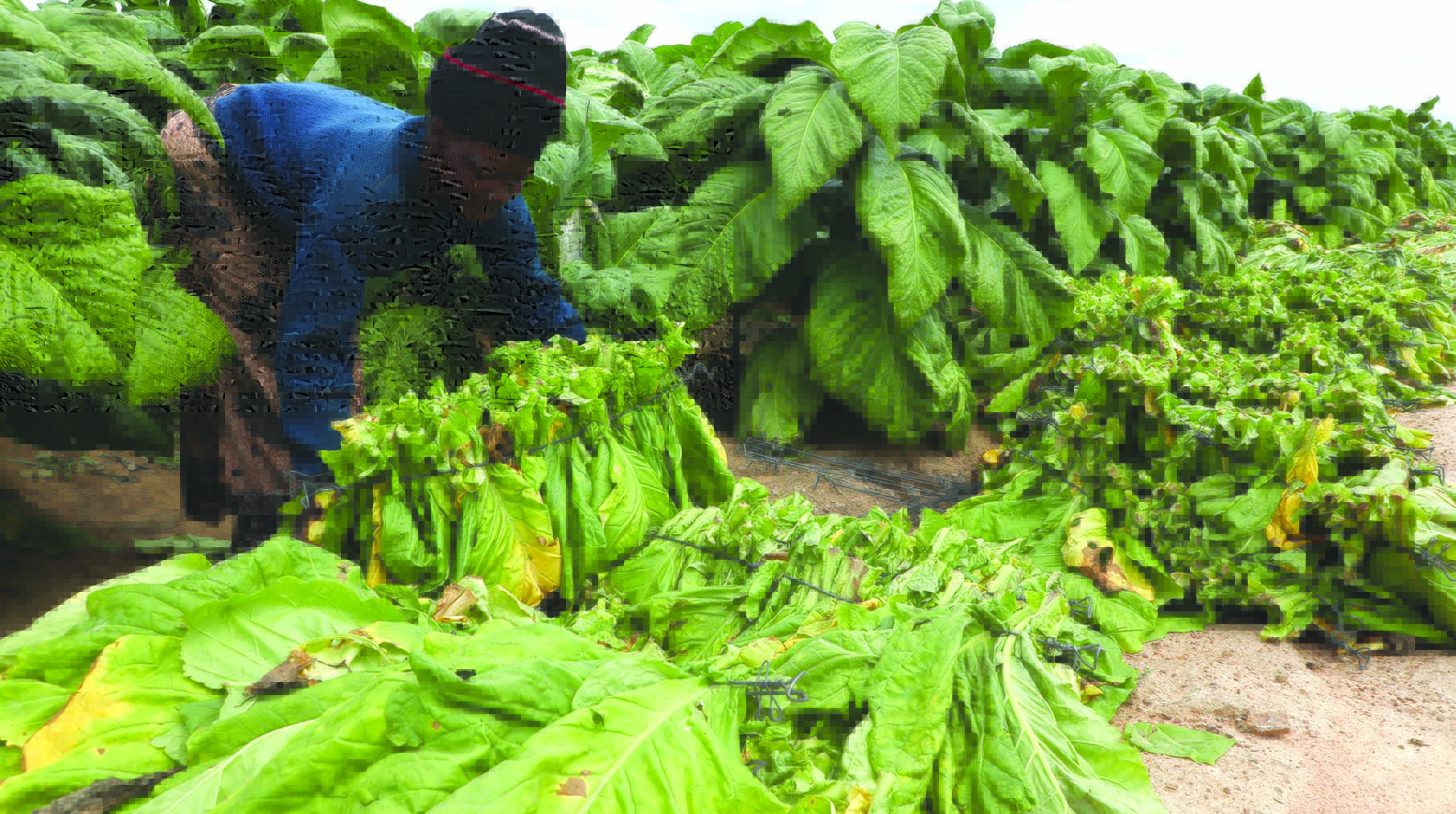
Martin Kadzere and Nelson Gahadza
There are fears the cost of producing tobacco might almost double during the next cropping season due to rising input costs, threatening production of a crop that provides livelihood for many families and generates foreign currency for the country, some leading merchants have warned.
However, industry stakeholders believe the impact could be reduced if the Reserve Bank of Zimbabwe introduces the US$60 million revolving fund announced last year meant to localise tobacco funding.
About 95 percent of tobacco production is financed using offshore loans under contract farming.
The offshore pre-financing arrangements mean tobacco merchants bring into the country part of export proceeds in the form of inputs. After exports, the bulk of the proceeds are used to pay offshore loans (capital plus interest).
The merchants, who support about 90 percent of farmers through various input schemes, said the Russia-Ukraine conflict has led to skyrocketing agricultural inputs such as fertiliser. The projected production cost per hectare is forecast to rise to US$1 800 from US$1 000 last season.
This means the value of inputs the farmer would require would almost double.
Merchants told The Sunday Mail Business the expected increase in input costs would see farmers abandoning tobacco since there wouldn’t be a corresponding increase in prices of the crop.
“What we are going to see is massive erosion of farmers’ earnings because input prices are likely to double with no corresponding increase in price,” said one executive with a leading tobacco firm, adding “only super-efficient farmers will survive”.
Zimbabwe Farmers Union executive director Mr Paul Zakaria has, however, allayed fears of massive production cuts, arguing the cost of producing tobacco has been rising over years but production has not fallen.
“Demand will not be affected because of shifts in input costs, so we expect the market to also perform,” he said.
The volatility of natural gas prices, a key ingredient in fertiliser production and other raw materials, is threatening global farm production.
While prices of fertiliser have been rising, reaching a record high on the back of the war in Ukraine and its repercussions on trade flows, the cost of crop nutrients are likely to go up further.
With Russia’s status as a primary exporter of ammonia, knock-on effects from sanctions imposed on the country have seen the fertiliser supply chain buckle under the weight of increased strain, creating concerns over food security, reports say.
The cost of importing ammonia gas into Zimbabwe is US$1 500 per tonne, about 150 percent ahead of last year’s price.
Since the beginning of 2020, global nitrogen fertiliser prices have increased fourfold, while phosphate and potash prices rose threefold, reaching levels higher than the previous record in 2008 during the global food crisis.
“Weaker tobacco producers will fall and the stronger ones will survive but the size of the crop will significantly decline,” said another merchant, who declined to be identified.
Tobacco remains a strategic crop in Zimbabwe and the Government has announced several policies and incentives that are meant to build capacity under Vision 2030.
Under the Tobacco Value Chain Transformation Plan, the Government has set a target of producing 300 million kgs of tobacco by 2025, and the US$60 million fund is among the various initiatives aimed at increasing tobacco production.
The fund would support 50 000 hectares and 60 million kgs of tobacco.
According to the Tobacco Industry and Marketing Board (TIMB)’s public affairs officer Mrs Chelesani Moyo, the revolving fund facility was yet to be rolled out.
“The implementation of the Tobacco Value Chain Transformation Plan is still work in progress to achieve a US$5 billion industry by 2025,” Mrs Moyo said.
“The plan focuses on increasing primary production of the crop from 211 million kg (in 2021) to 300 million kg by 2025, localising financing for the 150 000 debt-ridden small-scale producers, value addition and beneficiation, and export of cigarettes instead of raw tobacco targeting to create a US$5 billion industry by 2025.”
Some stakeholders involved in ensuring the success of the plan are working on different sub groups created to achieve set targets by year-end, Mrs Moyo added.
Mr Zakaria said the country could benefit more through local funding and enhancing value addition.
“Currently, 90 percent of tobacco farmers are contracted and that means the merchants who have the contracted tobacco are the ones making money.”
In 2019 and 2020, Zimbabwe’s tobacco net foreign inflows amounted to about US$87 million against nearly US$1,6 billion in exports of the “golden leaf”.
According to figures from the Reserve Bank of Zimbabwe, net inflows were US$47,5 million in 2019 and US$39,4 million in 2020.
In the same period, total value of tobacco shipments were US$843 million and US$763 million in 2019 and 2020, respectively.
“What is required is to generate our own capacity to produce locally using local resources and then we are able to take advantage of value addition, so that when we sell, whatever we are selling, we are selling finished products which will generate a lot of foreign currency for the country,” said Mr Zakaria.
“The US$60 million is a good figure but there is a need to pump it up so that it becomes an investment that will generate US$800 million to US$1 billion.”
Zimbabwe should also process tobacco before exports to increase value-added jobs and export earnings.
“We are not only talking about tobacco production, but the processes of value addition so that we come up with primary products which can be consumed outside our borders to generate foreign currency to reach the US$5 billion,” he said.
Beneficiation will include processing tobacco into cigarettes and other products for export markets.
Currently, only 2 percent of tobacco produced in Zimbabwe is processed locally.



 Online Reporter