Chronicle Editor
Michael Magoronga, Midlands Correspondent
In the 2018 harmonised elections, a record number of women threw in their hats as they sought the mandate to occupy the State House.
Former Vice President Dr Joice Mujuru, Dr Thokozani Khupe, Ms Melbah Dzapasi and Ms Violet Manyacha, were part of the 23-member cast of presidential hopefuls who wanted the top job in the land then. The number of female participants was expected to rise in the 23 August 2023 polls with pro-women organisations, led by the government, doing their best in creating spaces and opportunities for women participation. But alas, figures show otherwise as, initially, there was no woman in the presidential hopeful list.

Out of the confirmed 11 candidates vying for presidential office, there is only one woman, United Zimbabwe Alliance leader, Elisabeth Valerio whose name only found its way on the ballot after a long court process. Another female presidential aspirant, Labor, Economists and African Democrats (LEAD) leader, Linda Masarira could not make it to the ballot paper after she failed to raise the US$20 000 nomination fee required by the Zimbabwe Electoral Commission (ZEC).
Figures show that out of the 673 candidates standing for the parliamentary seats in the National Assembly, only 70 are women. This is in sharp contrast with the Second Republic’s push for more women representation in political spheres that President Mnangagwa and his Second Republic have been pushing for.
All this comes at a time when countries in the Sadc region and indeed on the African continent, are pushing for women participation in politics and leadership. However, the Second Republic led by President Mnangagwa continues to push for the empowerment of women at all levels.
Already, the Second Republic has facilitated the creation of a 30 percent quota for women in local authorities while in Parliament, the quota system that was coming to an end following the August polls, has been extended by an additional two terms.
This is among a number of initiatives that the Second Republic has implemented in the upliftment of women’s participation in politics in the country. In continuing on the path of women empowerment, President Mnangagwa has implored women to create synergies and form companies with the capacity to compete for tenders in the ongoing economic and infrastructural development efforts being championed by the Second Republic.
But at a time when everything is being put in place to ensure political participation by women, what could have gone wrong for such a paltry number of women to participate in this year’s election?
Masarira blamed the exorbitant charges by ZEC which she said were not favorable for female participation. Masarira even dragged the commission to court seeking the slashing of the nomination fees. However, Masarira lost her bid to quash ZEC’s US$20 000 nomination fee for presidential candidates when she approached the High Court. Masarira along with Lynette Mudehwe and the Institute for Young Women Development Trust had approached the High Court arguing the fees were too steep for women. They wanted an order granting them access to the Constitutional Court on the basis that ZEC?s fees go against Sections 56 and 67 of Zimbabwe’s Constitution.
“My application was dismissed with costs. The judge only read the operational part of the judgment. We will only get to know the reasons when we get a copy of the full judgment. The way forward will be determined after reading the full judgment. The struggle continues unabated,” said Masarira after losing the bid.
Valerio however, welcomed the decision in which the Electoral Court division of the High Court granted her the opportunity to be added to the ballot paper. She believes that barring her from contesting in the elections was going to send the wrong signal about women participation.
“UZA believes that this appeal is a crucial step for the advancement of democracy, transparency and women’s rights in Zimbabwe. We are delighted that the decision has upheld the principles of justice and fairness that are essential for our political systems and the participation of women in political leadership,” she said in a statement.

Being the only woman on the ballot paper with 10 other men, what does this mean for Valerio?
“I feel a great sense of joy for the women in our country. In this election ,we have a chance to lead. I feel a tremendous amount of responsibility as the only female candidate in this year’s presidential race. I feel proud and humbled to have been chosen to lead our party and represent women in this race for the highest office in the country. I see it as an opportunity to inspire and empower women by breaking societal barriers and stereotypes,” she said.
Valerio said she aims to bring a unique viewpoint to the political landscape. Meanwhile, Kwekwe Mayor, Councillor Future Titora said she was not seeking re-election this time around citing a lack of financial resources, sexual harassment and the pull her down syndrome by fellow women.
“Women need to get involved in politics but the problem is most women do not have money to compete with their male counterparts. Sexual harassment is another elephant in the room which women face mostly because when you get those big offices, men tend to ask for sexual favors in exchange for political benefits,” she said.
Asked why his party (CCC) had only one woman who had successfully filed her nomination papers to contest for a seat in the Kwekwe City Council, Dr Henry Madzorera said, “We want women to take up leadership roles but we don’t know why they are not forthcoming. It is disheartening to note that most of these seats were occupied by women before and they are not there to take up their posts.”

Zanu-PF Secretary for Women’s League, Cde Mabel Chinomona challenged women to take up leadership roles saying they were the backbone of the ruling party.
“We are the backbone of the party and we should vote for fellow women into political office. We should put differences aside and support the ascendancy of each other into political office. We should remember how women participated even during the liberation struggle; women played a critical role including Mbuya Nehanda. We should continue with that and vote for our fellow women into office,” she said.
Cde Chinomona applauded the Second Republic for enabling a conducive environment for women participation in politics.
ZEC is equally worried about the record low number of female participants in this election. Chief Elections Officer, Mr Utoile Silaigwana said it was the commission’s wish for more women participation either vying for political office or as voters.
“Just by scanning through the figures, we discovered that there are a few numbers of women who are participating in this coming election. We continue to encourage women to play their role and participate either for political office or as voters,” he said.
Mr Silaigwana said the zebra concept under proportional representation was meant to encourage women participation.
“Proportional representation made sure that through the zebra concept whereby we put a woman, a man, then followed by another woman, was meant to encourage female participation in this election. The concept seems to have worked for other countries and we hoped it would work for us as well,” he said.
Zimbabwe Gender Commission (ZGC) chairperson, Commissioner Margaret Mukahanana-Sangarwe said the major challenge remains the systematic barriers that continue to hinder women’s participation, not only in politics but other spheres of life as well.
“Political parties have and continue to be urged to prioritise and respect provisions in the national constitution that promote gender equality and non-discrimination. The extension of the women’s’ quota has guaranteed seats for women that come through the proportional representation system. However, it would have been even better for political parties to have fielded more women candidates across constituencies and wards,” she said.
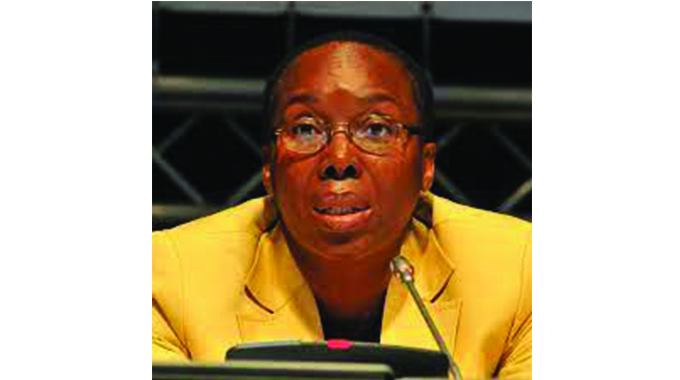
Commissioner Mukahanana-Sangarwe said the quota system opens a possibility for women to participate in politics but more can be done.
“It is important also to acknowledge that we need to go beyond looking at women representation in terms of figures to ensuring equal power and control in decision making outside politics.”
She noted that the limited participation by women in this year’s election will definitely stifle gender equality in power struggles over the next term.
“Getting more women into politics, and decision making is not something that can be left to chance, there is need for commitment at political party level. There is need for this commitment to reflect at the lowest levels of governance, otherwise issues affecting women will remain peripheral due to limited or misrepresentation at policy level. The exclusion of women means no representation,” she said.
There is, therefore, need to expedite the implementation of constitutional reforms and provisions that promote gender equality and political participation by women going forward.


 Online Reporter