admin
admin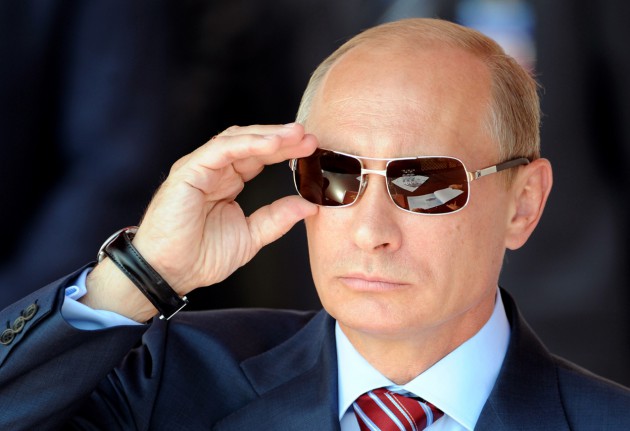
Russian President Vladimir Putin has directly appealed to the American people and to US politicians on Syria by writing an article in the New York Times warning that a military strike could unleash a new wave of “terrorism”. Writing in the newspaper yesterday, Putin said there were “few champions of democracy” in the two-and-a-half-year-old civil war in Syria, “but there are more than enough Qaeda fighters and extremists of all types battling the government. Recents events surrounding Syria have prompted me to speak directly to the American people and their political leaders,” Putin wrote.
He repeated assertions by his government and Damascus that an August chemical weapons attack that the United States blames on President Bashar al-Assad’s government was likely the work of opposition forces seeking to provoke foreign intervention.
US President Barack Obama wants to hold Assad accountable for the suspected attack in a Damascus neighbourhood on 21August that US officials say killed about 1 400 people, including 400 children.
Obama said in a speech on Tuesday that he had asked Congress to put off a vote on his request to authorise military action in Syria to let diplomacy play out around a Russian proposal to put Syrian chemical weapons under international control, although he said the threat was still needed to ensure Syria complies.
Putin cautioned against taking military action without UN Security Council authorisation, saying, “We must stop using the language of force. The potential strike by the United States against Syria, despite strong opposition from many countries and major political and religious leaders, including the Pope, will result in more innocent victims and escalation, potentially spreading the conflict far beyond Syria’s borders,” Putin wrote.
“A strike would increase violence and unleash a new wave of terrorism,” he added. “It could undermine multilateral efforts to resolve the Iranian nuclear problem and the Israeli-Palestinian conflict and further destabilise the Middle East and North Africa. It could throw the entire system of international law and order out of balance.”
Putin said it was alarming that intervening militarily in foreign countries’ internal conflicts had become “commonplace” for the United States. “Is it in America’s long-term interest? I doubt it. Millions around the world increasingly see America not as a model of democracy, but as relying solely on brute force, cobbling coalitions together under the slogan ‘you’re either with us or against us.’”
Putin also rejected Obama’s assertions of “American exceptionalism,” saying: “It is extremely dangerous to encourage people to see themselves as exceptional.”
Russia has been Assad’s most powerful backer during the civil war, which has killed more than 100 000 people since 2011, delivering arms and — with China — blocking three UN resolutions meant to pressure Assad.
Meanwhile, US secretary of state John Kerry has arrived in Geneva to meet Russian counterpart Sergey Lavrov as the UN tries to forge an international plan to disarm the Syrian government of its chemical weapons.
Lavrov and Kerry will discuss efforts to agree a UN resolution on the issue, as well as the practicalities of finding, removing and destroying chemical stockpiles during a civil war in which more than 100 000 people have already died. However, the diplomats are expected to clash on whether a UN resolution should contain the threat of force – something to which Russia is deeply opposed.
Al Jazeera’s diplomatic editor James Bays, reporting from the UN in New York, said he understood both ministers would be accompanied by chemical weapons experts at the meeting in the Swiss city
The meeting comes a day after the permanent members of the Security Council — the US, UK, China, Russia and France — met to discuss the content of draft resolutions proposed by Russia and France. The discussion “helped to pave the way for tomorrow’s meeting” in Geneva, one council diplomat told AP news agency, but an agreement was not reached.
France’s draft states that Syrian President Bashar al-Assad’s forces should be condemned for their use of chemical weapons on 21 August in Damascus, and threatens force if they do not comply with disarmament. — Al Jazeera


 Online Reporter