Chronicle Editor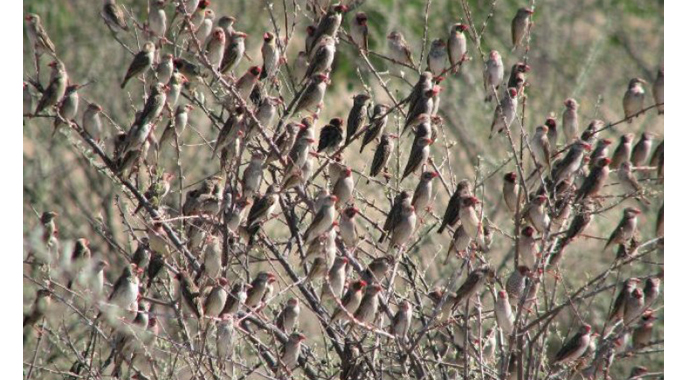
Sikhumbuzo Moyo, Senior Reporter
GOVERNMENT is on high alert following an unprecedented high number of quelea birds that have invaded the country, with crops in Matabeleland North province also coming under attack from the menacing birds.
Aerial and drone sprays over and above the motorised bird control measures are underway to save wheat from the destructive quelea birds that are the most damaging pest to wheat, sorghum and millet in Zimbabwe.
Teams that are working to control the birds are also targeting and destroying their breeding areas.
In Matabeleland North control teams were deployed in Umguza district last week before they shifted to the Arda Irrigation Farm in Jotsholo, Lupane district this week.
Quelea birds are the largest contributors to wheat loss annually and can wipe out an entire crop field if left uncontrolled.
According to experts, the average quelea bird eats around 10 grams of grain per day – roughly half its body weight – so a flock of two million can devour as much as 20 tons of grain in a single day.
With an estimated adult breeding population of at least 1,5 billion, the Food and Agriculture Organisation (FAO) estimates the agricultural losses attributable to the quelea in excess of US$50 million annually.
Besides activating aerial sprays, which have always been the last line of defence for both commercial and small scale farmer’s crops from unforeseen plague of insects, disease or quelea birds attack, Government has opened up a Quelea Command Centre which provides farmers and the Department of Migratory Pests and Biosecurity Control with real time updates on any invasion by the highly destructive birds.
Once reports of the birds being sighted are made, deployment is done immediately.
Government has also started importing additional chemicals as it leaves no stone unturned in its efforts to ward off the invasion at a time farmers are preparing to start receiving inputs for the Intwasa/Pfumvudza programme under the Presidential Input Scheme.
The invasion by the quelea birds may have a direct impact on Government’s Agriculture and Food Systems Transformation Strategy that seeks to achieve a US$8,5 billion agriculture economy by 2025
Quelea control and management is done using the Quelea Control Act by the Zimbabwe Parks and Wildlife Management Authority (Zimparks) under the Ministry of Environment, Climate, Tourism and Hospitality Industry in collaboration with the Department of Migratory Pests and Biosecurity Control in the Ministry of Lands, Agriculture, Fisheries, Water and Rural Development.
In a ministerial report in June this year, the Ministry of Lands, Agriculture, Fisheries, Water and Rural Development said the country surpassed its target of 75 000ha of planted wheat this season after 78 038 hectares of land was planted. Some of the wheat is being targeted by the birds.
In an interview, the acting director in the Department of Migratory Pests and Biosecurity Control, Mr Shingirai Nyamutukwa said this week his office had received eight reports of quelea birds’ sightings.
“Mashonaland West is the hotspot with high bird numbers then other reports are coming from Mashonaland Central, Mashonaland East, Manicaland and Matabeleland North provinces,” said Mr Nyamutukwa.
“We are always on our feet with regards to quelea birds but the reports we are receiving of late is of huge numbers of these birds which is alarming but under control for now. These birds are very mobile so it is difficult for us to quantify in terms of numbers. We are working with Africair for aerial sprays especially in the lowveld areas, we are also using drones hence our confidence that we will win this war.”
Zimbabwe Commercial Farmers Union (ZCFU) Matabeleland region chairperson Mr Winston Babbage said the invasion was causing panic among farmers but they were closely working with the relevant Government departments in the fight against the bird invasion.
“This is a national problem and as such we are working hand in hand with Agritex guys to destroy these birds and also on awareness programs. We are indeed in a tricky situation regarding this invasion. We hope however that in the process of destroying these birds we won’t cause harm to other species of birds, domestic or wild,” said Mr Babbage.



 Online Reporter