


 Chronicle Editor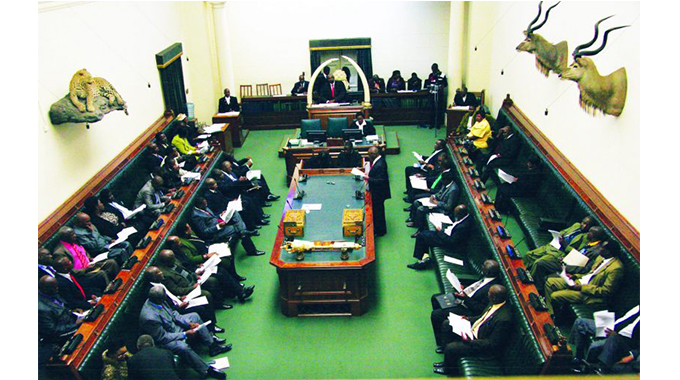
Chido Manzini
THE advocacy of women leadership in politics through various international and regional boards has seen women rising in the field of politics as it is vital to incorporate their views and opinions seeing they cradle the continent as a whole.
Women in politics has been advocated globally and this has resulted in a surge in the influx of women in parliament as over the past 25 years, the statistics of women in politics has risen from 11.3% to 24.9% as a whole. This rise is attributed to quota systems which various countries have adopted which have been key in the progress of women in the political arena. Dahlerup (2006) defines a quota system in politics as an affirmative measure that establishes a fixed percentage or number for the nomination or representation of a specific group. In view of that the Zimbabwe government has laid down policies and legislation that advocates for women empowerment in all arenas. Notwithstanding the government’s effort, there is still a gap in terms of women participation in politics which is directly reflective on the quota system that is being adopted at national level and other variables which will be discussed in depth in this submission.
Zimbabwe adopted the quota system in terms of some sections of the Constitution which mandate the nation on women representation in parliament. Zimbabwe has also adopted and implemented the 30 percent quota system which was agreed upon during the Sadc Declaration on Gender. However, in comparison to other Southern African states the nation is lagging behind as other nations have raised their quotas to around 50 percent representation of women in parliament. Therefore, there is a gap that needs to be filled considering that women constitute 52% of the population. It is of great concern therefore that parliamentary seats are not reflective of their numbers which ultimately has a direct impact on the magnitude of women’s and children representation in parliamentary dialogues consequently.
Currently in Zimbabwe women in parliament hold 31.9 % seats which is a commendable increase from 1995 where they held 14.7% but women are indeed advocating for 50% representation. Countries such as Rwanda have set the pace as the world leader in women participation in politics as it has achieved 60% of seats for women in parliament. Rwanda has set the pace for Southern African countries and the continent. In Namibia women’s representation in the National Assembly is 47.7% which is commendable as their progress is as a result of their dominant party SWAPO which adopted the voluntary 50 per cent gender quota. Similarly the ANC in South Africa has also adopted the 50% gender quota for national elections since 2009. Therefore, there is a call for voluntary quota system to be adopted at a local level and also the quota percentage to be reviewed upwards so as to increase the number of women in leadership as this will have a direct correlation with their increase in representation at National Assembly level.
In as much as a quota system is in place there are other variables which come into play to enable women to thrive in politics since they face a number of entry barriers both socially and economically. Cultural norms and values have been a major deterrent in the progress of women in politics as they have been stereotyped according to gender. The patriarchal society makes it difficult for women to thrive let alone rise in politics as they are seen merely as caregivers and not leaders. Women should also be recognised as custodians of cultural norms and values, hence, there is need for a paradigm shift in changing the culture that is embedded so as to accommodate women in leadership.
Women should also guard against the tendency of presentism instead of quality participation in parliament. This is so because women occupy seats which do not have much magnitude in shaping the direction of issues which are discussed at the National Assembly and debates. It is unfortunate that culture has subdued women such that they fail to raise their issues confidently in debates, hence their male counterparts dominate in deliberations skewing the outcome of debate in their favour. The working environment in Parliament makes it more difficult for women in parliament due to the language that is used in these debates which is sometimes demining to the female gender.
Therefore Parliament should be sensitive to the plight of women and enforce a conducive environment to harmonious co-exist between genders. Women do not have the luxury of indulging in certain social activities that enable them to boost their political careers as they may have limited resources to actually campaign at a local level against their male counterparts. Therefore, one will realise that their representation even at party level is low and hence there is need for political parties to have a provision for women and create policies which are effectively implemented which help women to be empowered. Quotas need to be introduced and institutionalised at this micro level so as to have more women partaking in politics. Political parties need to equip women with requisite skills and trades of the field so that their positions are not questioned as they hold them with honour. This will go a long way in enabling them to be competitive in the political arena.
Women in political parties especially those campaigning for elections face a range of challenges which include discrimination in party procedures and practices and lack of gender sensitivity. Political parties should adopt policies to combat sexual harassment by having effective complaint mechanism and penalties for offenders so as to create a conducive and safe environment for women. The goal is to ensure that all parties be it male or female unite their efforts together so as to create a safe working space in politics free from prejudice and harassment.
Quota systems are the key towards women participation in politics in the sense that if they are embedded in the legislation and culture of the nation they will uplift the girl child and result in them having fruitful political careers which will not only result in self actualisation but also the nation at large being represented as a whole. The quota system should be reviewed and cascaded from national level down to party level and most importantly to societal level where the yokes of culture need to be broken which withhold the rise of women.
In a nutshell, it is submitted that while the nation has made significant inroads in terms of promoting women participation in politics through the women quota system, there is still great room to enhance this democratic process especially in the wake of the devolution concept which encourages utilisation of local resources through popular participation and consultation in decision making at grassroots levels. There is also need to strengthen the current legislation to protect women especially from political violence and victimisation during the electoral processes so that they participate freely.
Feedback: [email protected]/[email protected]. The writer is a social analyst and lecturer at Midlands State University


 Online Reporter