

 admin
admin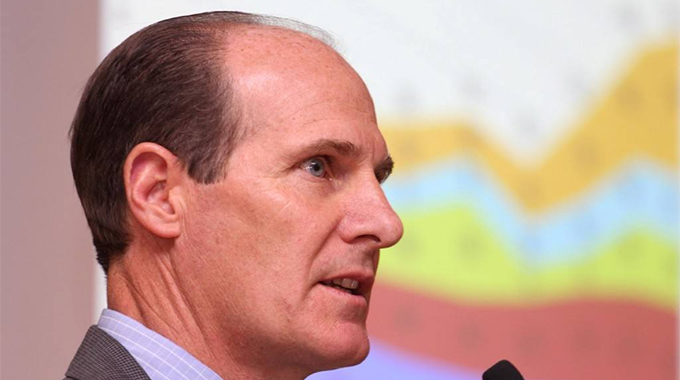
AVI chair Gavin Tipper and CEO Simon Crutchley have sounded a stark warning over conditions in the South African economy, which they say are directly affecting the group’s capital investment plans.
In effect, capex will be directed not on expansion, but mainly on improving efficiencies.
Writing this month in the group’s annual report for the year to end June 2022, Tipper and Crutchley say that: “Although we have a highly regarded management team, staff that are the envy of many businesses, a robust and pedigreed portfolio of brands, and efficient manufacturing and distribution facilities, over time our performance will be determined by the performance of the economy in which we operate.
“We can outperform the economy for short periods and have done so on many occasions; over longer periods we cannot create growth in an environment where none exists and our customers are getting poorer in real terms.”
These 37 words say so much about what many senior business leaders in the country are thinking and talking about, albeit generally privately.
The AVI bosses say “sustained long-term growth in our business is dependent on the government taking the steps necessary to remove the impediments to growth in our economy”. – Bloomberg
This is the second high-profile warning from leaders of large JSE-listed companies this month. Earlier in October, FirstRand chair Roger Jardine slammed the “painfully slow” pace of the Government’s much mooted infrastructure programme in the group’s annual report.
Jardine said “it is hard to identify one government-led infrastructure project of any significance that has actually been executed”.
AVI, which owns more than 50 brands spanning beverages, snacks, frozen foods and fashion, says capital expenditure for 2021 totalled R240,8 million.
In 2021, it had planned total capex for 2022 of R400 million, with the six largest projects totalling R287 million.
In effect, completed capex was 40 percent lower than the originally budgeted amount.
The group admits it has been reducing the level of capital expenditure for a number of years “to reflect the difficult economic environment and reduced growth opportunities”.
By-and-large, it says capex “is focused on driving efficiencies and maintaining capacity”.
Capex has effectively halved from five years ago, when it was nearly R550 million, and has been declining steadily.
In the case of expansionary investments, AVI says capex “is carefully evaluated with a strict focus [on] the merits of the risk-adjusted case for the investment”.
It says it will “continue to monitor the environment and, where appropriate, expenditure will be curtailed should the risk-adjusted returns not justify the cost”.
It does admit that budgeted capital expenditure for the next financial year “is higher than that for the current year and is directed at the parts of our business that are most appropriate to the current, and likely future, domestic economies”.
Of the R245 million budgeted, R78 million will be spent on packaging automation at its creamer plant (which will increase capacity). A further R87 million is earmarked for capacity and process improvements on its biscuit line as well as replacements and upgrades to its snack line.


 Online Reporter