Online Reporter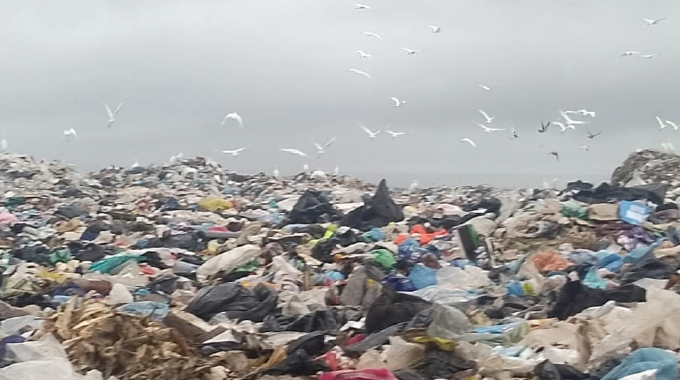
Raymond Jaravaza, [email protected]
MONTHS of choking smoke and sleepless nights have finally eased for Bulawayo’s Cowdray Park residents after persistent rains extinguished fires at the Richmond landfill, popularly known as Ngozi Mine, which had blanketed nearby homes in toxic fumes.
For Mrs Elina Mathuthu, who lives less than a kilometre from the dumpsite, the period between August and November last year was unbearable.
“Our house would fill up with smoke and soot. Curtains and sofas were blackened. We were forced to keep doors and windows open day and night just to breathe,” she said.
Landfill fires raged almost continuously during the hot months, producing thick clouds of smoke that affected hundreds of families and nearby institutions, including Tategulu Primary School and Cowdray Park Secondary School, both within walking distance of the dumpsite.
Residents said the fires, some burning for 24 hours at a time, left them helpless.
“The most painful thing was knowing there was nothing we could do. The smoke never stopped,” said Mrs Mathuthu.
Relief only came with the onset of the rainy season late last year.
“By the end of December, the fires had completely stopped because it was raining almost every three days. Our prayer is that the rains continue,” she said.
When Zimpapers visited the area yesterday, the news crew observed a wet and calm dumpsite, with no visible smoke.
The saturated ground appeared to have suppressed underground fires that had previously smouldered unseen beneath the surface.
Waste pickers had resumed work, cautiously sifting through refuse.
One of them, Mr Mbulelo Sibanda, admitted that some fires are deliberately started to burn old waste and make scavenging easier, but said they often spiral out of control.
“The fires keep burning as if fuelled by gases underground. Many people here have burns from picking hot materials. When it’s very hot, it becomes dangerous to work,” he said.
Mr Sibanda said the rains had brought temporary relief.
“It’s been raining almost daily for weeks. Everything is wet and fires can’t start,” he said.
However, community leaders warn that the problem is far from resolved. Ngozi Mine Residents’ Association vice-chairperson, Mr Thulani Nxumalo, said the landfill’s proximity to homes remained a serious hazard.
“Our houses are too close to this dumpsite. Residents want it relocated. Council has land elsewhere,” he said.
Dumpsite fires, also known as landfill fires, are notoriously difficult to extinguish for several reasons.
There are two main types of landfill fires: surface fires and underground fires. Surface fires involve recently buried or uncompacted refuse and are generally easier to manage. However, underground fires occur deep below the surface and involve older, decomposed materials, making them far harder to reach and extinguish.
Landfills contain a mix of materials, including organic waste, plastics and hazardous substances. This combination can cause fires to burn at varying temperatures and produce toxic fumes, complicating fire fighting efforts.
Decomposing waste also produces methane, a highly flammable gas that can accumulate, ignite, or help fires spread rapidly through the landfill.
Fires need oxygen to burn, and poorly compacted or uncovered waste can create multiple pathways for air to enter, making it difficult to suffocate flames.
Using water to extinguish landfill fires can also create leachate pools, which pose environmental risks, and fires can damage the landfill’s protective liner, increasing the risk of groundwater contamination.
Some waste materials can spontaneously combust due to chemical reactions or bacterial decomposition, making it difficult to predict or prevent fires. Combined, these factors make landfill fires complex and hazardous to control.
Bulawayo City Council (BCC) communications manager, Mrs Nesisa Mpofu, said landfill fires were an unfortunate but inherent risk at waste disposal sites.
“Waste disposal sites are obnoxious but necessary. They receive all kinds of waste. Putrescible waste gives rise to odour and fly nuisance challenges, whereas some inorganic waste, such as old batteries, presents fire hazards when subjected to pressure through compaction, a normal landfill maintenance process. Broken glass presents physical damage and injury to vehicle tyres and employees. As putrescible waste decomposes, it produces methane, a greenhouse gas that contributes to climate change,” she said.