Online Reporter
Bruce Ndlovu, Sunday Life Reporter
A FEW times in recent years, some have questioned whether Boerboels, the large, powerful Mastiff-type dogs originating from South Africa, are also man’s best friends.
Occasionally over the last few years, a few people have found themselves in the jaws of these massive canines and the results have been devastating.
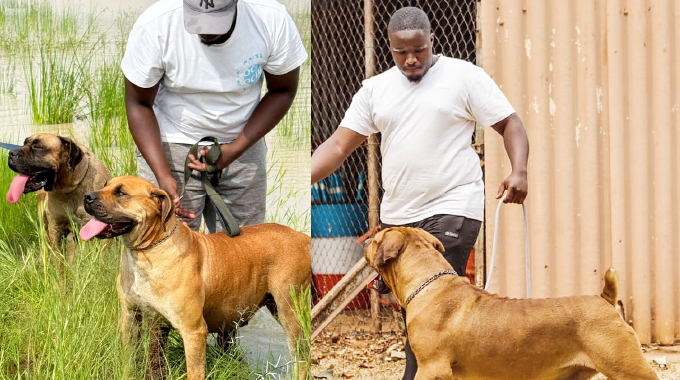
Boerboel attacks are rare, but when these giant canines spill blood, they tend to garner a lot of attention, with gory details of their tantrums splashing onto newspaper pages and social media timelines. With a bite force measured at over 3 500 kilopascals, which is more than a cheetah’s, it is no wonder that some liken the Boerboel to a beast instead of a domestic pet.
Such characterisation of this breed, according to Clive Khumalo of HI Level Boerboel, is wrong. Last week, Khumalo, alongside his brother and partner Michael Mangena, saw their dog Simba romp to victory at the Harare Kennel Club during the 2026 Zimbabwe National Boerboel and Appraisal Show.
The national event provided breeders with an opportunity to assess their dogs against established standards, while members of the public learnt more about the breed and its characteristics.
For Khumalo and Mangena, however, the show was about more than just ribbons and recognition.
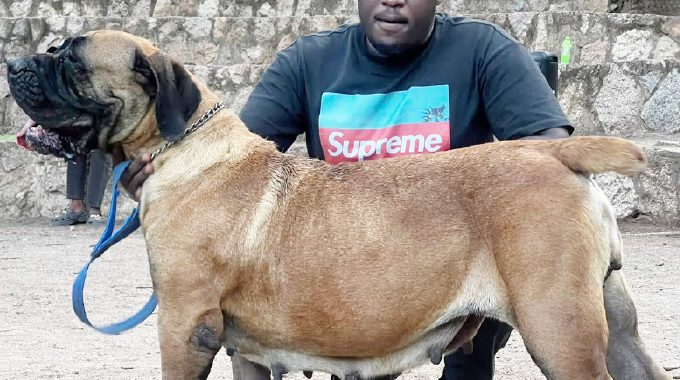
It was another opportunity to demonstrate what they believe a properly bred and properly raised Boerboel should look like.
“All dogs are the same but they have different personalities. So how they behave all comes down to socialisation,” Mangena said.
“Most owners buy the dog and they just leave it there. You need to be able to take it out for walks from an early age. It needs to get used to the outside world and people because it can get frustrated at home.
“There are other breeds that are aggressive but because a Boerboel is a large breed dog, if it bites someone, the damage is great. That’s why it gets a lot of attention when there is an incident.”
It is this distinction between the breed’s physical power and its temperament that the two breeders believe is often lost whenever a Boerboel attack makes headlines.
The dog may be capable of inflicting serious damage, but according to the breeders, size and strength do not automatically translate into aggression.
“We are trying to debunk negative stereotypes about Boerboels that are out there. We also want to produce stable dogs with a stable temperament. Temperament is the most important thing in any dog,” Mangena said.
For the brothers, Simba’s success is therefore part of a bigger project: producing dogs that can compete at the highest level while remaining stable enough to live responsibly alongside people.
“We look forward to producing dogs that will do well for other people as well. For us, the job does not stop here. We want to compete even outside Zimbabwe because our dog is young and we hope that he will mature into a great champion,” Mangena said.
“We believe he can outdo other dogs in other countries as well.”
Khumalo believes the misconception surrounding Boerboels is largely rooted in their intimidating appearance.
“What people usually get wrong about Boerboels is that these are naturally aggressive dogs that kill.
That’s very wrong. These dogs are gentle giants that are easy going and as long as they are trained and well socialised, they are the perfect dog for any owner who’s willing to feed and keep them well.
They are great couch potatoes,” he said.
While the Boerboel might be a couch potato at heart, but it is a very large couch potato, and owning one is a responsibility that Khumalo says should not be taken lightly.
“You need to be physically strong. That’s the first thing one needs to get right when they think they want to own a Boerboel. You need to have a lot of experience with dogs or dogs of a similar size,” he said.
“This breed is not for first-time owners. You need to be able to train the dog through the use of commands without resorting to any violence. This is where most people get it wrong. They try to raise these dogs but they later find out that the dog is now too big for them and they can’t keep it.”
There is, in other words, nothing casual about bringing one of these giants into the home. Their imposing frames come with equally imposing appetites, while their strength demands an owner capable of controlling them without cruelty.
“Boerboels are big, very big, and so they have to be fed a lot. They should not be fed any random
food but they need to be given proper nutrition so they perform their duties,” Khumalo said.
“They need someone who can discipline a dog properly without abusing them. They need to be raised properly because if you don’t give them the right environment, they might turn out bad and become like the ones that we see coming out on the news.”
For Simba, that proper environment appears to have yielded results.
At the national show, it was his presence in the ring that caught the eye of the judges.
“What made him stand out? I think it was his character and his movement. Strong character, excellent and very good structure is what made him stand out,” Khumalo said.
While some gravitate towards the dogs because of their look, for the breeders, those qualities are not simply cosmetic. They are part of what makes a Boerboel a Boerboel and ultimately, what separates responsible breeding from simply producing large dogs. Their affection for the breed is also rooted in its African origins.
“We fell in love with this breed because it is an African dog and we knew that it would survive here without any serious health issues. It is also the only breed that has a proper organisation in Africa, which makes sure that the dogs pass the proper tests and criteria for it to be bred,” Khumalo said.
Their journey into Boerboel breeding, however, began long before HI Level Boerboel was established. The fascination with dogs goes back to childhood, when ownership for the two was more aspiration than reality. In 2023, admiration became a vocation when the brothers began their breeding journey. Three years later, their young champion has given that journey a significant boost.
“I got my passion for dogs when I was a kid. At home we never really had dogs but we would admire people that had dogs around us. We wanted to have dogs but we couldn’t afford them. Even as we grew up, we would admire people with Boerboels and that continued until we got our first one from Botswana,” Khumalo said.