Chronicle Editor
A casual conversation with a farmer and colleague inspired part of this week’s submission. He was carrying bags of stock feed in his car for his animals in Diba communal lands of Bulilima District.
He is a very passionate farmer who goes all out to ensure his animals have feed even in the most difficult of situations. He never misses an opportunity to consult about his animals each time we meet.
Our conversation drifted to how most of the communal grazing lands have degraded over the years, rendering some areas completely useless in terms of livestock rearing especially cattle production. This is the reality of most old communal lands areas across many districts of the country.
We now have communal lands where even after receiving decent amount of precipitation, the rangelands remain non-productive and farmers harvest very little from the crop fields. The areas are simply exhausted and depleted nutrients wise.
I am fortunate enough to have been exposed to the geographic of our beautiful country and I can attest to the fact that districts like Kezi, Gwanda, Mangwe and others especially in the Matabeleland region have some communal lands that have become exhausted because of nutrient mining by agricultural activities.
The carrying capacity of the grazing lands and the entire rangeland decrease every time and in fact some grazing lands can hardly sustain a meaningful number of animals through out the year regardless of the amount of rains received.
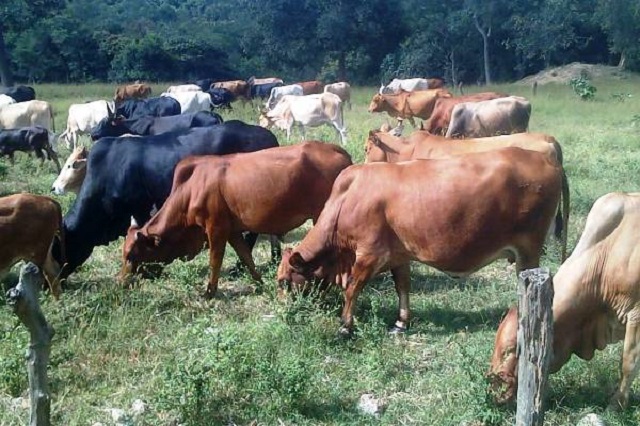
This means as farmers and the Government we need to seriously start thinking of ways of rehabilitating these rangelands that have become less productive over the years for one reason or another.
Active actions have to be taken on reclaiming and rehabilitating these rangelands so as to make them more productive and increase the carrying capacities. Deliberate rangelands rehabilitation measures such as revegetation and other approaches need to constitute part of our agricultural interventions and extension messaging. Rangeland scientists can guide the nation on what exactly needs to be done and how to do it so that we revitalise our rangelands.
Most rangelands are now typified by proliferation of unpalatable grasses and invaderspecies. Livestock farmers will describe to you different kinds of shrubs that they hardly have names for or have just coined a locally recognise name. In Ngwizu and Jimila areas of Tsholotsho District, their rangeland has been colonised by shrub/tree which they have called “umdoro”.
There are many other nameless shrubs in other districts which have colonised rangelands and some of these shrubs have been observed to have allelopathic effects which suppress undergrowth of grasses and even other hoody species.
It must be appreciated that while human population and settlement increases, the land remains inelastic hence the need to make every rangeland as productive as possible. This entails forward planning on the part of government through its relevant line ministries and agencies. An example will be the Government putting out a 10 year plan to reclaim and revegetated all the non productive and degraded rangelands.
Deliberate extension work is then instituted supported by the community through various development structures available. Such an action can definitely help to increase the productivity of rangelands and increase the carrying capacities of the grazing lands. The bottom line is that, deliberate action needs to be taken to revitalise most of the communal rangelands that have become severely degraded and unproductive over several years of nutrient mining and poor grazing land management practices.
A less productive and degraded area can be reclaimed and brought back to its usefulness but there are prescribed actions and steps that need to be followed and given the scale of the problem and the fact that we are talking about state land, it becomes imperative for the Government to take lead in the rehabilitation and reclamation interventions.
If no action is taken to reclaim communal lands that are being lost to degradation, the existence of livestock production industry is threatened. We will find livestock farmers being forced to do intensive and expensive production as opposed to the extensive production system that has been in use since time immemorial.
I hope this submission catches the attention of powers that be and appropriate action can be taken. Uyabonga umntaka MaKhumalo.
Mhlupheki Dube is a livestock specialist and farmer. He writes in his own capacity. Feedback [email protected]/ cell 0772851275



 Online Reporter