admin
admin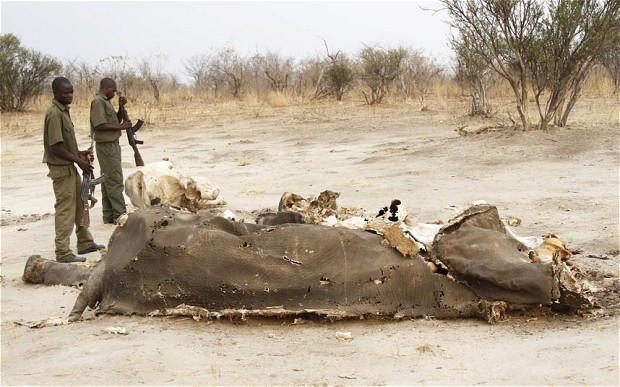
 Kennedy Mavhumashava
ONE morning in late August, Mr Ndaba Luphahla (46), a game scout at Lodzi Safari Camp in Tsholotsho led a team of four on a regular patrol in a zone on the southern part of Hwange National Park. Later that day he spotted a spoor. A veteran of 18 years, he immediately knew that the trail had not been left by animals, but people. They duly followed it down until they came close enough to count three men who were carrying a huge pile of luggage.
Camouflaged in the foliage and in the game scouts’ typical olive green fatigues, Mr Lupahla and his colleagues, Messers Iberman Moyo, Bestman Nyoni and Thabani Zondo sneaked within 15 metres of the unsuspecting trio. Because Mr Luphahla and company were unarmed, they agreed that confronting the men could be suicidal as they suspected that the intruders were armed. So they sent one of them back to camp for reinforcements. A few ZimParks and Campfire men came, with some weapons and the tricky pursuit gathered momentum, as they waited for the best time to pounce. It turned out to be a two-day, slow and silent chase that left Mr Luphahla and company thirsty and hungry but victorious.
In a forest where day-time temperatures can rise to 40 degrees Celsius, the scouts became so worn down that on the second day, they began looking around for baobab tree to bark and eat, while at the same time making sure they did not lose the men they were tracking.
“It was the longest and probably most dangerous task I have ever done in my 18 years in this job,” said Mr Luphahla.
“You can see the people you are chasing; you are unarmed, yet unaware whether they are armed themselves or not. You don’t know what to do but tiptoe in their wake. We went very close, about 15 metres but they did not see us because of the uniform. You can’t see me in the jungle in this outfit.”
They kept the hunt and on the second day they were getting too hungry and thirsty to continue as they had no food or water. The hunger and thirst, coupled with the heat in the area and the ruggedness of the terrain, were taking their toll.
Taunting his colleagues Mr Luphahla added: “It was only me who still had the energy. Moyo and his friends were already hunting for baobab trees to bark. They are weaklings.”
When they reached Liyasha, he said, they were hit by a strong smell of rotten meat.
“That is when everything fell into place,” he said.
“We saw an elephant carcass with no tusk and from the way the guys looked at it, it was clear they had something to do with the elephant’s death. That is when we went after them. They ran away but we managed to arrest Sipho (Mafu). Why I say this was a very dangerous operation is that we did not know that while we were tracking these men, one of us, Zondo was in fact a poacher himself. We questioned Sipho and everyone was surprised when he pointed at Zondo saying they poisoned the elephants together. To imagine that one of us was actually working with poachers was chilling. What if he had decided to also lace our food with cyanide at the camp?”
Mr Luphahla and his team were unaware that their heroic act would, a few days later, ignite an international story and arguably the most high-profile national response to poaching.
On 5 September news broke of the cyanide poisoning of 41 elephants in Hwange National Park, a 14 651 square kilometre wilderness which is the biggest animal sanctuary in Zimbabwe and the third largest in Africa. It is home to most African animal species including the prized Big Five — lion, elephant, buffalo, leopard and rhino. Zimbabwe’s biggest concentration of elephant, estimated at 40 000 is found there. In this jungle snakes grow so large that you sense their presence from a distance through the foul smell their immense bodies give off.
Up to 110 elephants have died of cyanide poisoning since Mr Luphahla and his colleagues’ heroics. Vultures and other animals on the food chain have died as well. It has become a global story that has touched the hearts of conservationists at home and abroad.
The Government’s response to the carnage has been significant. Police have arrested a number of poachers, those who bought the ivory from them and those who supplied the cyanide. The courts are handling the cases of some.
Zondo (24), Robert Maphosa (42) and Dedani Tshuma (25) were sentenced to 16 years in jail each for illegal possession of ivory and violating a section of the Environmental Management Act. Maphosa and Zondo were also ordered to pay $600 000 restitution to ZimParks by the end of this year while Tshuma was also ordered to pay $200 000.
Ministers including Cde Saviour Kasukuwere (Environment, Water and Climate), Engineer Walter Mzembi (Tourism and Hospitality Industry), Cde Kembo Mohadi (Home Affairs) and Professor Jonathan Moyo (Information, Media and Broadcasting Services) and Dr Sydney Sekeramayi (Defence) have visited the park several times to gain an appreciation of the extent of the situation. They have visited e salt pans at which Zondo and company put cyanide and held meetings with villagers and their local leadership urging them to desist from poaching or harbouring poachers.


 Online Reporter