Online Reporter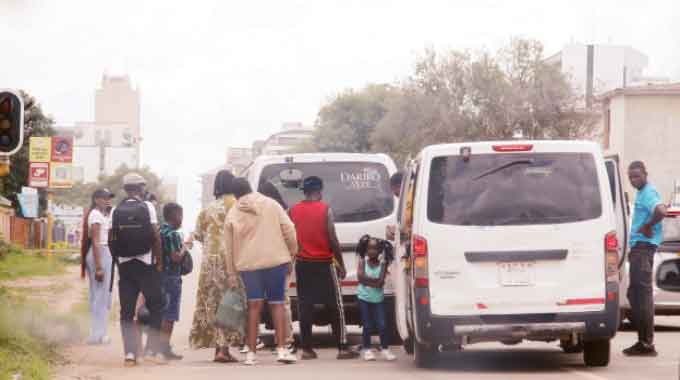
Trust Freddy-CheckPoint Desk
Residents of Harare and surrounding dormitory towns are crying foul over a sudden and “unjustified” hike in public transport fares from the standard US$1 to as much as US$2 for local routes.
The fare surge, which initially began as a temporary measure during recent heavy rains to compensate for traffic congestion, has seemingly become the new reality for the city’s workforce.
This comes amid revelations that kombi rank barons are collecting over US$300 000 per week from more than 3 000 registered transport operators at bus terminuses and ranks in Harare alone, enough to fund high quality terminuses and proper supervision, as touts continue to dominate services.
Commuters travelling to suburbs like Highfield, Budiriro and Glen Norah – routes that traditionally cost US$1 – are now being forced to fork out US$1,50 or US$2.
Those travelling to Chitungwiza, a trip usually priced at US$1,50 are now coughing up to US$2,50.
“It is heart-breaking,” said Mr Tanaka Sandi, a concerned commuter.
“They begged the President (Mnangagwa) to be allowed back on the roads, but now they are taking advantage of a lack of regulation. How can you charge US$1,50 to go to Highfield? That distance should cost 50 cents, yet we accepted US$1. Now they want more.”
While operators claim to be victims of “muscled touts” who control both legal and illegal ranks, investigations by the CheckPoint Desk suggest a more complex reality.
In council-run ranks, operators pay a US$2 daily fee to the local authority.
However, they are simultaneously extorted by touts who demand US$3 per trip when fares are at US$1.
When fares are hiked to US$1,50, these touts reportedly demand a “commission” of US$5 or US$6 per load.
“If we don’t comply, they forcefully close our doors and chase us out of the rank,” one driver lamented.
However, the “tout excuse” falls thin for many commuters.
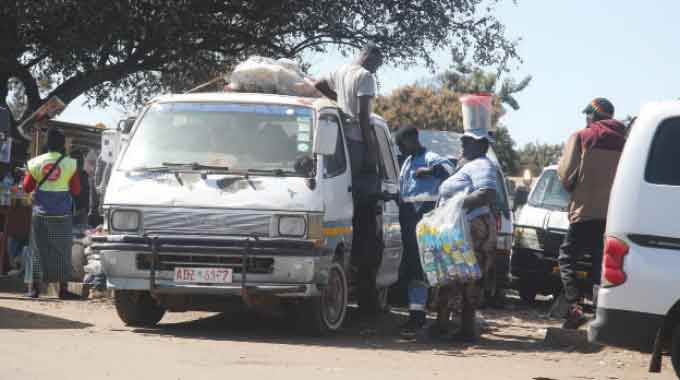
Most kombis in the capital have raised fares making it difficult for commuters.
It has emerged that even in the early morning hours and at suburban bus stops where touts are absent, operators continue to charge the inflated US$1,50 rate.
Beyond the rank fees, a deeper systemic issue has come to light: exorbitant daily targets set by vehicle owners.
A snap survey revealed that owners of newer kombis are demanding up to US$140 per day in returns.
Older vehicles carry targets of approximately US$110, while drivers argue that a sustainable target should range between US$50 and US$80.
“Because the target is US$140, we are forced to either hike fares or drive recklessly against traffic to make more trips,” a driver, speaking on condition of anonymity, revealed.
“We are often working until midnight just to break even.”
The CheckPoint Desk further observed that some “mushikashika” (illegal) operators actually possess the full legal documentation required to operate, but choose illegal pickup points to evade association rules or council oversight.
“If you visit the intersection of Robert Mugabe Road and Mbuya Nehanda Street near the Bata shop – where there is an illegal rank – you’ll find that nearly 90 percent of the kombis are fully compliant with their paperwork,” explained a driver who only identified himself as Tihwa.
“The minimum daily revenue target there is US$110, rising to US$140 for the newer models.”
Despite the presence of associations that are meant to ensure self-regulation, even registered kombis have joined the fray, charging premium rates during peak hours.
As the rainy season continues, commuters fear that the US$2 fare will become the standard, further stretching the pockets of a population already grappling with a high cost of living.
“They saw that people were desperate enough to pay during the rains, and they never looked back,” Mr Ruvimbo Gumbo from Glen View said.
The CheckPoint Desk also observed that long queues remain a common sight at various central business district pickup points throughout the evening.
Despite a high volume of available kombis, fares remain inflated, only returning to the standard US$1 rate after 8pm.
“I cannot afford the US$1,50 fare, so I choose to wait from 5pm until 8pm when the prices finally drop,” another commuter, Ms Claris Chikuse said.
“I have even had to stop breastfeeding my child because I can no longer afford to get home at a reasonable hour. These operators are being heartless.”
The secretary-general of the Greater Harare Association of Commuter Operators (GHACO), Mr Ngoni Katsvairo called for mandatory association membership for all kombis.
He warned that without association-led rank management, touts filled the vacuum, stripping operators of control and unfairly hiking fares for commuters.
“We fine our operators who hike fares, but the truth is we have no control over fares in ranks because touts are in charge of ranks yet we pay ranking fees to Council which is not in control of ranks,” he said.
“We have tried to enlist the assistance of authorities to no avail. Touts demand equivalent of two or three passengers’ fares plus some extras they call money for book, money for tea – this means they have more interest in increasing fares so that their loading fee is more also. For a US$1,50 fare they demand US$3 or more at each and every trip.”
Mr Frederick Maguramhinga, president of the Zimbabwe United Deregulated Commuter Operators (ZUDCO) also weighed in accusing rank barons of imposing fares.
“The primary challenge is the influence of rank barons. Unfortunately, when we seek assistance from the police, they often target our drivers and conductors for touting rather than pursuing the actual perpetrators. We have identified the touts responsible for illegally imposing fares and would welcome the opportunity to collaborate with law enforcement to bring them to justice.”
At these illicit ranks, the touts act as human hinges – holding doors wide as kombis idle, ready for a high-speed getaway.
The moment a suspected officer is sighted, the tout pulls the door tight, forcing passengers to scramble beneath his arm to get inside.
When the enforcement lorries roll in, the result is pure bedlam.
Drivers careen in every direction, mounting sidewalks and forcing pedestrians to dive for cover as the vehicles prioritise escape over public safety.
Police spokesperson, Commissioner Paul Nyathi warned all illegal kombi operators who mount pavements to flee from police, declaring that offenders will no longer be given the option to pay fines and will instead face immediate prosecution and jail time.
“We are witnessing a blatant disregard for human life where drivers choose to drive onto crowded pavements to avoid arrest,” he said.
“The era of paying a fine and returning to the road is over. This is a criminal offence that will now be resolved strictly by the courts.”
Comm Nyathi, however, urged associations to report any officers exhibiting favouritism to the national complaint desk, while simultaneously warning them against the employment of touts.
“We recognise that certain officers may fail to uphold their professional standards, and we invite the public to bring these instances to our attention,” Comm Nyathi stated.
“However, we are aware that some associations employ touts who masquerade in uniforms.
“Regardless of who they work for, touting is a crime, and we shall apply the law across the board without favouritism.”
Touts and rank barons are reportedly collecting up to US$300 000 per week from all kombis, across different associations and from the independents who do not belong to any association.
This is achieved by collecting between US$1 and US$3 from each kombi for a minimum of five daily trips, with the amount charged dependent on the time of day and the demand from passengers.
Some suburban rank touts have positions where passengers congregate and they grab ZiG20 if they load passengers.
Speaking to The CheckPoint, Harare City spokesperson Mr Stanley Gama denied the allegations, urging associations to make a formal report to the police and stop paying rank barons.
“We have asked associations to disown these people by not paying them money. If forced to pay they are supposed to report the cases to the police who are more than willing to react and arrest the culprits . . . no reports have been received by the police or by municipal police.”