admin
admin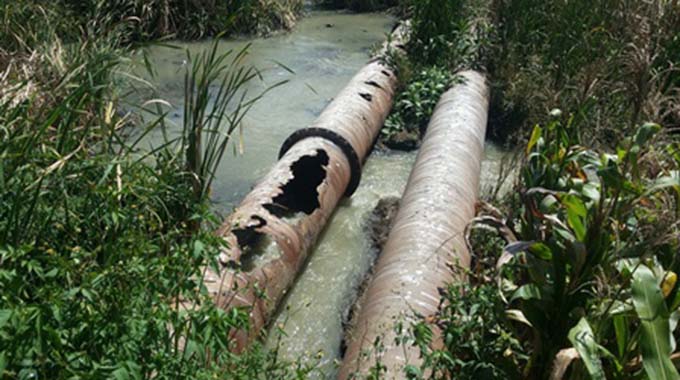
Herald reporters
The country’s 32 urban local authorities are discharging at least 366 million litres of raw effluent sewage daily into water bodies, the Environmental Management Agency has said.
EMA said Harare City Council’s main source of water, Lake Chivero, is set to be declared an ecological sensitive area as a way of trying to manage pollution in the water body.
High levels of pollution in water bodies has been costly to councils, including Harare which spends between US$2 million and US$3 million monthly to purchase essential water treatment chemicals.
Speaking during a tour of Marimba catchment area organised by Zimbabwe Union of Journalists, EMA and Harare City Council yesterday, EMA education and publicity manager Ms Amkela Sidanke said the country was ceased with a big problem of pollution.
“From the 32 urban councils we are having in the country, with about 72 treatment plants, they are discharging about 366 mega litres of affluent into the environment on a daily basis,” she said. “This came out in a survey EMA did using the source point form of discharge not knowing the non-point sources of discharge.
“As EMA, we have gone a step further to recommend for Lake Chivero to be declared an ecological sensitive area.”
Ms Sidanke said while they appreciated the sewer systems, they had become overwhelmed and old.
“They are now prone to bursts,” she said. “Some of them are overwhelmed due to rapid urbanisation, these systems were created for small populations, but our cities have grown in leaps and bounds.
“This means that the infrastructure that is there can no longer accommodate the amount of sewage that is being generated, but all the same what remains is that the environment is suffering because this is the discharge that is going straight into the environment, actually compromising the quality of water we have now.”
Ms Sidanke said all the pollution coming from urban centres was affecting downstream populations.
She urged local authorities to conform with section 95 of the EMA Act, which advocates for all urban councils to have the Local Environment Action Plan.
“With this system of doing things, this is a planning tool enabling councils to prevent some of these problems happening,” said Ms Sidanke. “The councils are able to put down measures to prevent sewer problems currently being faced.
“This becomes a statutory requirement for all local authorities to have environmental plans enabling them to come up with by laws that will stop all the activities that harm the environment, also giving them authority to whip everyone into line just through these by laws.”



 Online Reporter