


 Sundaymail Editor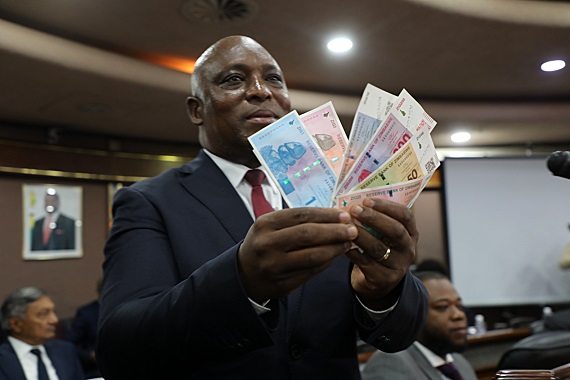
Sunday Mail Reporter
THE Zimbabwe Gold (ZiG) currency is expected to strengthen further starting next month, as its demand is projected to rise from businesses seeking to fulfil their quarterly corporate income tax obligations.
ZiG usage in the market remains steady at 30 percent of all transactions, with projections suggesting a gradual increase in use as the unit maintains stability.
The central bank is aiming for 100 percent adoption of ZiG by 2030.
Appearing on a special edition of ZTN’s “Beyond the Dollar” podcast on Friday, Reserve Bank of Zimbabwe (RBZ) Governor Dr John Mushayavanhu said demand for ZiG will surge this month as businesses prepare for quarterly payment dates (QPDs), further strengthening the currency.
He said a similar trend was observed in December when banks were scrambling to secure ZiG balances to facilitate tax payments for clients holding foreign currency.
Zimbabwean law mandates companies to pay taxes every quarter, with the deadlines, known as QPDs, falling on March 25, June 25, September 25 and December 20 of each year.
According to the RBZ, the Zimbabwe Revenue Authority typically collects approximately US$300 million worth of corporate income tax each quarter.
“We were hearing of rates of about US$1:ZiG35, but now we are hearing rates of about US$1:ZiG30; but you are going to be hearing of even lower rates,” said Dr Mushayavanhu.
“Why? As we go into March, which is QPD, the demand for ZiG is going to be increasing. We saw it in December; people holding ZiG were being called by their banks to say can we buy your ZiG because there are people holding foreign currency, but when it comes to paying tax, they are supposed to be paying that tax in ZiG, but they don’t have the ZiG.
“So, the time has now come for the holder of a ZiG balance in a bank to dictate the price, as opposed to what was happening in the past.”
Dispelling claims that ZiG has not been widely embraced, Dr Mushayavanhu said the local currency’s usage had risen from 20 percent to 30 percent of total transactions since he assumed office.
He said while Zimbabwe remained in a multi-currency system, the long-term goal was to phase out foreign currency transactions and transition to 100 percent ZiG usage by 2030.
“It is not true that the ZiG has not been widely embraced,” he said.
“Remember, we are in a multi-currency regime, which means you can use US dollars or any other currency or the local currency — ZiG.
“What we have seen is that currently, 30 percent of the transactions that are being done in this country are being done in ZiG and 70 percent are being done in US dollars.
“When I came in, the ratio was 80:20 — 20 percent of the transactions were in local currency and 80 percent of the transactions were in foreign currency.”
He said this reflects the monetary authorities’ goal of gradually increasing the usage of ZiG in the market.
“By 2030, we want the ratio to be 100 percent ZiG and zero percent foreign currency,” he said. “So, as far as adoption of ZiG is concerned, I can tell you that the figures are showing that it’s increasing.”
Responding to concerns about the lack of ZiG circulation in some areas, particularly rural regions, Dr Mushayavanhu attributed the issue to low economic activity caused by the recent drought.
He said individuals in rural areas typically acquire ZiG through selling produce or receiving payments from State-run schemes, such as grain deliveries to the Grain Marketing Board (GMB).
“So, why is there no ZiG in Checheche and why is there no ZiG in the rural areas? First of all, remember that we are coming out of a drought year,” he said.
“For someone in the rural areas to get ZiG, they have to be involved in an economic activity that involves them selling something in exchange for ZiG.
“Now, if they did not produce enough maize, then it means that they are not expecting anything from the GMB, so they will not get ZiG.”
In cotton-producing areas, said Dr Mushayavanhu, ZiG was circulating because cotton companies approached the central bank requesting ZiG to pay farmers for their deliveries.



 Online Reporter