Rutendo Nyeve [email protected]
THE Reserve Bank of Zimbabwe (RBZ) will maintain a cautious monetary policy stance in 2027, keeping interest rates well above inflation to preserve room to respond to potential economic shocks, including an El Niño-induced drought and instability in the Middle East.
Reserve Bank of Zimbabwe Monetary Policy Committee member Dr Persistence Gwanyanya said the central bank would avoid both aggressive monetary easing and excessive tightening, opting instead for a measured approach to protect currency and price stability.
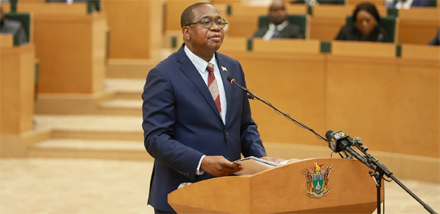
Responding to questions from Zimpapers following Finance Minister Professor Mthuli Ncube’s 2027 National Budget Statement last week, Dr Gwanyanya, an economist and chartered banker, said the policy direction was intended to preserve flexibility in an uncertain economic environment.
“The outlook for 2027 is not about opening the taps or slamming them shut. It is about calibrated caution. We are deliberately carrying policy headroom,” he said.
“Keeping the policy rate significantly above ZiG inflation gives us room to move if the external environment turns against us, and that is a strategic strength, not timidity.”
The policy rate currently stands at 27,5 percent, against ZiG inflation which averaged about four percent in the first 10 months of 2026.
Dr Gwanyanya described the difference between the policy rate and inflation as a buffer in a multi-currency economy, where monetary authorities must manage domestic credit conditions while safeguarding the external value of the local currency.
He said the outlook was exposed to two major external risks: drought and instability in the Middle East.
“The El Niño-induced drought is a direct risk to agricultural output. It can widen the maize deficit and push food prices up,” said Dr Gwanyanya.
“At the same time, the conflict in the Middle East threatens supply chains and keeps energy prices elevated, which feeds straight into our fuel import bill. We cannot afford to exhaust our tools before those shocks land.”
On efforts to strengthen the ZiG, Dr Gwanyanya welcomed Treasury’s decision to require that 50 percent of corporate taxes be paid in local currency, but said demand for the currency needed to expand through broader economic use.
“Mandating 50 percent of corporate taxes in ZiG is commendable, but there is scope to calibrate this demand further,” he said.
“Expanding the tax obligations payable in ZiG and increasing public sector payments in local currency will anchor the currency’s velocity and utility. That is how you build genuine confidence, not by decree, but by use.”
Dr Gwanyanya also welcomed amendments to the Reserve Bank Act which reduce the statutory limit on Government borrowing from the central bank from 20 percent to five percent of the previous year’s revenue.
He said the Government had not borrowed from the central bank under the current limit, describing the restraint as an important signal of fiscal discipline.
“The Government has not borrowed a single cent from the central bank under the current limit. That is strict fiscal discipline, and it is the strongest signal we can send to the market,” he said.
Turning to the real economy, Dr Gwanyanya said manufacturing’s 17 percent contribution to gross domestic product remained below the National Development Strategy target of 25 percent.
He said deeper industrialisation was critical to reducing informality, which stands at 76,1 percent, and addressing persistent balance of payments pressures.
Dr Gwanyanya welcomed measures in the 2027 National Budget, including the reduction of the Intermediated Money Transfer Tax, the suspension of duties on semi-knocked-down kits and a duty rebate on raw materials and capital equipment in the fertiliser value chain, effective November 1.
He also pointed to the debt clearance process as a potential avenue for Zimbabwe to regain access to international financing.
Zimbabwe has about US$3 billion in arrears to international financial institutions, including US$1,7 billion to the World Bank, US$835 million to the African Development Bank and US$433 million to the European Investment Bank.
Dr Gwanyanya said successful implementation of the International Monetary Fund Staff-Monitored Programme, alongside the United Kingdom and France co-chairing the Debt Consultative Group, could improve prospects of securing bridging finance in 2027 to clear arrears and restore the country’s borrowing status.
“The successful implementation of the IMF Staff-Monitored Programme, with the United Kingdom and France co-chairing the Debt Consultative Group, significantly improves our prospects of securing bridging finance in 2027 to clear these arrears and restore our borrowing status,” he said.
He said gross reserves had risen to approximately US$2 billion, providing a stronger foundation for currency stability and lower inflation in 2027.
Dr Gwanyanya said the 2027 National Budget provided a framework for navigating external shocks, but maintaining monetary discipline and strengthening the productive sector would be critical to sustaining economic stability.