Chronicle Editor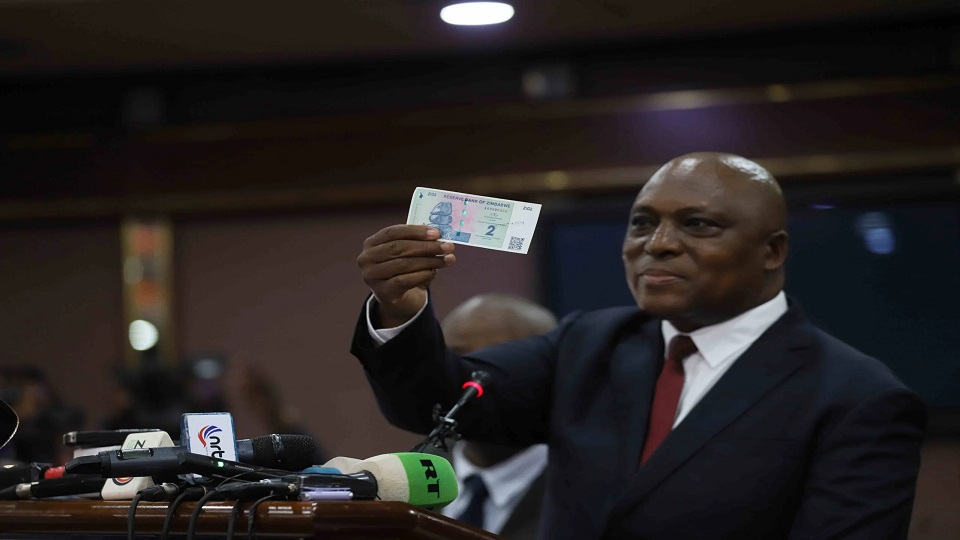
Prosper Ndlovu, [email protected]
THE Reserve Bank of Zimbabwe (RBZ) has liberalised the exchange rate, effectively devaluing the local currency for the first time since its adoption in April, while tightening the screws on loans by raising the bank lending rate from 20 percent to 35 percent with immediate effect.
Earlier reports yesterday suggested the Central Bank had devalued the official Zimbabwe Gold (ZWG) rate by about 42.5 percent to settle at ZWG24.39 to the greenback, following weeks of rising black market rates, according to correspondence issued to banks and bureau de change outlets on Friday. The RBZ has also reduced the amount of foreign currency an individual can carry outside the country from US$10 000 to US$2 000.
Economic experts have welcomed the interventions, which are part of comprehensive measures aimed at tackling the resurgent exchange rate volatility, easing inflationary pressures to protect consumers, and consolidating macroeconomic stability.
RBZ Governor, Dr John Mushayavanhu, announced the measures on Friday, following the resolutions made by the Monetary Policy Committee (MPC), which analysts say were long overdue.
He said the committee sat to deliberate on the recent macro-economic and financial developments amid concerns over the depreciation of the local currency against the United States dollar.

While the economy had experienced relative stability since the adoption of the ZWG in April up to mid-August 2024, the past few weeks had witnessed a rapid loss of value for the local unit, sparking consumer outcry over the loss of purchasing power and erosion of savings by businesses.
President Mnangagwa this week denounced the speculative market behaviour by some market players and criticised those involved for sabotaging the economic transformation achieved so far under the Second Republic. Whereas the official exchange rate had remained below US$1:ZWG14, black market rates had breached US$1:ZWG25, in some instances extending above US$1:ZWG30, resulting in businesses increasing prices beyond the reach of many, as others refused ZWG transactions in favour of forex.
This prompted the RBZ to take action to ensure inflation expectations remain well anchored and to dissipate the latest inflationary pressures. In a statement, Dr Mushayavanhu said the corrective measures include increasing the Bank Policy rate from 20 percent to 35 percent with immediate effect, which should help curb money supply through loans, as well as reducing the amount of foreign exchange an individual can take out of the country from US$10 000 to US$2 000.
The Central Bank has also resolved to increase and standardise the statutory reserve requirements for demand and call deposits for both local and foreign currency from 15 percent and 20 percent to 30 percent. Similarly, the statutory reserve requirements for savings and time deposits for both local and foreign currency have been increased from five percent to 15 percent, with immediate effect, said Dr Mushayavanhu.
Going forward, the Apex Bank has said it will “allow greater exchange rate flexibility”, in line with the increased demand for foreign currency in the economy.
“The MPC is convinced that the above measures will go a long way in addressing the emerging exchange rate risks, anchoring inflation expectations, and stabilising prices in the near to short term,” said the Governor.
“Going forward, the MPC will remain vigilant to any emerging risks to ensure continued macroeconomic stability.”

Commenting, Bulawayo businessman and former banker, Mr Morris Mpala, said the latest interventions will cool down volatility and stabilise the exchange rate for now, as he warned the RBZ and Treasury against increasing money supply through printing or payments to contractors.
“The liberalised exchange rate could be what the doctor ordered as long as it will be allowed to float and allow people to access forex from banks and other agencies. Everyone has to price in ZWG and get forex from banks,” said Mr Mpala.
He, however, said the stance on increasing the cost of loans was rather an “overreaction”, as this could potentially slow down production since businesses usually borrow to finance growth and critical operations.
Mr Mpala said psychologically, the increased costs of goods and services have essentially shut out those earning ZWG income as the exchange rate movement had widened.
The monetary policy gains since the adoption of the ZWG had seen month-on-month inflation averaging as low as 0.82 percent for the three months from May to July 2024. However, from the second half of August 2024, resurgent exchange volatility ensued as reflected by the widening parallel market exchange rate premium and the increase in inflationary pressures, said Dr Mushayavanhu.
Consequently, this has pushed monthly inflation up to 1.4 percent in August 2024, and it is likely to be higher for September 2024, he added.
The increase in parallel market exchange rate volatility is despite the increase in foreign currency inflows for the first eight months to August 2024 of US$8.465 million, reflecting an increase of 13.4 percent compared to US$7.468 million in 2023.



 Online Reporter