Vusumuzi Dube
Business Reporter
ZIMBABWE’s foreign currency reserves have continued their strong performance, with the Reserve Bank of Zimbabwe (RBZ) reporting that as at the end of June 2025, the holdings significantly exceeded the stock of the ZiG reserve money by more than three times.
The strong backing, composed primarily of gold, foreign currency cash holdings, and Nostro bank balances, is a cornerstone to ensure the stability of the ZiG.
Zimbabwe’s foreign currency reserves climbed to US$731 million from US$639 million in May and US$276 million in April last year, when the nation introduced the Zimbabwe Gold currency.
“Growth in the local currency component of reserve money, which the Reserve Bank targets for monetary policy purposes, continues to be under check,” said the RBZ in a monetary policy snapshot for the second quarter of 2025.
“The Reserve Bank continues to ensure growth in reserve money is consistent with the policy objective of containing annual inflation to below 30 percent by December 2025.”
Launched in April 2024, the ZiG replaced the Zimbabwe dollar, which had experienced extreme depreciation. The RBZ introduced the ZiG to bring predictability by linking it to tangible assets like gold and foreign reserves.
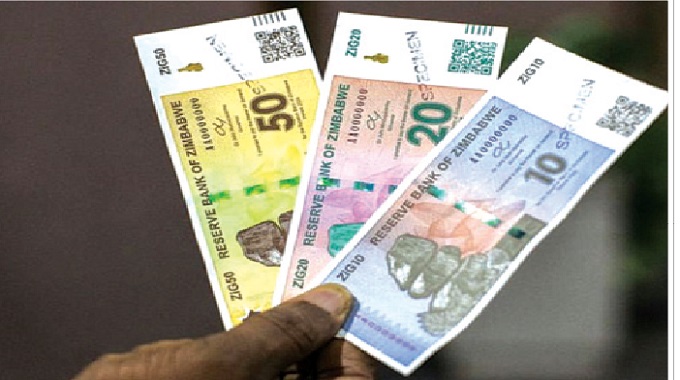
At its inception, the ZiG was backed by US$100 million in cash and 2 522 kilogrammes of gold (worth US$185 million). The strong foreign reserve cover provides a vital anchor for the stability of the ZiG and underscores the central bank’s commitment to maintaining a stable currency.
The central bank noted efforts to boost the use of the local currency were encouraging, with its sustained demand seen as crucial for its wider adoption.
Data from the National Payments System indicates an upward trend in ZiG transactions, which peaked at 43 percent in May 2025, up from 32 percent in April. While there was a slight dip to 35 percent in June, the overall trajectory suggests a growing acceptance of the domestic currency.
The increased proportion of ZiG transactions in domestic transactions is a key indicator of public confidence.
“Government and RBZ are putting initiatives to increase the use of the local currency,” said the RBZ. “RBZ initiatives, including increased notes and coins in circulation and rolling out of Point-of-Sale Machine (POS), continue to bear fruit.”
The central bank said it is maintaining a vigilant watch over the growth of the ZiG component of broad money supply, with provisional figures for June 2025 showing a moderated month-on-month growth of 7,4 percent, down from 16 percent in May 2024.
According to the central bank, the controlled expansion is deemed consistent with the country’s economic growth projections and efforts to maintain exchange rate stability.
The RBZ has reiterated its commitment to keep money supply growth in check, viewing it as essential for sustained economic stability.
The central bank’s tight monetary policy stance has supported the stability of both ZiG and US dollar-denominated loans.
From January to June 2025, weekly average ZiG loan growth stood at 0,7 percent, while US dollar loans saw a 0,56 percent increase.
Furthermore, there has been a steady increase in the share of ZiG loans to total loans, as evidenced by the rise in the ZiG loan-to-deposit ratio.
This ratio climbed from below 30 percent in April 2024 to 45 percent in May 2025, indicating growing confidence and increased utilisation of the local currency in lending activities within the economy.
The growth of the local currency component of reserve money remains tightly managed, aligning with the central bank’s monetary policy objectives.
The stringent control was critical in supporting the RBZ’s target of bringing annual inflation down to below 30 percent by December 2025.
The central bank further noted strengthening of the economy, with the country consistently receiving sufficient foreign currency to cover its external payment obligations and building a substantial surplus.
The surge in foreign currency receipts has been primarily driven by improved mineral prices, particularly gold and growth in diaspora remittances.
From January to May 2025, Zimbabwe recorded average monthly foreign currency receipts of US$1,2 billion, significantly outpacing external payments of approximately US$821 million per month, the central bank said.
This has resulted in a healthy monthly surplus averaging US$378 million, which has been instrumental in facilitating domestic transactions and bolstering the country’s foreign currency reserves.
The stability of the local currency, the ZiG, against the US dollar has been a key outcome of these developments.
The willing buyer-willing seller interbank exchange rate closed June at ZiG26,95 per US$1, reflecting a largely stable trend.
The stability is partly linked to the increased availability of foreign currency in the economy, which has also helped to contain the parallel market premiums.
“The build-up of foreign currency reserves is critical for the lasting stability of the ZiG,” the RBZ noted.
Overall foreign currency receipts for the first five months of 2025 reached US$6 billion, a notable increase compared to US$4,9 billion during the same period in 2024, the Reserve Bank said.
Export earnings dominated the foreign currency inflows, accounting for about 55,9 percent by May 2025, followed by loan proceeds at 18,4 percent and diaspora remittances at 15,4 percent.



 Online Reporter