Chronicle Editor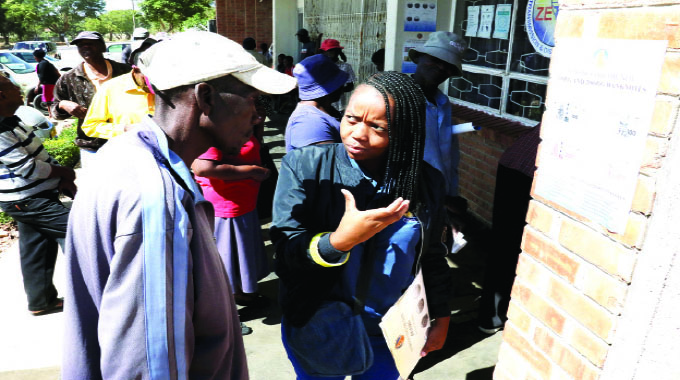
Nqobile Tshili, [email protected]
MEMBERS of the public have appealed to the Reserve Bank of Zimbabwe (RBZ) to come up with measures that enforce the use of the new Zimbabwe Gold (ZiG) currency in all transactions across the country to achieve its wider adoption.
Speaking during the ongoing RBZ nationwide sensitization programme on the new currency, consumers said the situation in which some traders and service providers reject the ZiG and prefer forex only, was not helpful as it creates social inequalities, distorts the economy and promotes arbitrage that fuels illicit currency dealings.
The Apex Bank has partnered with the Ministry of Information, Publicity and Broadcasting Services among other arms of Government to educate the public on the new currency.
The exercise will run for two weeks in all the 10 provinces to ensure no one and no place is left behind.
The RBZ launched the new structured currency early last month and depositors started withdrawing banknotes and coins from their accounts on Tuesday this week, cementing the successful launch and overwhelming endorsement of the new money by market players.
Backed by gold and other precious minerals as well as forex reserves, the ZiG is a successor to the Zimbabwe dollar, which had suffered from volatility challenges, and the ZiG success is expected to anchor the de-dollarisation roadmap.
A Chronicle news crew yesterday covered the RBZ teams that were conducting awareness campaigns on the new currency in Luveve suburb in Bulawayo during which the team members responded to questions from the public.
One of the residents, Ms Monica Khumalo, said they welcomed the new currency but demanded that it should buy all goods and services.
“I have not seen the new currency but for it to be fully embraced, it should buy all products and not selected goods.
“It should be able to buy fuel and pay for other services where providers have been demanding US dollar only,” said Ms Khumalo.
Another resident Mr Mandla Sithole said the awareness campaign gave residents an opportunity to engage RBZ officials as well as understand the features of the new currency.
“It’s important for us to know the features of the new currency for security reasons and we want to commend the RBZ officials for coming on the ground to explain to us how the currency operates and its features,” he said.
Mr Sithole said although he was yet to come across the ZiG notes and coins, he was ready to transact using the new currency.
RBZ principal economist, Dr Stephen Moyo who is part of the awareness teams, expressed satisfaction with the way residents were warming up to the new currency.
“What we are seeing is that the public are embracing the currency and members of the public are keen to use it.
“They are actually asking if they can buy with the currency and I personally have bought with the currency.
“This is what we want to see, people should enjoy using their currency,” said Dr Moyo.
He said what the people want is to be able to use the new currency to buy all products as well as pay for services
Dr Moyo said the RBZ and Treasury were working on measures that will make the local currency more acceptable as a medium of exchange across the economic sectors.
“The measures we are working on will encourage businesses and individuals to accept the local currency. The local currency is the way to go and it is our hope that eventually everyone will prefer the local currency for local transactions,” said Dr Moyo.
He said while the introduction of ZiG has brought stability of the exchange rate, they have seen cases where some shops were pegging their prices using black market rates.
Dr Moyo said through the Financial Intelligence Unit, RBZ will be descending on individuals and institutions that are flouting the exchange rate.
“There are some cases that we have heard, as you are saying, that people are coming up with outrageous exchange rates. These unscrupulous people should be reported to the Financial Intelligence Unit (FIU),” said Dr Moyo.
Speaking during a Zimpapers’ Star FM radio programme yesterday morning, RBZ Governor, Dr John Mushayavanhu, said the apex bank will freeze accounts and heavily penalise organisations flouting the exchange rate, describing the ZiG as a stable currency, which should not be subjected to currency volatility.
He was responding to queries on how RBZ will deal with incidents where companies and individuals dump local currency in the black market contributing to a spike of the exchange rate.
“There are various measures that will be taken by FIU, one of which would be to freeze the bank account of those offending institutions, they will not be able to transact. Secondly, they will be heavily penalised in the form of fines,” said Dr Mushayavanhu.
He said RBZ will continue to drip feed the market with the bank notes as it started with smaller denominations and will later move to bigger ones.
“Why did we introduce the smaller notes first? We are drip-feeding the market as the currency is being received while at the same time conducting awareness campaigns to educate members of the public. The bigger notes are going to be introduced next week,” said the RBZ chief. You are going to see ZiG20 in the market and so on until we get to the biggest denomination, which is the ZiG200,” said the RBZ Governor.
Dr Mushayavanhu said the public should also guard against being shortchanged by individuals or businesses using the black market rates as the ZiG is infact gaining value.
Responding to callers who said money changers were not the real culprits influencing the black market, Dr Mushayavanhu said there is no room for illegal money changing under his watch.
“The caller is saying the money changers are not the real culprits and as far as we are concerned, the person who is caught exchanging money using the parallel market rate is the culprit and if there somebody behind they should let us know so that we look for that person and arrest him or her,” he said.
Dr Mushayavanhu said the RBZ wants to the issue of parallel market rates nipped in the bud hence police were on the ground arresting the culprits.
“If these culprits are sent by their bosses they should tell the police who their bosses are so that they are also arrested,” said Dr Mushayavanhu. — @nqotshili



 Online Reporter