daniel chigunwe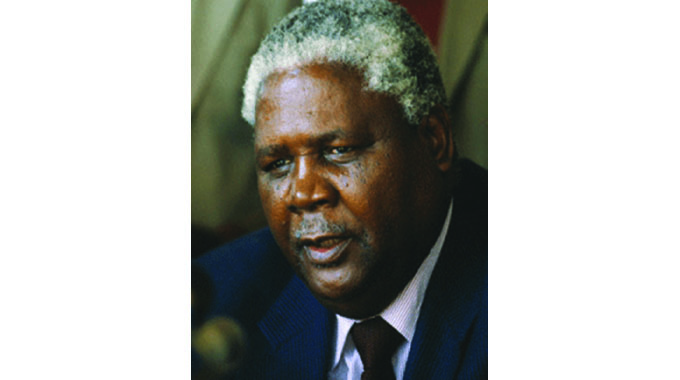
Elliot Ziwira
Senior Writer
SPEAKING to an estimated 5 000 people at Mandava Stadium in Zvishavane on February 16, 1980 on a campaign trail, the late Father Zimbabwe, Dr Joshua Mqabuko Nkomo, emphasised that it was within the masses’ power to choose leaders they believed would represent their aspirations, since the war was a collective effort, and not fought by people with guns alone.
Underscored the late revolutionary icon and Vice President of Zimbabwe: “This country wasn’t freed just by men with guns, as some will tell you.
“It was a combination of all of you. You must now combine to give a reasonable Government that will see to it that this country is peaceful.”
True to that, Zimbabweans have been enjoying the right to vote representatives they believe are capable of delivering on their shared dreams for 44 years now. It is a constitutional right culminating from a protracted struggle combining the efforts of guerrillas (the fish), and the masses, who were the water of the struggle.
Cognisant of the masses-guerrilla relationship, on October 29, 2022, President Mnangagwa implored delegates to the 7th Zanu PF National People’s Congress in Harare to remain “immersed in the people”.
He emphasised that as a revolutionary party, Zanu PF, the fish; should remain absorbed in the people, who have always been the life-supporting water over the years.
As enshrined in the ethos that shaped the struggle, without which the country’s independence would not have been possible, the masses should be the beneficiaries of the party’s ideas, the President pointed out.
Collective memory recalls that incorporation of the people into the war effort was key in determining the direction of the struggle. Politicisation of the masses, therefore, made it possible for the war against colonialism to be won.
Winning the minds and hearts of the people, and awakening them to the reality of their land through ideological grounding was crucial in heightening the demise of colonial regimes and all they stood for.
Hence, as Independence Day approaches, the need arises to remain mindful of those who put their eyes and ears on the block for freedom—the mujibhas and chimbwidos—war collaborators—the people, without whom the liberation struggle would have taken another twist.
They did not have guns, but they knew the price to pay to silence the villainous apparatus put in place to subjugate them.
In her memoirs, “Re-Living the Second Chimurenga: Memories from Zimbabwe’s Liberation Struggle”, published in 2006, Fay Chung, makes the observation that the sad realities of the 1960s when the liberation struggle was relatively unsuccessful made the Zimbabwe African National Liberation Army (ZANLA) to change tact to gain the people’s support.
She notes that around this time when the “local people would betray the guerrillas to colonial authorities, ZANLA began to build up a cadre of political commissars whose weapons were not the arms of war but concepts, values, and ideology”.
As such, political commissars in both ZANLA, which was ZANU’s military wing, and ZIPRA (ZAPU’s military wing) began enlightening the people and winning over their hearts.
Thus, paving the way for fruitful encounters against Ian Smith’s soldiers.
Ideologically situating the masses’ aspirations within the struggle made it easier for them to support the guerrillas in their own unarmed way.
Like water, they gave life to the fish that sought their support, thus, giving impetus to collective struggle.
The carefully set up intelligence network encompassed boys as young as six or seven, schoolboys, young men, young women, and elderly people. In other words, it involved just about everybody who would have passed the security vetting by the freedom fighters.
This made it difficult for Ian Smith’s Intelligence Corps to burst the network.
It dawned on them that the battle had been lost on their part when little boys would play innocent to boot, despite knowing all the details involving guerrilla warfare.
They knew what makabichi (meat from beasts slaughtered in the mapurazi) were, and where they were ‘grown’.
They were aware of all the movements of the guerrillas (vanamukoma), whom they considered their friends, and their Chimurenga names. They also knew the movements of enemy soldiers.
When people struggle together, as owners of the struggle that shapes and informs their dreams, no enemy weaponry, no matter how sophisticated, can ever ride roughshod in their midst.
The researcher Julie Frederikse captures how the guerrillas’ intelligence network gave Smith’s security forces nightmarish experiences in the book “None But Ourselves: Masses vs media in the making of Zimbabwe (1990).
Chuck Hanson, an American and Vietnam War veteran in the Rhodesian army, admitted in an interview that the freedom fighters’ intelligence network was top-drawer.
On how he would rate it, he said: “Excellent. The best. Even better than Vietnam. They lived with the people; they were the people. That is the ultimate factor in a war like this, having the indigenous population with you.”
He added, “They kept the gooks informed, with local, tactical, hard combat intelligence, not all the highfalutin stuff we put out—the sitreps we relayed, and all that.
That is not intelligence, though we had plenty of that. They had the picaninny who’d run and tell them, ‘The soldiers are coming’” (Frederikse, 1990).
Another Rhodie, Dave Brooks, who was in the Rhodesia Special Air Services said: “The other side had the most infallible intelligence system in the world.
“It was because of the nhingi (mujibha), as you say in Shona—It’s the guy who just sits around all day and does nothing. No one would question him. . . It’s a difficult system to beat.”
Rhodesian Intelligence Corps’ Bob North concurred that, indeed, breaking up a united people was no mean stuff. He revealed that even though they had their own people planted in the villages to sell out on the struggle, they could not burst the guerrillas’ effective intelligence system.
“They would monitor our bases and you could guarantee after a couple of days of us taking in witnesses we’d be stomped—hit, a base attack—because their knowledge was so good.
“Those mujibhas would give the terrs logistics, troop movements, troop strengths, and that was one of their strengths, and that was one of their greatest attributes as far as intelligence was concerned.
“And I will tell you something—it wasn’t just the young boys who were involved. They had a lot of women working with them” (Ibid).
The Rhodesian Intelligence Corps operative recounted how women were used to ferry weapons of war. They would conceal them in their dresses, feigning pregnancy.
Since their intelligence system involved a whole people, united through shared meanings, collective struggle and toil, it was difficult for Rhodesian soldiers, notwithstanding their superior weapons and oppressive machinery, to defeat the guerrillas.
The messages would be carried through different beats of the drum, an important communicative tool during the war, as warning of impending danger, or through interaction with the freedom fighters at their bases, either during the day or at night vigils—pungwes.
Besides providing the much-needed intelligence about the enemy’s movements and strength, risking their own lives, for they were unarmed, the people provided more than eyes and ears to the struggle. They provided food and shelter as well. They cooked for their sons and daughters at the front, and in the rear. They carried heavy burdens on their shoulders and heads.
Some had their homesteads razed to the ground, their livestock killed, and lost all about everything, for supporting their children whom the enemy derogatorily called magandanga (terrorists) or gooks.
Since the spirit of oneness helped us triumph over colonialism, therefore, we should remain united, and spare a thought for those of us, who put their lives on the block as the eyes and ears of the struggle; the cooks, and couriers.
And, indeed, all our people who made it possible for freedom to be a reality by keeping the fire of struggle on, in their vulnerable way, as guns blazed on either side of their terrains.
As we take to the podium—twirling to the African tune, imbibing from the African calabash, and enthusing in the heartbeat of the Motherland’s dream for the 44th time this April, we should remember that our freedom from the clutches of imperialism was not offered on a silver platter.
It was neither a matter of keyboard mastery, nor a result of keyboard heroism — all for ephemeral likes. There are sons and daughters of an impoverished peasantry who sacrificed limbs, eyes, ears and mental well-being for this beauty of a country formerly known as Southern Rhodesia.
This is why President Mnangagwa’s closing remarks at the 7th Zanu PF National People’s Congress in Harare on October 29, 2022, are as crucial as they are philosophically-steeped in the principles of struggle.
“It is the people who are galvanised, moved and organised by our ideas towards transforming, modernising, industrialising and growing our economy. As it was during the liberation struggle, we remain like fish and the people our water.
“Therefore, let us continue to be immersed among the people,” the President said.
President Mnangagwa’s words are echoed by General Secretary Xi Jinping—also the President of the People’s Republic of China, who underscored the essence of the people in struggle in his report to the 20th National Congress of the Communist Party of China (CPC) on October 16, 2022.
“This country is its people; the people are the country,” General Secretary Xi affirmed, adding, “As the Communist Party of China has led the people in fighting to establish and develop the People’s Republic, it has really been fighting for their support. Bringing benefit to the people is the fundamental principle of governance.”
He highlighted that the CPC, which, with 96 million members, is the largest Marxist governing party in the world, should forefront the people in all its endeavours to remain in their favour.
Such wise counsel from two servant leaders from two great nations, makes of the phenomenal role that the people play in a democracy; a democracy informed by the realities of struggle.



 Online Reporter