

 admin
admin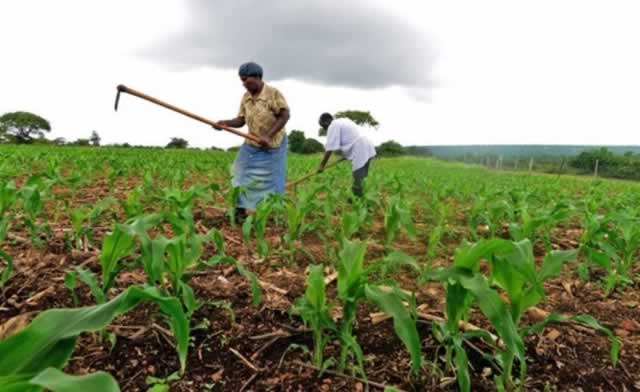
Obert Chifamba
Agri-Insight
THE heavens may have opened up recently and allowed lavish volumes of rains to drench the earth, breathing fresh life into all forms of vegetation — crops included — and triggered an avalanche of expectations for a bumper harvest among all stakeholders in the agricultural industry.
And true to the rains’ magic, crops that had been showing signs of moisture stress immediately got revitalised and began to exude a lively greenery that had not been seen for a long time.
In other instances, the rains ended up off-setting heavy leaching that saw crops turning yellow and farmers with the capacity doing split application of fertilisers to salvage yields.
Those farmers that could not raise the cash to purchase more top dressing fertilisers watched in agony as their crops either died of water-logging or lack of nutrients while the fortunate had their crops maturing even under those difficult but unavoidable circumstances.
Now that the rains have receded, most farmers are starting to realise that they could have done better and even scored higher than what they are anticipating if they had listened to the extension officers’ gospel on ways of minimising climate change effects on crops.
There were lessons for farmers from all categories — large-scale, small-scale, communal and even urban.
The famous adage reminding people not to put all their eggs in one basket easily comes to the fore, especially for those that either had all their crops in the same age bracket or had one type of crop.
One of the lessons that came with the recent rains is that farmers need to stagger their planting dates so that if one age group is hit by a disaster, another may be fortunate enough to survive and throw the farmer a lifeline.
It is clear that growing different crops at different times help spread risk and sets the farmer on course to take a less battering from natural disasters than those that do not care to listen to the advice by extension officers to always try and spread risk.
The other observation I made was that crops that were planted early were not seriously affected by the recent persistent rains, as most of them are past that stage where they still need vast quantities of rains.
It is actually one lesson that farmers should pick from the recent rainy weather that left a mixed bag of results on crops.
They need to have one batch or two of early planted crops even if they may wait for meaningful rains to come.
I was in Mhangura, Mashonaland West and Mazowe in Mashonaland Central during the weekend and what I saw in the fields was both pleasing and disappointing.
I realised that more than 80 percent of crops was either almost mature or matured while some were not so fortunate and were beginning to wilt under the current dry spell.
I also noticed that some farmers are not heeding calls to adopt farming methods that help conserve moisture because barely two weeks after the heavy rains stopped, their crops are already showing signs of moisture stress, which may mean that the soil compacted upon drying.
If the soil on which the maize was planted had received organic manure during preparations to plant crops, surely the way it traps moisture would have changed for the better.
In general, organic matter helps improve the soil crumb structure, which is critical in the manner that soil is capable of holding moisture in the aftermath of rains.
I also noticed that maize produced under the Pfumvudza/Intwasa concept is faring better than that produced using conventional land preparation methods and is even greener and healthier looking compared to that produced using traditional soil preparation methods.
This simply demonstrates the need for farmers to adjust in line with climate change mitigation methods.
A farmer I talked to in Mhangura said she was not affected wholesomely by the current dry spell as she planted her crops at different times and was expecting very good harvests.
It is time farmers realise that they do not lose anything by adjusting their ways of doing business and do away with that stubborn attitude of watching a stone that is about to strike them without ducking.
The story is the same in Mazowe and Concession where maize is taking the battering differently depending on how and when it was planted. On the beautiful side, the heavy rains also left a healthy moisture legacy that has managed to keep crops going as moisture trapped in the soil has always been rising by capillary action during the night allowing crops to start the day looking lively and only wilt during the course of the day.
With some chance, those crops that are nearing maturity can manage to pull through and see the nation filling up its silos and becoming more food secure.
The current developments reminded me of an argument I heard recently in which a group of academics were arguing that rainfall amounts falling in recent years have not changed much from what was experienced in the distant past.
Their argument was that it was the distribution pattern that is the problem with rains either coming sporadically or concentrated during a short period of time and then departing for good or returning after a long time during which crops would have died.
To me, their argument made sense and actually spoke to what happened recently when the rains fell incessantly and either killed or resuscitated some crops in the process before stopping and exposing the crops to the blistering sun that is beginning to affect them now.
If only the rains could be evenly spaced, then the chances of most crops managing to make it to maturity even when the amounts are not gigantic are there.
What matters is the time taken between one downpour and the next especially given the fact that crops need those breaks between wet and dry spells.
Naturally, crops do not take kindly to either wet or dry weather overstaying its welcome. The two variables must strike a rich balance that gives crops breathing and growing space.



 Online Reporter