Online Reporter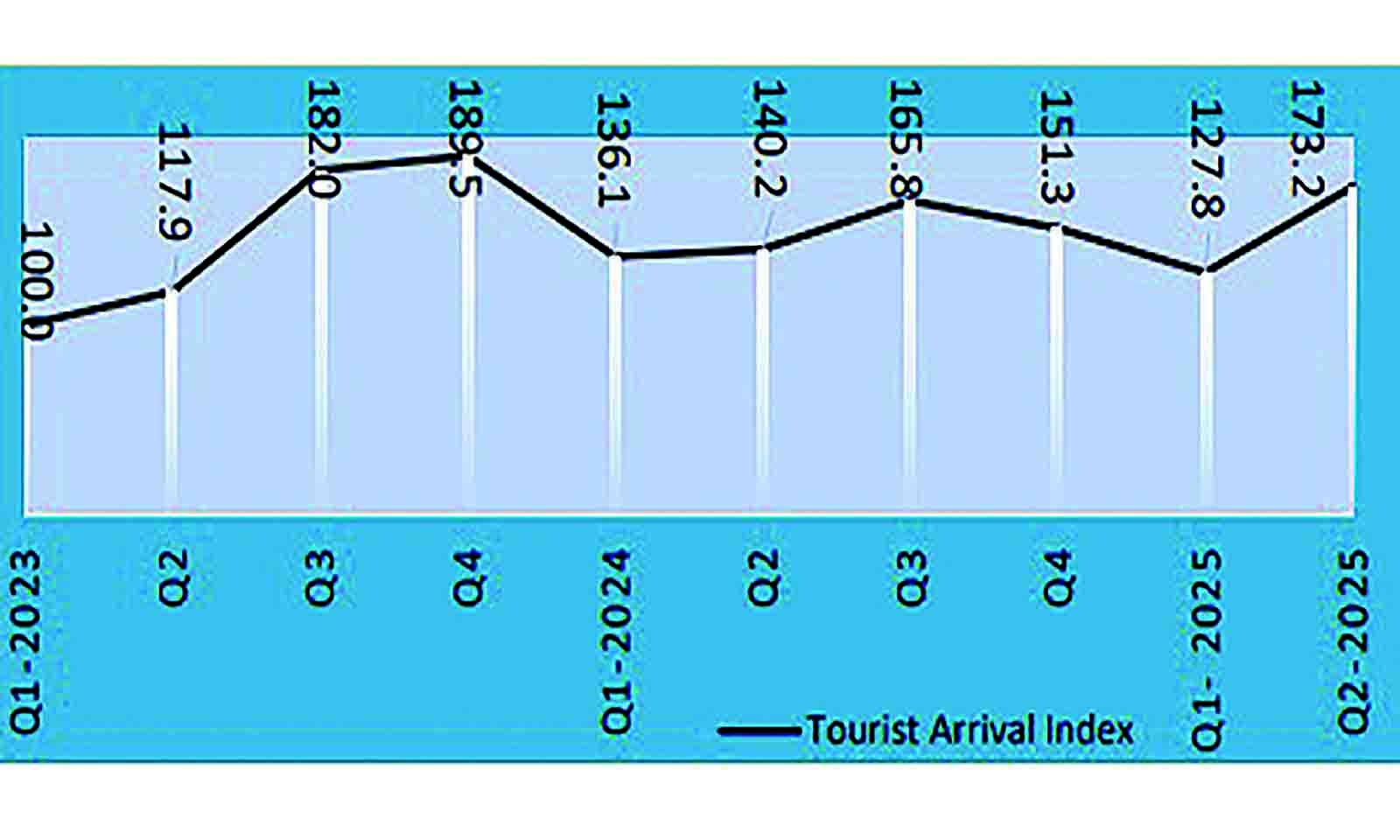
Business Reporter
Zimbabwe’s tourism sector posted a significant increase in visitor arrivals during the second quarter of 2025, but the growth was accompanied by a concerning drop in hotel and lodge occupancy rates, according to the latest figures from the Zimbabwe National Statistics Agency.
The country recorded a total of 471 041 tourist arrivals in the second quarter of 2025, a substantial jump from the 381 293 tourists welcomed during the same period last year. This represents a robust year-on-year increase of 23,5 percent in the tourist arrivals index.
This index is an indicator that shows the relative changes in the number of international visitors arriving in the country over time, in relation to a given reference period.
The quarter-on-quarter performance was even stronger, with the index surging by 35,5 percent from the first quarter of 2025, signalling a rapid recovery and rising popularity of the destination as the year progresses.
While the influx of visitors is a clear win for the economy, the hospitality industry struggled to fill its rooms and beds, pointing to a potential disconnect between tourist numbers and their accommodation preferences or the overall expansion of capacity.
The room nights occupancy rate declined by 2,2 percentage points, dropping from 47,9 percent in the second quarter of 2024 to 45,7 percent in the second quarter of 2025.
The downturn is reflected in the room nights occupancy rate index, which showed a 4,6 percent year-on-year decrease.
The decline was more pronounced in the bed nights occupancy rate, which fell by 3,1 percentage points, from 35,9 percent to 32,8 percent.
The Room and Bed Occupancy Rate Index is a key performance indicator that assesses the efficiency with which accommodation facilities utilise their available capacity over a given time.
Both indices serve as proxies for the tourism sector.
The bed nights index recorded an 8,6 percent year-on-year decrease, signalling that tourists are either staying for shorter periods or opting for accommodations outside of formal reporting structures.
Industry analysts say the simultaneous rise in arrivals and drop in formal accommodation occupancy suggests two key shifts in the tourism landscape.
The surge in tourist numbers may be heavily influenced by an increase in day-trippers, business travellers, or those visiting friends and relatives who do not utilise formal hotel or lodge accommodation.
They are more likely to stay in private homes, short-term rentals, or other informal lodgings that may not be fully captured in the traditional ZimStats occupancy surveys.
Ongoing investment in the tourism sector, particularly around hubs like Victoria Falls, has led to the opening of new hotels, lodges, and guesthouses.
While these new establishments contribute to the country’s overall capacity, they can temporarily lower the national average occupancy rate until demand scales up to meet the increased supply.