admin
admin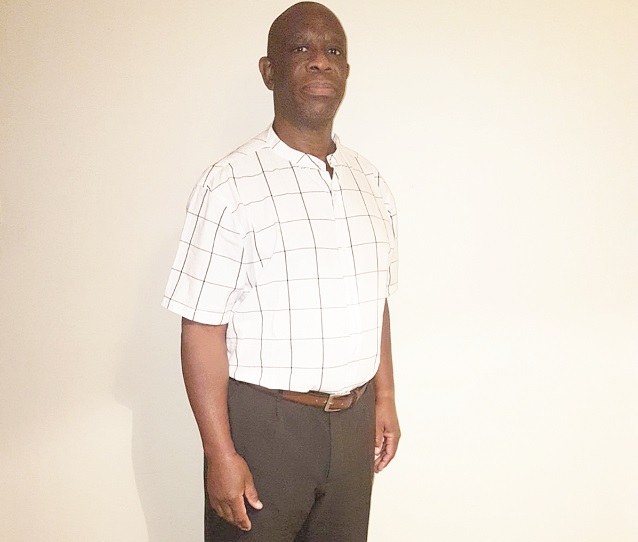

Danisa Masuku
BEING a referee is one of the jobs that needs one to develop a thick skin and be able to put up with all kinds of insults, booing or blame. This is what most of the referees experience in almost each and every match. It has become a staple thing in their career!
Admittedly at times the whistle man could make a wrong judgment or fail to notice a foul, but fans do not accept that to err is human. Thomas Khumalo is one of the easily remembered figures in Zimbabwean football by virtue of his prowess with the whistle.
Khumalo is ranked among the best retired referees that this country has ever produced, having been in charge of high profile matches in the domestic league and Caf matches. He takes us down a trip in his glittering career.
There is one incident that stands out in his career, the dark day when he collapsed while he was officiating in a league game between Highlanders and Tornadoes at the theatre of dreams, Barbourfields Stadium.
“I had a cramp, due to that I fell down. I heard that I passed out briefly. I was resuscitated by the Highlanders medical team but that did not go down well with Tornadoes officials as they felt I was biased towards Highlanders. I had not done enough warm-up and had not taken enough fluids and the situation was worsened by the scotching sun. My wife Theresia and my children were among the fans and they got worried,” he reveals to Sunday Life Sport.
He thought he had put that incident behind him but he was yet to experience a tough match between Harare giants Dynamos and Caps United FC when they clashed in Castle Cup semi-final at Rufaro Stadium.
“The match between Dynamos and Caps United at Rufaro Stadium was one of my tough matches in my domestic refereeing.
Former Caps united midfielder Alois Bunjira scored and his goal put Caps United in the lead, soon after that Dynamos defender Kaitano Tembo was penalised for a crude tackle on Bunjira. I gave him a red card. Following that Dynamos fans invaded the football pitch. Besides all the nasty things I feel I did everything according to book,” he recalls, saying this was the pinnacle of his career.
Former Chronicle Senior Sports Editor Lovemore Dube described Khumalo as a firm and impartial referee.
“I think the fact that he was a teacher contributed a lot in his refereeing profession. He was a good in decision making and was firm and fair and I believe that helped in catapulting him to the echelons of his profession,” says Dube.
Khumalo has some piece of advice for the local coaches. He says being a referee requires one to exercise caution and alertness.
“One has to be an excellent communicator, self confident and firm and that would help the match to flow in a balanced manner,” he says.
He says he used to endure walking 12 kilometres to and from school every day in Insiza district of Matabeleland. As a result he says budding players should prioritise education.
“There is nothing that could beat education, no matter how one is talented in football and when one retires in football he will have a fall back,” he says.
Khumalo was alternating as a referee or lines man (now assistant referee). He reveals that he was not in refereeing for financial gain but for the love of sport.
“It was not for financial gains whatsoever but for the love of football and I had always wanted to be part of football as a player or a referee so in that case I was fulfilling my dream,” he explains.
He considers a Castle Cup final between Tanganda and Caps United at Rufaro Stadium as the major highlight of his illustrious career.
“I managed to handle that match well as there were no incidents of hooliganism whatsoever, after that I was appointed to the Fifa Panel of referees where I served for seven years,” he says.
Khumalo recalls taking charge of a Caf match between Zimbabwe Under-20 national team against their Botswana counterparts in Botswana but the match commissioner did not turn up. So he had to do the match commissioner’s task.
“Sadly the match commissioner from Swaziland did not turn up. So as the referee I had to be the one to do all the correspondence with Caf headquarters. I did that successfully before and after the game, faxing all the required information,” he recalls.
His star power continued to shine in the next season and he was assigned to cover a Cosafa Under-20 final between South Africa and Mozambique.
His performance saw him appointed chairperson of the Bulawayo Soccer Referees Associations for two terms, spurning for six years. He says he used his influential position to lure a number of women to take up refereeing.
“During my tenure I made sure I attracted a number of women so as to balance gender and this resulted in having Sabelo Maphosa who is now a Match Commissioner,” he says.
He kept on climbing the ladders of his profession as he was nominated into Zimbabwe Referees Committee and was in charge of appointments until 2005 when he tendered his resignation letter.
He reveals that the players who were a headache were players from his home town.
“I wanted a clean and fair game, as such I always tried my best to be on high alert. I used to meet and mingle with most of the players from Bulawayo such as late Willard Khumalo, Mercedes Sibanda and late Adam Ndlovu, as such that posed some challenges when I was officiating. Regardless of that I exercised professionalism and I had no special player. One player that comes to mind that I once gave a red card was Mercedes Sibanda and when we met at social circles he understood it,” he says.
He says another player who was difficult to deal with was Carlos Max.
“Max was also a headache because he was well known for being a hard tackler, as a referee I had to monitor him closely so as to protect the players. However, at times I had to bear the brunt of booing as I would have missed such a crude tackle on players,” he remembers.
He is of the opinion that Video Assistant Referee (VAR) is good although it disturbs the flow of the game.
“I feel VAR is good for professional purposes as it leads to improved standards of officiating. I believe VAR would help in curtailing cases of match fixing which seems to be rife in our local football. However, it disturbs the flow of the game as the referee has to stop to review the video after which he would make a final decision,” he says.
He says in the early 90s he became a referee there were no match commissioners to rate the referee during the match.
“In the early years of my career there were no match commissioners or fourth match official during the game to rate us (referee). After the game I would write a report and return home. But now there is a match commissioner to rate how the referee performed,” he says.
Fact sheet
– Thomas Khumalo was born on 17 February 1955 in Insiza district, Matabeleland South province.
-He was born in a family of three children — two boys and one girl.
– He did Bachelor of Arts majoring in Geography at Forah Bay College in Freeborn, Sierra Leone. He came back home to teach in Zimbabwe in 1981. He was a teacher for 21 years at Falcon College.
– In 1983 he joined the refereeing fraternity as a class four and worked his way up to be a class one match official in 1983.
-He got married to Theresia in 1984 and the couple is blessed with three children, namely Rodwell who took a cue from his father as he is a teacher at Falcon College, Michael is a banker, Angela is working at Sheffield City Council in the business support unit.
Khumalo is now based in Britain where he is teacher and is teaching Basic Maths and Employability skills. n The family worships at Roman Catholic Church.



 Online Reporter