Chronicle Editor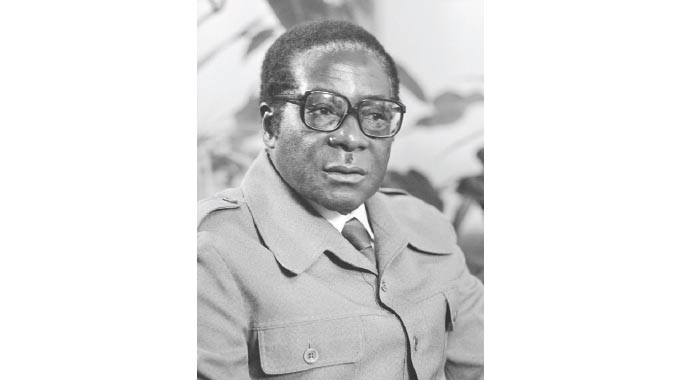
Vusumuzi Dube, Zimpapers Elections Desk
ON Wednesday 6 September the nation remembered the day Zimbabwe’s iconic founding leader and former President, Cde Robert Gabriel Mugabe passed on.
The reflections on the passing on of Cde Mugabe came at an opportune time when the ruling Zanu-PF have just retained power in the recently concluded harmonised elections which was followed by the swearing in of President Mnangagwa for his second term last Monday.
Remembering the passing on of Cde Mugabe offers a moment for the nation to reflect on his legacy, his impact on Zimbabwe’s history, and how his party’s continued leadership can shape the country’s future.
Remembering Cde Mugabe and his commitment to national sovereignty
In reflecting on the contributions of Cde Mugabe to Zimbabwe, permanent secretary in the Ministry of Information, Media and Broadcasting Services, Cde Nick Mangwana took to social media where he wrote; “Today we remember his role in the building of our Nation and making us a proud people who stand for what they believe to be right. Continue to Rest in Peace Gushungo.”
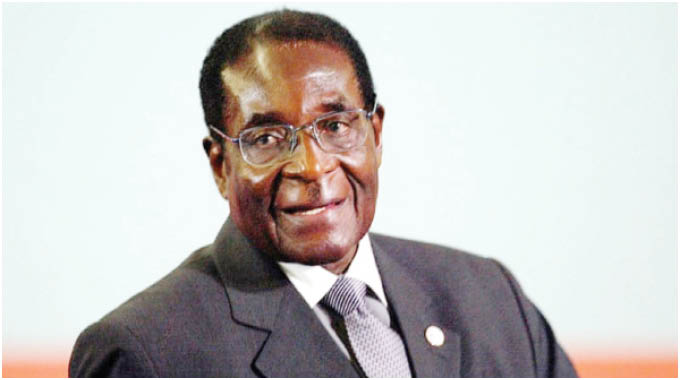
In the wake of Cde Mugabe’s passing on, Zimbabwe stands united in remembrance of the influential leader who played a pivotal role in the country’s fight for independence. There is no denying that Cde Mugabe left an indelible mark on the nation’s history. From his involvement in the liberation struggle to his visionary policies post-independence, his legacy is complex and continues to shape Zimbabwe today.
One undeniable lesson left to the nation by Cde Mugabe was the commitment to preserving national sovereignty.
Zimbabwe’s founding fathers fought for a self-governing nation, free from external interference. President Mnangagwa and the Second Republic have continued on this path emphasising that while Zimbabwe is a friend to all and an enemy to none, the nation will not compromise on external influences. This saw President Mnangagwa coining the term; nyika inovakwa nevene vayo/ilizwe lakhiwa ngabaninilo.
“The Japanese built Japan, the Chinese built China, the Germans built Germany, the Americans built America and the British built their British Island. So, we Zimbabweans must build our own country, no country will build another country. There are three principles you must teach your children, a country must be built by its own people, must be prayed for by its own people and it must be ruled by its own people,” said President Mnangagwa at a star rally that was held in Cowdray Park, Bulawayo in the run up to the harmonised elections. Zanu-PF’s victory therefore reinforces this principle, ensuring that decisions regarding Zimbabwe’s political and economic future are made by its own citizens.
Zanu-PF’s victory and the founding ideals
The ruling Zanu-PF party’s victory in the harmonised elections demonstrates a collective endorsement of the party’s leadership and the ideals laid out by its founding father, Cde Mugabe. It signifies the continuation of the policies and principles that he championed, such as land reform, indigenisation, and empowerment.
The Second Republic has taken these policies championed by Cde Mugabe and have further channelled resources towards ensuring that they change the economy of the nation. Zanu-PF’s victory provides the party with the mandate to continue crucial development initiatives. The Government will continue building on the foundations laid by the founding fathers, such as education, healthcare, infrastructure, and agriculture.
By focusing on sustainable development, Zanu-PF continues to contribute to the nation’s progress and ensure that every citizen benefits from the legacy left by the founding fathers like Cde Mugabe. Relating to the land reform, the Second Republic has come up with a number of programmes, inclusive of the Presidential borehole drilling facility, revival of irrigations, the Pfumvudza/Intwasa, to mention but a few, which have all seen the nation becoming food secure, with major strides taken to reclaiming the country’s status of being the regional food basket.
Vision 2030 was also set of seeing the country becoming an up middle-class economy by the year 2030, this has seen a lot of sectors like mining being revived and performing well towards attaining this goal. All these have their foundations tracing back to Cde Mugabe’s principles.
The party’s ability to retain power underscores its resonance with the electorate and its commitment to fulfilling the aspirations of the Zimbabwean people. Zanu-PF’s victory in the harmonised elections can also be seen as a step towards continuing the struggle for social justice that was championed by the founding fathers.
The party has traditionally aligned itself with the principles of the ruling party during Zimbabwe’s liberation struggle — equality and empowerment. By securing a majority in the elections, Zanu-PF has the opportunity to continue with its policies that strive for inclusive development and address the socioeconomic inequalities that persist within the nation. This is once again by President Mnangagwa’s development philosophy; “Leaving no one and no place behind.”

Upholding Cde Mugabe’s vision, continuity and stability
Cde Mugabe’s vision for Zimbabwe was multifaceted, encompassing objectives such as economic empowerment, social justice, and national sovereignty. While his Presidency had its share of challenges and criticisms, his passion for the betterment of Zimbabweans cannot be denied. Cde Mugabe’s passing and Zanu-PF’s electoral victory have brought Zimbabweans together in a moment of shared remembrance and reflection. As the nation mourns the loss of its founding president, it also strengthens its bonds of unity.
This collective mourning can serve as a catalyst for social cohesion, where Zimbabweans from all walks of life come together to uphold the values and principles that Mugabe fought for. One advantage of Zanu-PF’s victory is the potential for continuity and stability in governance. Amid the challenges and criticisms faced by the party, its retention of power allows for the continuation of Government programs and the implementation of long-term development strategies. This stability can attract investment, foster economic growth, and ensure that the nation moves forward on a path of sustainable development.
Consolidating stability and peace
The elections themselves were conducted in a relatively peaceful manner, which is crucial for ensuring stability and progress within the nation. By securing a majority and winning the confidence of the electorate, Zanu-PF has the opportunity to steer the country towards a more stable future. This stability is essential for continued growth, attracting foreign investment and improving the overall quality of life for Zimbabweans.
Therefore, as Zimbabwe commemorates the death of its founding president, Cde Robert Mugabe, it does so at a time when the ruling Zanu-PF party has retained power in the harmonised elections. This confluence presents an opportunity for the nation to reflect on Cde Mugabe’s legacy and how Zanu-PF’s continued leadership can uphold his vision for Zimbabwe.



 Online Reporter