Online Reporter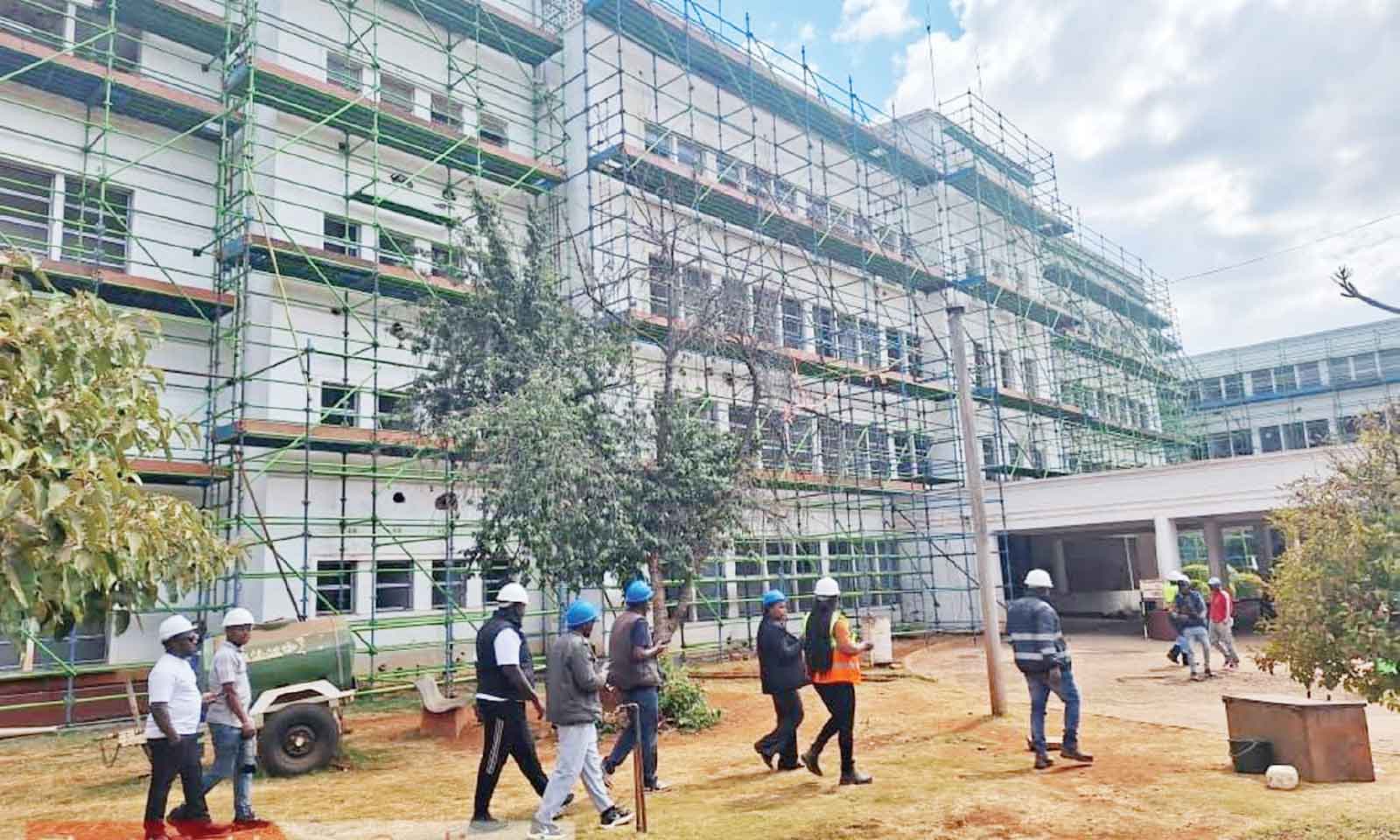
Dr Aspect Maunganidze
THE year 2025 has been particularly good for the health sector, despite the significant challenges we have faced over the years.
As we entered 2025, one of the major setbacks was the withdrawal of funding by the United States government.
While this posed immediate pressure, it also reinforced a critical lesson — that Zimbabwe must strengthen its own local resource mobilisation.
Coming from the Health Financing Dialogue we held in November 2024, we were already mentally and institutionally prepared for such an eventuality.
Donor funding is declining globally, and this reality informed our planning.
The withdrawal particularly affected funding for HIV, malaria, tuberculosis, as well as maternal and child health programmes.
However, guided by the outcomes of the Health Financing Dialogue, we were able to mobilise local resources through institutions such as the National AIDS Council.
This ensured that people on antiretroviral therapy, as well as those requiring malaria and TB (tuberculosis) treatment, continued to receive uninterrupted care using domestic funding.
In addition, we forged new smart partnerships.
Local private sector players came on board, and together we managed to sustain the national response to HIV, malaria and TB.
As a result, Zimbabwe remains one of the most organised countries in the region in terms of the provision of essential medicines, particularly in these priority disease areas.
Hospital infrastructure
In 2025, we also saw the rollout of the Presidential Hospital Renovation Scheme.
The programme began with Parirenyatwa School of Nursing and Mbuya Nehanda Maternity Hospital, and has since moved to Mpilo Central Hospital.
The intention is to ensure that, for a start, all central and provincial hospitals have infrastructure that is fit for purpose.
This is particularly important as we transition from the National Development Strategy 1 (NDS1) to NDS2.
We are now in the final lap towards achieving Vision 2030, and health infrastructure is a key pillar in that journey.
Human resource production, retention and motivation
Human resources for health remain a sensitive but critical area.
Zimbabwe has experienced high attrition rates, largely because our health professionals are highly sought-after globally.
They are well trained, particularly in practical competencies, which makes them competitive internationally.
In response, we have focused on strengthening and increasing the production of health workers.
In October 2024, we signed the Human Resources for Health Investment Compact involving various Government departments and our partners.
This compact is designed to significantly boost production, with our overall goal being to double the health workforce by 2030.
To achieve this, we have expanded training capacity.
In particular, for nurses, we have added more than five new training schools across the country.
In the spirit of devolution, almost every province now has, or is in the process of establishing, a new training school as we move into NDS2.
We have also devolved recruitment for nurse training.
Provinces and institutions now have a greater say in who is being trained.
We are aware that people are more likely to serve in the communities where they grew up, and this approach strengthens devolution while improving retention.
Beyond production, retention is a key focus.
With the establishment of the Health Service Commission, work is underway to improve conditions of service, both monetary and non-monetary.
We want those we train to remain in the system. Equally important is providing the appropriate tools of trade.
Many health workers become frustrated, not necessarily because of remuneration, but due to the lack of equipment.
Working with partners and across Government, we have embarked on a major drive to equip our health institutions.
Facilities have received theatre equipment, ventilators and incubators, among other critical assets. This plays a significant role in job satisfaction and motivation.
Modernising service delivery
As part of strengthening human resources for health, we are also prioritising digital healthcare.
We want our health workers to be equipped to use digital tools and benefit from reliable internet connectivity across all institutions.
Currently, more than 1 300 health institutions are on the Impilo Electronic Health Records Platform.
Our goal is to ensure that every institution is connected.
This will enhance service delivery, support telemedicine and allow patients in remote areas to access specialist services without incurring the costs of travelling to central hospitals.
Overall, 2025 was a particularly strong year for human resources for health.
If we sustain this momentum, increasing production, devolving training and ensuring equitable deployment across the country, we are confident of achieving our goal of doubling the health workforce by 2030.
Treasury has also played a critical role.
It concurred with the additional costs associated with expanding the workforce.
In 2025 alone, Treasury availed 5 284 posts across various cadres, including nurses, pharmacists and doctors.
This was a significant achievement.
Public Health Institute of Zimbabwe
Another major milestone in 2025 was the launch of a national public health institute, officially named the Public Health Institute of Zimbabwe.
The institute has already begun operating.
Its mandate is to strengthen public health interventions by ensuring they are evidence-based.
It will focus on disease surveillance, including monitoring at ports of entry and will enhance preparedness and response to public health emergencies.
The institute will also play a critical role in research, ensuring that policy and interventions are informed by scientific evidence.
Additionally, it will strengthen the digital health ecosystem, allowing us to be data-driven and responsive.
In this regard, we have already engaged countries such as Zambia that have experience with similar institutions.
In 2026, we intend to fully operationalise the institute, with a view to making it semi-autonomous while remaining accountable to the Ministry of Health and Child Care and existing administrative frameworks.
Expanding health infrastructure
Beyond hospital renovations, 2025 also marked progress in community-level infrastructure. We commissioned and opened Mataga Health Centre in Mberengwa, completing the four pilot facilities opened over the past two to three years.
These include Runyararo, Cowdray Park and Stoneridge.
We are now moving towards the next phase, with ground-breaking for additional facilities already underway.
Centres in Manhize, Chivi, Zaka and Bulilima are at various stages, with rollout planned for 2026. By placing infrastructure closer to where people live, particularly in rural areas, we aim to reduce walking distances from an average of 10 kilometres to five kilometres.
Looking ahead, towards the end of 2026 and into 2027, we plan to begin construction of district hospitals for the metropolitan provinces — one in Harare and one in Bulawayo.
These will address a critical gap in the referral system, sitting between primary health facilities in suburbs and central hospitals.
This middle-level referral infrastructure is essential for a functional and efficient health system.
So that will be our next phase with the NMS.
Dr Aspect Maunganidze is the Permanent Secretary in the Ministry of Health and Child Care. He was speaking to our reporter Rumbidzayi Zinyuke.