admin
admin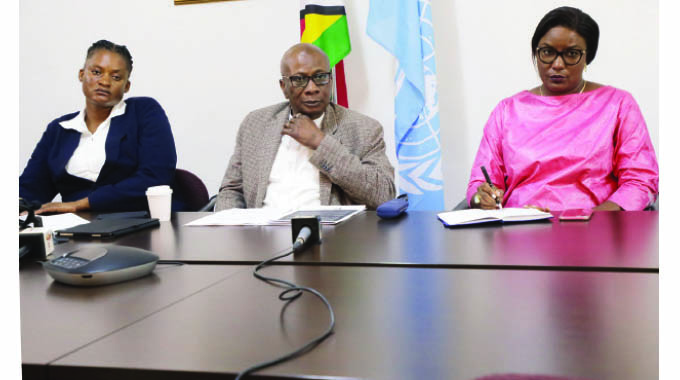
Zvamaida Murwira-Senior Reporter
THE United Nations Security Council and international financial institutions should be reformed to uphold the principle of multilateralism as opposed to the unilateralism of these institutions, which are currently dominated by Western countries, a top diplomat has said.
UN Resident Co-ordinator in Zimbabwe Mr Edward Kallon said international financial institutions such as the World Bank and International Monetary Fund should be reformed for them to become “fit for purpose” and help Africa and other developing nations to achieve their Sustainable Development Goals.
Mr Kallon said this in Harare yesterday while addressing journalists and UN agencies accredited to Zimbabwe ahead of a conference titled, “Summit of the Future” that will bring together UN member states, civil society, academia, traditional leaders and women, among other stakeholders.
The summit, to be held from September 22-23 this year at the UN headquarters in New York, is a platform to reflect on sustainable development goals, the Paris Agreement and the principles of the United Nations Charter.
It is expected to adopt the Pact for the Future along with the Global Digital Compact and a Declaration for Future Generations.
Mr Kallon said developing countries were the most affected in efforts to attain sustainable development goals owing to funding challenges, mostly occasioned by the skewed nature of multilateral financial institutions.
He said some of the challenges faced by developing countries include inability to adopt expansionary fiscal and monetary policies and high interest lending rates.
“These are the issues behind the call for the reform of global financial institutions to make them fit for purpose to serve the interests of Africa and developing countries elsewhere.
“Africa can’t achieve sustainable development goals and Agenda 2063 without financing. The Economic Commission for Africa estimated that Africa needs investments of US$1,3 trillion per year to achieve sustainable development goals by 2030 and investments of over US$3 trillion in mitigation and adaptation to implement its nationally determined contributions to eliminating net greenhouse gas emissions.
“For Africa to access this financing, there must be deliberate action to reform the international financial architecture; reform debt resolution mechanisms; and scale up affordable financing,” said Mr Kallon.
There was need to reinvigorate the role of the UN in maintaining peace and security in the era of geopolitical competition, mounting international tensions and worsening conflicts.
Responding to questions from the media, Mr Kallon said there was growing consensus to reform the UN and the issue would form part of the impending summit.
“There is a general consensus that there has to be reforms. No one can argue about that. But it has to be negotiated and an agreement made,” said Mr Kallon.
African leaders, including President Mnangagwa, have been vocal in calling for the reform of UN Security Council so that it is relevant and not be subservient to the USA and Western Europe.



 Online Reporter