admin
admin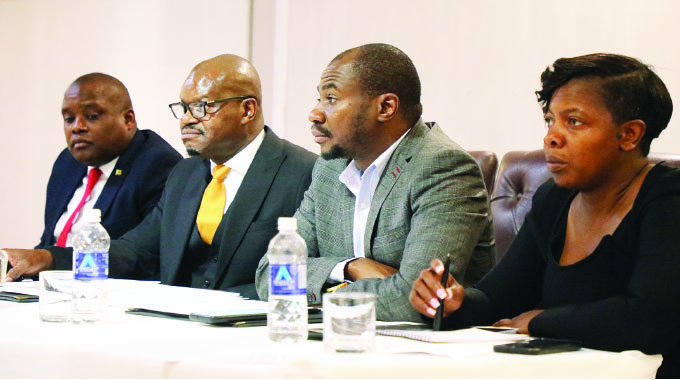
Joseph Madzimure
Senior Reporter
GOVERNMENT has embarked on a process of reviewing the country’s media laws and policies in accordance with international best practice, Information, Publicity and Broadcasting Services Permanent Secretary Mr Nick Mangwana has said.
Speaking at the Annual Media Stakeholders Conference organised by Media Alliance of Zimbabwe (MAZ) and the Voluntary Media Council of (VMCZ) in Harare yesterday, Mr Mangwana said Government has done its best to reform the media sector.
“Government heartily appreciates the need to constantly move with the times and not be laggards when it comes to modernisation and professionalism of the media sector.
“That is why we have been steadily spearheading media reforms and continue to do so,” said Mr Mangwana.
The Permanent Secretary said the raft of media reforms that the Second Republic is undertaking are a reflective of President Mnangagwa’s long-held dream of liberalism in the media space.
Mr Mangwana said one of the first things the Second Republic did was to repeal the contentious laws that included the Access to Information and Protection of Privacy Act (AIPPA).
“In its place, we enacted the Freedom of Information Act (Chapter 10:33), the Cyber and Data Protection Act (Chapter 12:07) and the Zimbabwe Media Commission Act 2021,” he said.
AIPPA was being repealed and replaced with three Acts, which are the Freedom of Information Bill, the Zimbabwe Media Commission Bill and the Protection of Personal Information/Data Protection Bill.
“Our commitment to develop the media industry is what motivates us to continue crafting and amending laws to suit the ever-evolving environment that the media operates in,” Mr Mangwana said.
He told stakeholders in the media fraternity that the Broadcasting Services Amendment Bill was approved by Cabinet and will soon be gazetted by the Attorney General’s office after which the parliamentary processes will follow.
On the Zimbabwe Media Commission Amendment Bill, Mr Mangwana said it was now at the Attorney General’s office where amendments are being finalised.
“Let me take this opportunity to thank you and other stakeholders for partnering us in this journey to reform, modernise and professionalise the Zimbabwe media sector,” he said.
He said President Mnangagwa’s mantra of “leaving no one and no place behind” is the driving factor in Government’s embracing of affordable internet and enhancing access to information.
“We are alive to the fact that we need to have a media literate citizenry to fully enjoy the benefits of this expansion in access to information infrastructure.
“In this regard, a Media Literacy policy is in the pipeline and consultations are being arranged so that we come up with a wholesome policy that ensures our citizenry is well equipped to interact with the media in this age of Artificial Intelligence (AI) and information disorders.
“In as much as Government is doing its best to reform the media sector, you as practitioners should reign in the lunatic fringe. The advent of social media and 24-hour news cycles has caused a shift to event-driven reporting where journalists focus on breaking news and instant updates leading to what many observers conclude is a decline in the standards of journalism”.
While new media such as Artificial Intelligence has the advantage of cutting down on research time for journalists, same has created a culture of instant gratification, where speed is prioritised over accuracy.
Journalists are now under pressure to break news quickly, often sacrificing fact-checking and verification for the sake of being the first.
“Let me remind you all today that while it’s correct to call new technologies, disruptive, the journalism profession must see them as enhancers and not obstacles to ethical practice. An unverified story remains a lie whether there is disruptive technology or not,” emphasised Mr Mangwana.
He noted that the interest that lower-cost internet services such as Starlink has generated in the country could potentially impact massively on the sector.
The media industry, he said, must take steps to strengthen its own integrity, promote fact-based reporting and transparency.
Mr Mangwana emphasised the need for online news outlets to meet the same standards as traditional media, with a focus on accuracy and verification.
He assured stakeholders in the media industry that the Government will do its best to protect the media sector from all emerging threats and disruptions, including ensuring that journalists are free to report without fear of intimidation or harassment.
“We have already proved our bona fides throughout the Second Republic and call on the sector to play its part. This is because journalism has a role in nation building and development,” he said.
The conference was meant to reflect on the successes and challenges obtaining in the media sector and Government progress on media reforms.
Zimpapers board member, Dr Alexandra Rusero, hailed the Government’s commitment to institute media reforms.
“We are coming from a position of hostility to cordiality in as much as all the key actors in the media industry who have been involved in this. It’s actually good to see the Government’s position with regards to media reforms.
“More importantly, we are talking about issues of artificial intelligence, which are the major dominance in our discussion.
“How do we then envision issues to do with media sustainability in the current context of AI where in some circumstances machines and tools are supplanting the role of human beings? This is the food for thought for the media stakeholders to say how best can we sustain the media industry but at the same time also moving with times grappling with the realities of modernity,” said Dr Rusero.
Zimbabwe Media Trust board chairman, Mr Perfect Hlongwane, said the purpose of engagement with media stakeholders was to reflect and share ideas on what needed to be done to develop the media sector.
“We want to interrogate our laws, the Government positions regarding the media reforms,” said Mr Hlongwane.
The conference was attended by parliamentarians, the media houses, journalists, the European Union, the United Nations, civic society among other players. The conference theme: “Media Professionalism in the age of Artificial Intelligence and Information Disorders” could not have been more apt given the way AI has invaded all aspects of our daily life.



 Online Reporter