Richard Muponde-Zimpapers Politics Hub
ZIMBABWE will host the 25th Summit of the Common Market for Eastern and Southern Africa in Harare from October 19 – 22, under the theme, “One Market, One Future: Advancing Inclusive Industrialisation, Investment and Regional Integration in COMESA.”
The theme captures the ambition of a region seeking to deepen economic cooperation, expand productive capacity and attract investment. However, these objectives cannot be fully realised without greater macroeconomic stability.
Integration cannot thrive when currencies fluctuate wildly, inflation erodes purchasing power and inconsistent fiscal policies make cross-border business a gamble.
The summit’s focus on industrialisation, investment and regional integration therefore raises a fundamental question: how can COMESA build a more unified market if businesses cannot reliably price goods, secure financing, settle payments or plan investments with confidence?
Sound monetary, exchange-rate and fiscal policies are essential foundations for achieving the regional bloc’s integration ambitions.
Stability is the bedrock of one market
COMESA brings together 21 member states and a market of more than 600 million people. Its integration agenda goes beyond trade liberalisation towards deeper economic cooperation and the development of a common market.
However, reducing tariffs alone cannot eliminate the hidden costs of inflation, currency instability and unpredictable economic policies.
A Zimbabwean manufacturer sourcing packaging materials from Zambia or machinery from Kenya needs reasonable certainty about the cost of inputs when payment falls due.
Sharp exchange-rate movements can wipe out profit margins, disrupt contracts and discourage businesses from entering cross-border supply arrangements. Macroeconomic stability gives businesses a more predictable environment in which to plan production, develop regional supply chains, attract investment and create employment. Without it, the benefits of a larger regional market risk being undermined by the very economic uncertainties that integration is intended to overcome.
Harmonisation must respect national realities
Macroeconomic coordination does not mean imposing identical interest rates or inflation targets on economies with different structures and challenges.
COMESA member states differ in their levels of industrialisation, financial-market development, exposure to commodity-price movements, exchange-rate regimes and vulnerability to climate shocks. Effective coordination must, therefore, be built around shared principles and credible convergence, while allowing countries to adopt policies suited to their individual circumstances.
The COMESA Monetary Institute’s Monetary and Exchange Rate Policies Sub-Committee met in Nairobi from October 1 – 2, 2026, following research into inflation thresholds across member states.
The findings identified different levels at which inflation begins to undermine economic growth, reinforcing the importance of country-specific targets, timely policy interventions, effective liquidity management and clear communication by monetary authorities.
Such evidence-based coordination is more useful than rigid uniformity. The objective should be to establish a common direction towards stability without disregarding the different economic conditions prevailing across the region.
Exchange-rate credibility cannot be decreed
Exchange-rate stability must not be confused with artificially fixing a currency at a level that economic fundamentals cannot sustain.
Credibility rests on disciplined money creation, transparent foreign-exchange arrangements, adequate reserves, productive exports and confidence in public institutions.
Where official exchange rates diverge significantly from market realities, businesses face uncertainty, opportunities for rent-seeking increase and formal trade can be pushed towards opaque channels.
COMESA member states should, therefore, promote orderly foreign-exchange markets while addressing the underlying causes of volatility, including fiscal imbalances, weak export earnings, external debt pressures and shocks to fuel and food prices. No single exchange-rate model is suitable for every economy. Nevertheless, persistent unpredictability should not become a structural disadvantage for businesses seeking to trade and invest across the region.
For Zimbabwe and its regional partners, the challenge is to build exchange-rate arrangements that support productive activity, encourage confidence and facilitate legitimate cross-border transactions.
Fiscal discipline must back monetary policy
Central banks cannot sustainably control inflation if governments routinely finance budget deficits through excessive monetary expansion.
Fiscal and monetary authorities must therefore work in tandem. Budgets should be credible, public debt manageable, domestic revenue mobilisation strengthened and reliance on central-bank financing appropriately controlled.
Without fiscal discipline, monetary tightening risks constraining productive lending without addressing the underlying pressures that cause inflation to return.
COMESA’s macroeconomic convergence discussions have identified public debt, limited domestic revenue mobilisation and dependence on central-bank financing as continuing challenges. The approved Macroeconomic Convergence Peer Review Mechanism offers member states an opportunity to assess their progress, identify weaknesses and learn from one another’s reforms.
For the mechanism to be effective, however, peer reviews must be frank, regular and focused on implementation rather than diplomatic praise. Identifying problems is only the first step; countries must also demonstrate that corrective measures are being implemented and producing results.
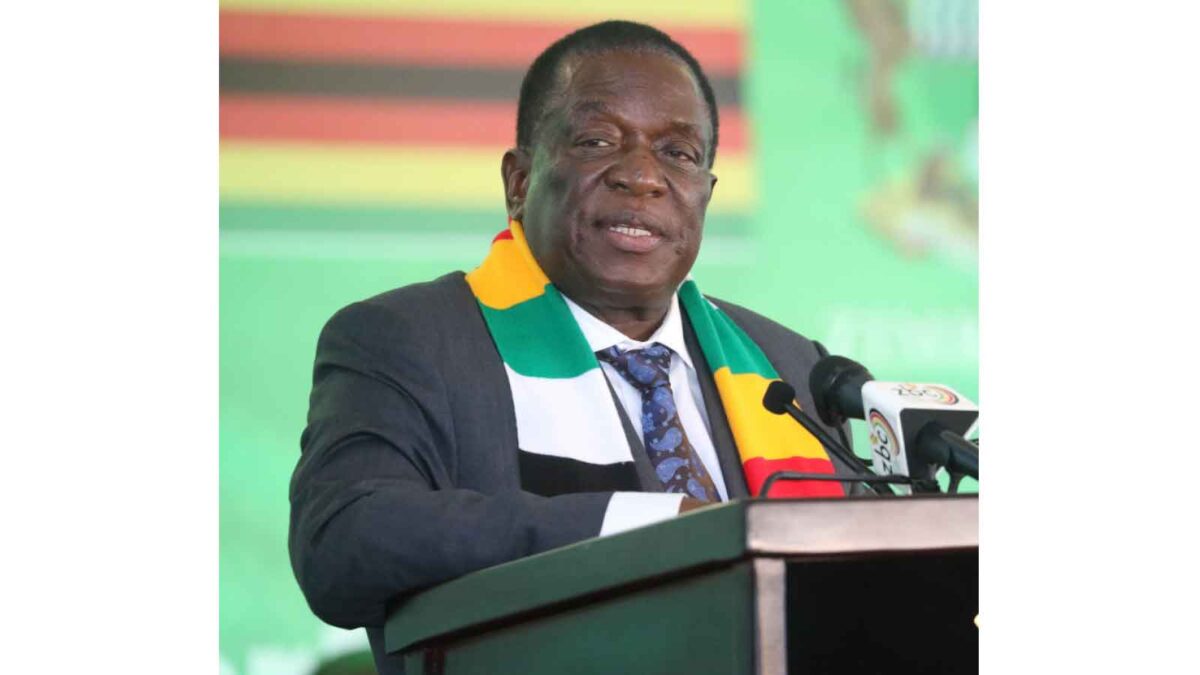
President Mnangagwa’s vision must translate into regional results
President Mnangagwa’s role as host of the summit provides Zimbabwe with an opportunity to connect its Vision 2030 ambitions with the wider regional integration agenda.
The Government’s development programme emphasises economic stabilisation, investment, production and value addition. The test is whether these priorities help create a predictable business environment, expand productive capacity and strengthen foreign-currency earnings. The summit should give Zimbabwe’s development ambitions a regional dimension by advancing practical commitments on inflation monitoring, responsible public finance, reserve adequacy and support for cross-border industrial development.
Leadership in regional integration should ultimately be measured not merely by declarations made at high-level meetings, but by improvements in the economic conditions experienced by businesses and citizens.
COMESA Secretary-General Chileshe Mpundu Kapwepwe has described industrialisation, investment and regional integration as “mutually reinforcing drivers of sustainable development and improved livelihoods for our citizens”. Her observation captures the relationship between the summit’s priorities. Industrial expansion requires investment, investment depends partly on confidence, and confidence is weakened when prices and exchange rates become unpredictable.
Regional central-bank leaders have likewise stressed the importance of macroeconomic convergence, financial stability, fiscal discipline and debt management in advancing monetary cooperation. These priorities reinforce the need to link regional integration commitments with credible national economic policies.
Payments, reserves and regional value chains
COMESA should also strengthen its Regional Payment and Settlement System, improve interoperability between national payment platforms and reduce the cost of cross-border transactions.
Greater use of national currencies in eligible transactions could reduce dependence on third-country currencies. However, this would require adequate liquidity, workable convertibility arrangements and confidence in the currencies involved.
Payment technology alone cannot compensate for weak monetary fundamentals. Efficient settlement systems must be supported by credible policies and financial institutions capable of facilitating reliable transactions.
Foreign-exchange reserves are equally important. They help countries meet external obligations, finance essential imports and withstand disruptions to export earnings.
Regional cooperation should, therefore, promote information-sharing, export diversification, value addition and sustainable borrowing. Zimbabwe and its neighbours can strengthen their resilience by processing more minerals and agricultural products locally, rather than relying excessively on exports of raw commodities.
Developing regional value chains would allow member states to combine their productive strengths, expand industrial capacity and retain a greater share of the value generated from their natural resources. Such cooperation would give practical meaning to the idea of one market by linking producers, processors, investors and consumers across national borders.
From summit resolutions to measurable delivery
The first stage of COMESA’s Macroeconomic Convergence Programme has been extended to December 2027 to align with the African Monetary Cooperation Programme.
The extension should be used to accelerate reforms, supported by measurable targets, transparent reporting, clearly assigned responsibilities and regular progress reviews. The Harare Summit should seek to translate its broad ambitions into an implementation framework covering inflation management, exchange-rate transparency, fiscal discipline, reserve adequacy, regional payment systems and productive investment.
The COMESA Medium-Term Strategic Plan for 2026-2030 should also connect these priorities to manufacturing, agriculture, mining value chains, infrastructure development and employment creation. Crucially, member states must be prepared to report on progress and address shortcomings where commitments are not being met. Without credible monitoring and accountability, even well-designed regional programmes risk remaining declarations of intent.
The summit offers an opportunity to strengthen the relationship between macroeconomic stability and the productive sectors that drive inclusive growth.
Ultimately, “One Market, One Future” must mean more than shared rhetoric. It must mean that entrepreneurs can trade across borders with fewer avoidable currency shocks, manufacturers can make investment decisions with greater confidence, and households are better protected against the damaging effects of runaway prices.
Sound monetary and exchange-rate policies are not a cure-all for the region’s economic challenges. They are, however, essential foundations on which broader reforms in industrialisation, trade and investment can endure.
As Zimbabwe prepares to host the COMESA Summit, it should champion disciplined macroeconomic coordination, respect for national policy realities and accountability for agreed reforms.
The success of regional integration will ultimately be measured not by the number of agreements signed in Harare, but by increased production, stronger intra-regional trade, more jobs and improved livelihoods across the COMESA region.