admin
admin
Elita Chikwati Features Editor
Comesa Member States have been urged to increase regional trade, invest in value addition and strengthen value chains to improve their economies and reduce the levels of poverty and inequalities in their countries.
Promoting regional trade will also enable the region to fight against the effects of climate change.
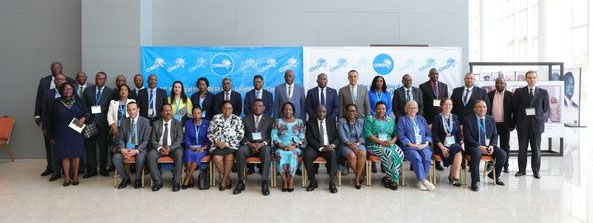
This came out during the opening of the 44th Comesa inter-governmental committee meeting held in Lusaka, Zambia yesterday.
Officially opening the meeting, Zambia, Commerce, Trade and Industry Minister Chipoka Mulenga said the region was prone to hunger, poverty and inequality despite the abundant natural resources.
“This is why there is an urgent need for a change of mindsets to trade more with each other, invest more in value addition and strengthen national and regional value chains.
“Comesa has continued to implement various programmes to support agriculture and food security such as the Regional Food Balance Sheet Initiative, being piloted in Zambia, Malawi, Kenya, Rwanda, Uganda and Tanzania, and the Regional Enterprise Competitiveness and Access to Markets Programme (RECAMP) which seeks to enhance competitiveness and market access in horticulture, agro-processing and leather products,” he said.
Minister Mulenga said the region was endowed with minerals such as gold, copper, diamond, lithium, magnesium and cobalt but continued to export raw material and re-import into the region manufactured products.
“It is time to identity the right incentives for industrialisation diversification for the benefit of the region and the continent as a whole.
“It is also important to encourage green investments and enhance our joint efforts to confront the risks of climate change.
“Tapping into available opportunities however requires investing more in skills development and innovation. This is why the Comesa Annual Research forum and other capacity building platforms should be enhanced,” he said.
He said infrastructure development and connectivity were fundamental for sustainable economic growth and development.
“Our region suffers from critical infrastructure gaps in road, rail, maritime and air transport, energy and ICT. Lack of appropriate infrastructure aggravates the problems of poverty and inequality and increases the costs of production and doing business both domestically and regionally.
“We need to enhance our joint efforts and tap onto more resources to bridge the infrastructure gap, thereby making cross-border trade, value addition and industrial development more profitable,” he said.
Minister Mulenga said women and youth should also be taken on board to ensure sustainable economic development.
“Specific programmes such as the Simplified Trade Regime (STR) support small-scale cross-border traders, majority of whom are women and youth.
“Domestication of the Comesa Gender Policy and Youth engagement programmes, capacity building and sensitisation ensure all stakeholders are effectively involved in the integration activities,” he said.
He said Comesa supported continental management and resolution of conflicts although poverty and inequality was increasing the challenges of peace and security.
“We should therefore, use the opportunities provided by regional trade and investment to produce more wealth and reduce the levels of poverty and inequality in our countries,” he said.
Comesa secretary general Mrs Chileshe Kapwepwe said the organisation had made some strides although it was still facing some challenges.
“In pursuit of market integration, we have continued to implement our Trade Facilitation Programme with notable achievements to date, including in terms of automated customs systems; national single window systems, the Simplified Trade Regime and NTB reporting, monitoring and eliminating mechanism.
“With the support of the European Union, we are finalising preparations to roll out some of our digital free trade instruments, including the Electronic Certificate of Origin, Customs Automation Regional Support Centre and the Regional Trade Information Portal.
She said the Yellow Card Scheme and the Regional Customs Transit Guarantee (RCTG) Scheme contributed to the smooth movement of vehicles, cargo and people within the Comesa region and beyond.
“Another significant step is the development of an Online Platform for Comesa Negotiations of Trade in Services, with the support of the African Export-Import Bank (AFREXIMBANK).
“Comesa continues to play a leading role in supporting continental integration efforts through its broad institutional network which encompasses the Comesa Competition Commission, Trade and Development Bank, African Trade Insurance Agency, ZEP-RE re-insurance, Comesa Business Council and the African Leather and Leather Products Institute.
“With regard to the Tripartite FTA, this agreement remains a strategic tool to enhance continental integration, with its three pillars, namely Market Integration, Infrastructure Development and Industrial Development,” she said.
The meeting was held to enable member states to take stock of the progress Comesa is making in the implementation of various programmes through the network of its institutions as well as its Medium-Term Strategic Plan 2021 – 2025.


 Online Reporter