Online Reporter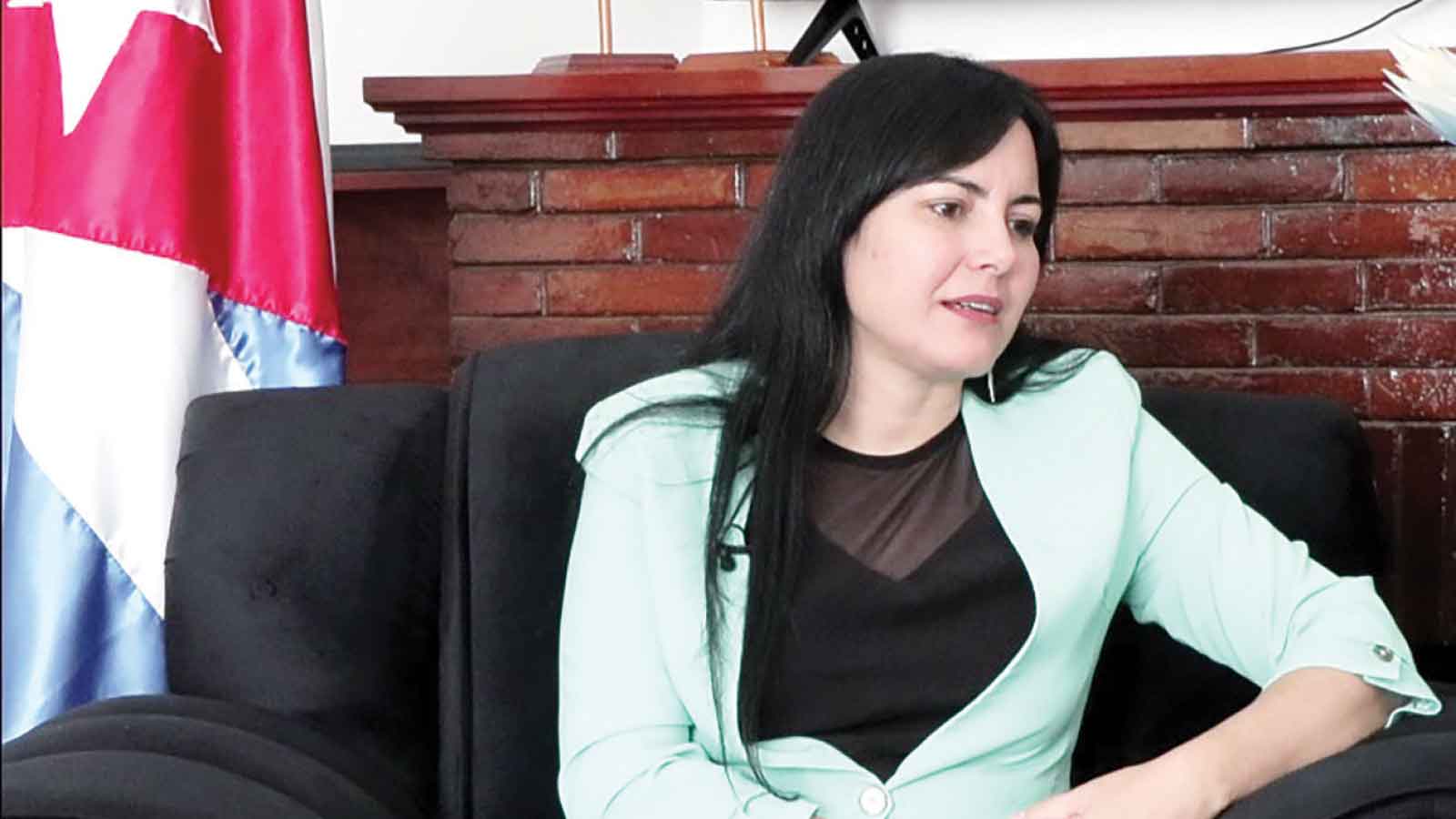
FOR many years, Cuba has been described as Africa’s great friend. It made sacrifices and contributions towards the continent’s independence, committing more than 380 000 combatants to fight imperial forces and their proxies. Zimpapers Politics Hub’s Gibson Nyikadzino (GN) had an exclusive interview with Cuba’s Ambassador to Zimbabwe Susellys Perez Mesa (SPM) on the friendship between the two countries, and the importance of Cuba to Africa, and vice versa. Below are the excerpts:
GN: How can the lived solidarity and deep historical alliances between Cuba and Zimbabwe, and Africa, be sustained by the new generations of leadership we have?
SPM: Cuba is very proud of these relations with Africa. I would like to highlight that a demonstration of our historic bilateral ties is the visit to Cuba in 2025 of two ministers, three deputy ministers and a special envoy of President Mnangagwa, as well as the visit to Zimbabwe of the president of the Council of State and of the Cuban Parliament. I believe that we can move forward by not forgetting history, always bringing it to new generations, honouring the legacy of those who made it possible to get here, continuing the bonds of cooperation, and seeking new areas of exchange for the benefit of our peoples.
GN: In what ways can Cuba, Zimbabwe and Africa leverage their shared history of fighting colonial and imperial power to strengthen their voting bloc in international forums?
SPM: One specific area is support in multilateral forums, advancing just positions, adhering to international law and defending the purposes of the United Nations Charter, which is currently being targeted for destruction. We need to avoid this and we kindly ask for rejection and denunciation of this behaviour.
For example, the repeated threats from the US against Cuba place the entire international community in a grave dilemma. Faced with these actions, no State can act sovereignly or independently, can exercise the sovereignty of its people, can consider that the only sphere of application within its territory is its national laws, or can defend the concept that only its national courts or tribunals have jurisdiction over its own affairs if they do not take a stand today in favour of justice, in favour of Cuba.
GN: How does Cuba’s historic role in supporting liberation movements influence its current diplomatic and security relationships on the continent in general and Zimbabwe in particular?
SPM: : Cuba has never done anything to receive anything in return. It has been demonstrated that we never asked for it; we were not taught to do so, nor is it in our DNA. What we do know well is how to help break the chains of oppression, exploitation and injustice. We have also practiced direct aid for the development of people, through education with teachers, scholarships to study in our country, doctors healing wherever they go, sports coaches, construction workers and hydraulic engineers.
The thousands of combatants who fought in Africa did not do so in search of personal glory or any wealth; they were driven by no other desire than to be useful, to fulfil the revolution, to rise to the occasion in which they lived. I take this opportunity to pay well-deserved tribute to the more than 380 000 Cuban combatants and the more than 2 000 who gave their lives fighting for the liberation of the peoples of Africa.
We have positive relations with every country in Africa and maintain 34 embassies in the region and in Cuba, Africa Day occupies a special place for us.
GN: In what ways do Cuba-Zimbabwe relations navigate the current geopolitical shift, specifically considering challenges Cuba has faced from the US since January, and the close ties to Russia and China?
SPM: Today Cuba lives under the threat of US military aggression, reiterated by the President of that country himself on numerous occasions this year, most recently last week, including the possibility of positioning an aircraft carrier off my country’s coast.
The response of my people can be summarised by the 6,2 million Cubans who signed their commitment to defend the homeland. It is also reflected in the resistance, in the unwavering decision to continue living in our free land, under very difficult imposed conditions, but without any master or price being paid for our dignity and respect for those who fought so hard to obtain it.
There is no justification whatsoever for aggression against our country. Cuba does not threaten anyone. Cuba defends itself, it defends itself with ideas, and it will defend itself with arms if necessary. I believe we are living in a particularly dangerous time for humanity and for Cuba.
We are suffering the consequences of an increasingly unstable international scenario, where the use of force, unilateral coercive measures, cognitive or unconventional warfare, the occupation of territories, the conquest of natural resources, and the disregard and violation of international law are becoming normalised. This is very worrying. It’s not just about Cuba; it goes much further.
GN: What model of cooperation can Cuba and Zimbabwe adopt and evolve from providing medical personnel to developing sustainable, local healthcare infrastructure and education between the two countries?
SPM: This year we are commemorating the 40th anniversary of the start of our significant medical and educational cooperation with Zimbabwe. More than 1 000 Cuban healthcare professionals have served in this nation, and over 3 000 Zimbabweans have graduated in Cuba and continue to do so, thanks to the scholarships we offer each year. Our greatest contribution is toward the creation of sustainable human capacities, of great value to the educational and healthcare systems, which are vital for national development. However, as is well known, Cuba has innovative and competitive industries and technologies, such as the biomedical and pharmaceutical sectors. In this area, we could make further progress, and we are ready to do so. We have begun some steps that we would like to see advance in order to achieve the results with social impact that we can achieve together in terms of medicines, vaccines, and medical equipment. We are working on several bilateral agreements to diversify our relations into areas beyond the traditional ones.
GN: What is your evaluation of the role of people-to-people relations such friendship societies play in maintaining the diplomatic bond beyond official government actions?
SPM: Relations between peoples are essential. For us, maintaining the brotherhood and ties between Zimbabweans and Cubans is a priority. It is a constant and necessary task, especially with regard to the new generations, with whom we also hold frequent meetings at universities and at our Embassy. The confrontation is now also being waged in the symbolic and digital arena and the solidarity support on this area could be relevant.
The Patria International Colloquium, recently held in Cuba, demonstrated the progress of an international coordination platform with great potential for articulating the digital struggle, integrating technological sovereignty—including infrastructure, data, algorithms, content generation and distribution capacity, specialised training, and operational capabilities for democratic, progressive, revolutionary, and leftist intervention in the digital sphere, for the fight against the dictatorship of the algorithm.
We count on Zimbabwe in the development of a multipolar front of international solidarity. As the Cuban Minister of Foreign Affairs stated at that “we will continue to be deeply inspired by Jose Marti, believing that homeland is humanity, and we will continue to be profoundly internationalist like Fidel and Che, to the very end”.
Our people’s resolve to overcome adversity and move forward, even in the worst of circumstances, is unwavering. It would be always better if we count on the friendly hand of Zimbabwe.