admin
admin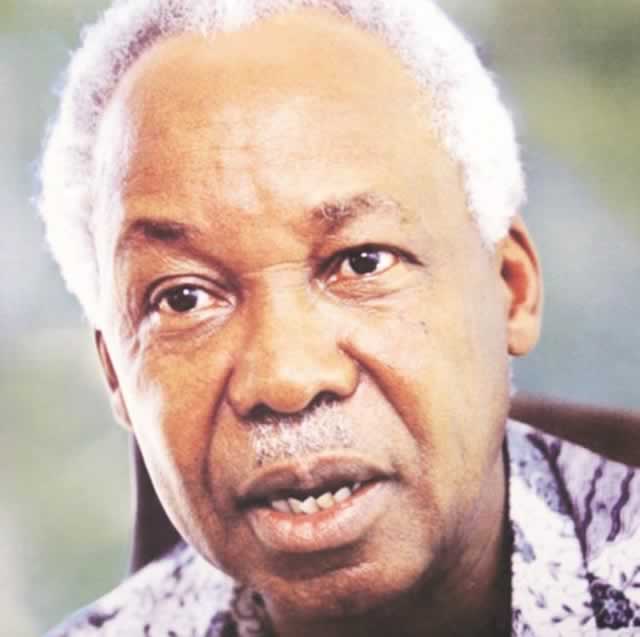
Elliot Ziwira At the Bookstore
It is now 22 years since Mwalimu Julius Kambarage Nyerere, the teacher, died on October 14, 1999, yet his legacy of love, unity and hope lives on.
A selfless doyen of the struggle against colonial hegemony and subjugation, Mwalimu Nyerere believed that shared hope was the only panacea to the total liberation of the people of colour.
In an obituary on one of Africa’s illustrious sons published in The Herald issue of October 15, 1999, historian David Martin captured the late former president of Tanzania’s words at the legislative assembly in October 1959, two years before Tanganyika’s independence.
Articulated the teacher: “We, the people of Tanganyika, would like to light a candle and put it on top of Mt Kilimanjaro, which would shine beyond our borders giving hope where there was despair, love where there was hate and dignity where before there was only humiliation. . .
“We cannot, unlike other countries, send rockets to the moon. But we can send rockets of love and hope to all our fellow humans wherever they may be.”
Such inspirational words, such wisdom, such selflessness, is what the Southern African Development Community (SADC) needs as the regional bloc gears up for the Day set aside for the fight against sanctions, October 25.
This is why on October 14 every year the regional bloc, Zimbabwe among them, join the rest of the continent and beyond in celebrating Mwalimu Nyerere’s self-sacrificing contribution to the total liberation of the oppressed black people.
Though Julius Nyerere Day is commemorated annually in Tanzania, the anniversary goes beyond the borders of Tanzania, as Southern Africa owed a lot to the freedom fighter, who was instrumental in the fight against imperialism, colonialism and racism on the African continent owing to supremacist inclinations of “othering”, inspired by colonial godfathers like Cecil John Rhodes.
Mwalimu believed in the warmth that comes with togetherness, shared aspirations and collective vision. He therefore laid a firm foundation that would sustain unity, peace, freedom and socio-economic prosperity on the continent.
As the then SADC executive secretary, Dr Stergomena Lawrence Tax underscored in a statement last year in tribute to Mwalimu Nyerere on the 21st anniversary of his death, the greatest honour that could be bestowed on him for his altruistic devotion to emancipation was to carry forward his “vision of peace, freedom, reconciliation, social cohesion, solidarity, resilience and development” for future generations.
Although 22 years have gone by since his death, Mwalimu’s footprints remain indelible across the Motherland, as he, alongside other distinguished African leaders, like Kwame Nkrumah, Abubakar Tafawa Balewa, Haile Selassie 1, Gamal Abdul Nasser, Milton Obote, Seku Toure, Leopold Senghor and Hastings Kamuzu Banda, played a crucial role in the establishment of the Organisation of African Unity (OAU) in 1963, which would later become the African Union in 2002.
Indeed, SADC’s story; from Zimbabwe, Angola, Guinea Bissau, Mozambique, Namibia, and South Africa, to the Comoro Islands, would be incomplete without the name Julius Nyerere. Together with other leaders, such as Kenneth Kaunda of Zambia and Sir Seretse Khama of Botswana, he founded the Frontline States.
Other leaders, like Samora Machel (Mozambique), Agostinho Neto (Angola), Robert Mugabe (Zimbabwe) and Nelson Mandela, would later join the Frontline States, following their countries’ independence, which later became the Southern African Development Coordination Conference (SADCC) in 1980, and subsequently, SADC in 1992.
On November 30, 1980, the late Dr Nathan Shamuyarira, then Information and Tourism Minister, extolled Mwalimu Nyerere ahead of his first state visit to independent Zimbabwe in early December of the same year, for his commitment to the country’s liberation struggle, and the critical role he played for the African cause.
“As the headquarters of the OAU, Tanzania has played a decisive and key role in the liberation of Africa,” Dr Shamuyarira acknowledged.
“On the one hand it was the Mecca of all refugees from Southern Africa and on the other, provided inspiration for our fighters. He is a man of peace, who created a truly non-racial society in Tanzania,” he added.
Mwalimu Nyerere unwaveringly supported Zimbabwe’s struggle, allowing for the establishment of guerrilla bases in his country, assisting in military training and providing financial support. He believed in sharing, even though his coffers were neither deep nor wide.
On September 29, 1965 Mwalimu Nyerere threatened to withdraw from the Commonwealth if Britain were to grant Rhodesia independence under minority rule, whether Rhodesia was in the grouping or not.
On his state visit in December 1980, the affable statesman rejoiced over Zimbabwe’s birth, and accentuated the need to remain vigilant as more challenges and dangers lurked ahead.
Cognisant of the essence of unity, peace and harmony in nation-building, Mwalimu reminded the newly born nation at a rally in Rufaro Stadium, attended by over 40 000 people, that independence could not automatically lead to freedom, justice and progress if corruption and laziness were allowed to take root.
Indicating that attainment of independence was the beginning of a new struggle, as it was the first step towards justice and freedom, he implored the people of Zimbabwe to be united against forces of disharmony and instability.
Known as the Father of the Nation—and Mwalimu—the teacher, to his compatriots, the late Nyerere, who was born in April 1922, became Tanganyika’s first Prime Minister at independence on December 9, 1961. One of Chief Nyerere Burite of the Wazanaki clan’s 26 children, he was elected president in 1962 when the country’s constitution was changed to that of a republic.
In April 1964, Nyerere became the president of the United Republic of Tanzania following the amalgamation of Tanganyika and Zanzibar. He was re-elected president in 1965, 1970 and 1975.
In 1977, he became chairman of Chama Cha Mapinduzi (CCM), which was formed after the merger of Tanganyika African National Union (TANU) and the Afro-Shiraz Party of Zanzibar.
A teacher by profession, Mwalimu Nyerere obtained a diploma in education from Makerere University, and later attended Edinburgh University where he earned an MA in 1952.
His Ujamaa or familyhood philosophy aimed at positioning Tanzania as a strong self-reliant socialist forte, was premised on rural transformation and sustainable development.
“There must be something wrong in a society where one man, however hard-working he may be, can acquire as great a reward as a thousand of his fellows can acquire between them,” he once outlined in his philosophy.
However, Ujamaa did not deliver according to plan.
“Tanzania is certainly not socialist—nor self-reliant”, he later admitted, adding, “The nature of exploitation has changed but it has not altogether been eliminated.”
Mwalimu Nyerere believed that education played a crucial role in social progress. He, therefore, promoted quality education resulting in a remarkable surge in school enrolment and literacy levels among his countrymen.
In recognition of his steadfast role in the liberation cause, in 2019, SADC adopted Kiswahili as a language for oral communication for its Summit.
To immortalise one of the continent’s greatest sons, and preserve his legacy, a statue is under construction at the African Union Peace and Security Building in Addis Ababa, Ethiopia.
Indeed, Africa will forever remain grateful for Mwalimu Nyerere’s sacrifices, resolute stance against colonialism, racism and neo-colonialism, as well as his endurance in the fight for justice.


 Online Reporter