Online Reporter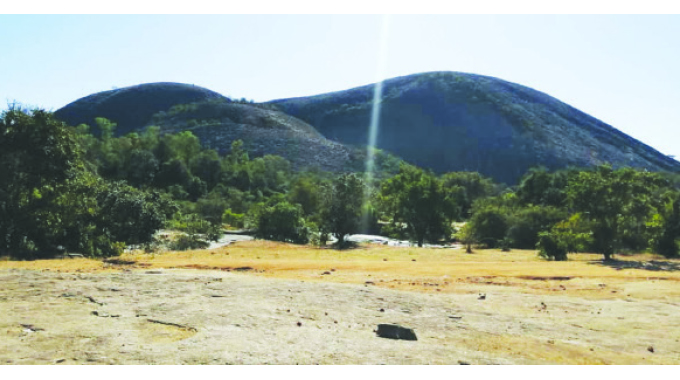
Edmore Maziofa-Correspondent
The hot summer air hits his face like the blade of a shredding knife. He is a frail man, with uncombed hair and vague liquid eyes, tears that tell of the time spent in this torture; with the weak fragile stature, he looks more of a comic character in children’s books.
Thirty tall Rhodesian troops are guarding him and getting him ready for execution. Chauya Chauya (CC) is his liberation name. A Zimbabwe African National Liberation Army (ZANLA) comrade had been captured in a recent battle in these parts.
His hands are tied on his back, his legs also knotted, but loosened a little by shackles to allow controlled movement during walking. Here and there he is violently pushed by a rifle butt and staggers to gain balance.
It is nightfall and the darkness hangs above the heads of the group of soldiers and their “slave”. From the hills, the terrain changes to a flat, sandy area of several acres with trees on this plain younger and shorter.
The planet’s yellow beam of light seems to fall into the rolling waves of grass, which the light hot summer wind just stirred, sending a ghostly whisper through it, the sound of this gentle breeze could be his last.
Just in front under a huge marula tree in the open field is a crowd of villagers, who are seated, their heads creating silhouettes from the sunset dusk.
The uneasiness cannot be missed: women with children on their backs leaning forward for balance, the dim light from the fire creating a warm, flickering and intimate glow that casts dancing shadows.
Normally it usually creates a cozy, relaxing atmosphere, often associated with feelings of comfort and tranquillity, but it’s the opposite. The petrified villagers had been called to witness a “terrorist” who is about to die and be an example, as if they didn’t know.
Among these Rhodesian soldiers are two of the Security Force Auxiliaries (SFAs) who are standing by with rifles and fixed bayonets. While the comrade is handcuffed, they pass a chain through his handcuffs and fix it to his belt, his arms tight on his thighs.
The soldiers, close to him, with their hands always on him in a careful, caressing grip, to make sure he was there. Their behaviour like men handling a fish which is still alive and may jump back into the water, but the comrade stood quite unresisting, compliant, his arms limply on the same position as though he hardly cares what was going to happen, displaying nothing but courage.
From the still sparkly night and the mysterious noises of the savannah, cattle cough drily in their pens, now and then an awl hoots as it searches for an evening catch. Crickets sounding their metallic chirp, deep underneath the ground.
Open fields shrubs look like a troop of ostriches in the moon’s dazzling rays.
It’s 1979 in this Zanla Operation area of Gaza Province in the Musikavanhu sector in Mwenezi Tribal Trust Land, Chief Mawarire area of Pazimani Village.
From the trembling crowd of villagers an individual sits uneasily. As everything unfolds, Enock Pfekeche, a mujiba, feels something has to be done to save this comrade and a feeling of worry, discomfort and anxiety is unmistakable.
He sneaks and disappears in the night to advise the section commander of the captive Mazarurahondo about the fate of his comrade.
The mujiba and other comrades coming to rescue their fellow cautiously crawled up the soft bank of a slow-flowing stream and gaze out on the open field, which in the moonlight looked like a frozen lake. Still grouped round the fire were villagers surrounded by Rhodesian soldiers.
“During the liberation struggle, there was some chemistry between the comrades and us the mujibas, we worked as a team on information matters. It was our job to make sure we give the right information to the comrades. When the news came that a comrade had been captured, we couldn’t stomach it, we felt we needed to act to save him hence I took the decision to escape and inform other comrades,” Enock said.
It took a shot in the air for the whole crowd to disperse, allowing CC to escape and join his comrades. They travelled amidst the serenity of the summer night to their base in Pazimani mountain, seven kilometres away.
“It was a very difficult situation, we had a captured comrade surrounded by armed Rhodesian troops, it was decided a bullet in the air would disperse the crowd, both civilians and soldiers thereby giving the captured comrade a chance to escape, which is exactly what happened,” added Enock.
The morning sun cast a rosy hue across the sunrise sky at Pazimani tribal trust lands, only to be disturbed by bombs from 82mm artillery shells in and around the mountain.
The Rhodesian soldiers were attacking the hide out of the freedom fighters who had earlier rescued their fellow.
Watching from a distance of three kilometres, trails of bombs exploding on the ground could be seen.
The bombardment continued for hours, shells bursting in plumes of smoke and dust, affecting a large radius, which would be saturated by a barrage of chunks and hot metal that sped through the air, slicing trees in half.
All over the mountain, missiles were falling like autumn leaves, disturbing the ecosystem on the edge of the mountain. This was the only safe place the comrades could hide in, but it was now under intense bombardment.
Towering trees were snapping and shredding, their bark stripped away, revealing the wood underneath. Their thick trunks were torn apart like plastics. From this mayhem there were bodies ducking and crawling for cover, rifles discharging bullets, their hissing sound adding to the chaos.
The comrades are trapped between the enemy and the edge of the mountain, their only source of cover destroyed. The blasts were creating shockwaves that ignited dry vegetation and fire was spreading and consuming the grass, producing intense heat and flames. The rising smoke provided cover, but the heat was unbearable for the trapped comrades.
The battle scenario made these warriors switch to survival mode.
“Our home is not far from this battle area, we were like an audience watching a theatre performance.
“We could smell death from that short distance, the noise was so devastating that up to today, I still hear the echoes in my head. We should enjoy our freedom knowing that there are some who gave their all for it,” said Jacob Macheza a local villager.
Four planes, an Augusta Bell helicopter known as “Cheetahs” from the then Thornhill Air Force Base in Gwelo, a Lynx, Allouitte 3 and at C-47 Skytrain dropped paratroopers as reinforcement in this guerilla base attack.
A loud, powerful and throaty rumbling sound of a Douglas C-47 Skytrain could be heard as more than 60 paratroopers tumbled out, landing in the open fields, less than hundred metres from the combat area.
More gunfire could be heard as the two groups continued to engage. Because of less cover, the Rhodesian troops were dropping like flies.
A soon as the airborne assault soldiers approached the ground, machine guns on the choppers blasted away in the thick forest on the edges of the mountains.
The noise of the engine, the rotor blades and gunfire from both sides, aided by the mountain echoes, created a blanket of noise any creature on the vicinity had never heard before. The Rhodesians’ only source of cover were gullies.
As the sun set below the mountain, the sounds of gunfire subsided with it. The following morning a dozen Rhodesians troops had been killed. Where the comrades went and how, only the nation’s spirit mediums know till today.