Chronicle Editor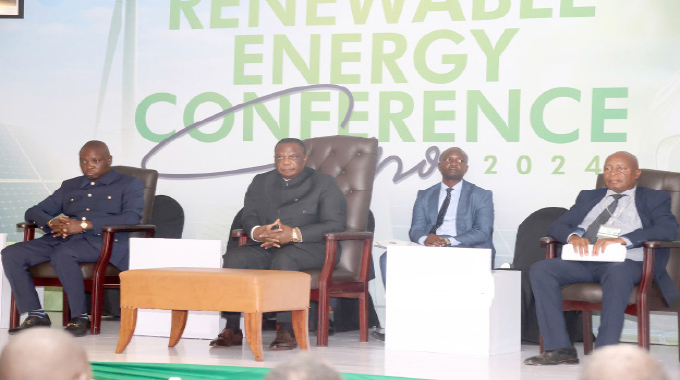
Nqobile Bhebhe in Victoria Falls
IN a compelling address delivered at the fifth international renewable energy conference in Victoria Falls yesterday, President Mnangagwa, represented by Vice President Constantino Chiwenga, reaffirmed Zimbabwe’s status as a prime location for investment. He stressed the nation’s commitment to expediting investments in renewable energy, which he described as readily accessible opportunities that will significantly contribute to the electrification of rural areas.
The President’s speech underscored the urgency of addressing the dual challenges of climate change and the need for industrialisation through decisive action and strategic investments. This approach is aimed at bridging the energy divide and propelling the country towards its modernisation and industrialisation goals, as outlined in the National Development Strategy 1 (NDS1). Energy is highlighted as a pivotal factor in driving sustainable socioeconomic advancement.
In response to the ongoing power shortages, the Zimbabwean Government is actively engaging in multiple electricity generation initiatives. These projects are predominantly funded through extra-budgetary allocations, loans, and contributions from the private sector, showcasing a collaborative effort to enhance the nation’s energy infrastructure.

President Mnangagwa’s message was clear – Zimbabwe is on a firm trajectory towards stabilising and boosting its overall energy production, marking a significant stride in the nation’s development journey.
The three-day conference which ended yesterday was held under the theme “Building a Sustainable Energy Future”.
“Our statistics reflect that Zimbabwe is making steady progress in stabilising and increasing total energy output. However, more work must be done to ensure consistent access to clean energy across our provinces, including in rural communities,” said President Mnangagwa.
“We, thus, stand ready to welcome more investors and partners to take up opportunities to promote new energy technologies and smart off-grid systems, across the country, with the Ministry of Energy and Power Development taking the lead. He noted that as the country march towards realising energy self-sufficiency, the Second Republic is increasing the share of renewables as we migrate from non-renewable sources.
Renewable energy, particularly solar, has been slowly closing the gap with the provision of electricity both at private individual and commercial levels.

The Government came up with the net metering concept where those producing solar energy can feed excess power to the grid. Other renewable energy options include wind, hydro, and hydrogen sources.
The conference is a partnership between the Ministry of Energy and Power Development and AMH Holdings. Delegates included Government officials, financiers, diplomatic missions, technology suppliers, independent power producers, academia, and partners like United Nations agencies.
Going into the future, President Mnangagwa said the Government will continue to prioritise the maintenance and rehabilitation of existing energy infrastructure over and above new green-field energy projects. With funding required to maintain and rehabilitation of existing energy infrastructure, President Mnangagwa stressed that the country is a safe investment destination.
“Zimbabwe is a safe investment destination. In the energy sector, renewable energy sources and technologies are low-hanging fruits for realising the goal of increasing the electrification of rural communities.

“Hence, the exploitation of clean energy sources, especially for establishing mini-grid systems, must be supported for accessible and affordable energy for all our people. Growing agricultural production activities and discoveries of exploitable mineral deposits across the country require solutions that are quick to deploy,” noted the President.
“I, therefore, challenge investors and other stakeholders to set aside resources for Research and Development towards understanding the needs of rural communities as well as to develop goods and services which give impetus to rural industrialisation and ultimately improve the quality of life of our people.”
To that end, he called for strategic partnerships in the sector.
“I invite strategic partnerships for the Rural Electrification Programme so that capacity is increased to roll out rural renewable energy projects and programmes. These include the adoption of new technologies to harness solar, wind, and biogas, among others.
“To this end, I commend Independent Power Producers and other private players who have taken up the challenge by investing in energy and power projects across all provinces, some of which will soon be ready for commissioning.
President Mnangagwa told delegates that the upgrading of the country’s Energy Generation, Transmission, and Distribution networks as well as other infrastructure is being scaled up.

“In view of the critical relationship between energy, and sustainable socio-economic development, I call upon the sector and in particular, the Ministry of Energy and Power Development, to enhance energy conservation and efficiency awareness.”
In addition, he noted that the provision of sound technical and professional services to investors and all stakeholders in the sector must be guided by the ease of doing business work ethic advanced by the Second Republic.
He challenged ministries, Departments, and Agencies in the energy sector to facilitate and not frustrate partners and investors. The Head of State further told delegates that Zimbabwe, being one of the founding members of the Accelerated Partnership for Renewables in Africa is collaborating and partnering with other African countries in the implementation of sustainable energy programmes and projects.
This he said is set to double our national energy- mix, while contributing to regional energy security and investment opportunities that leave no one and no place behind.
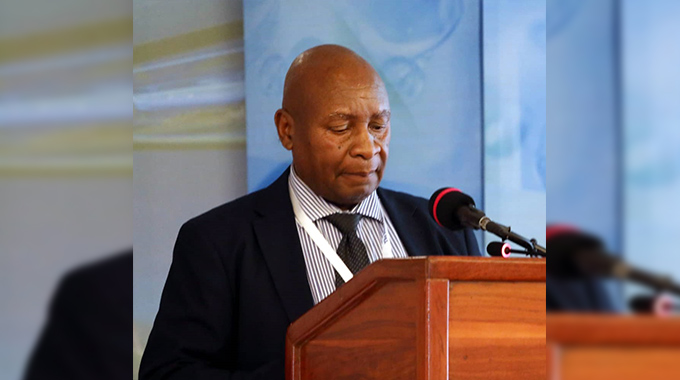
“The multi-pronged challenges of climate change coupled with the urgent need to industrialise our country demand you to be bold and decisive in the type of interventions and investments you make to close the energy gap. We cannot be found wanting and must keep up with the rest of the world,” he said.
“Conferences such as this and other platforms should critically examine the ongoing transition by incorporating the associated technological and socio-economic dimensions. Aspects related to the human capital development needs, in terms of skills and competencies that must be nurtured, should be given due attention.”
President Mnangagwa said the country is grateful for the invaluable partnership and support from the International Renewable Energy Agency, for the development of a Country Programme and Prioritised Strategy. This initiative will sharpen interventions specifically about access to clean energy by the health sector as well as the agriculture value chains, he said.
“The energy sector is also urged to equally shift the discourse so that we chart greener development pathways that do not compromise environmental biodiversity and our pressing need to modernise and industrialise Africa.
“On its part, my Government will continue to fine-tune policies and heighten the implementation of flagship projects to manage the uncertainties associated with climate change.
“Let us work concertedly to achieve net zero targets as outlined in the Nationally Determined Contributions (NDC). The Government Project Support and Implementation Agreement has been developed. The renewable energy targets based on the Nationally Determined Contribution are set to reduce greenhouse gas emissions while positively impacting on the demand and supply trends and maintain affordability of power to end-user consumers.”
He called on manufacturers of green energy solutions and products to be more proactive and establish factories in Africa. President Mnangagwa expressed confidence in the collective abilities, as stakeholders, to propel aspirations in the renewable energy sector.

He said as patron of the forum, his door remains open for dialogue towards accelerating defined targets in terms of both growing the energy mix and realising renewable energy transition in the country.
The high-level conference started on Wednesday and closes today with the Government expected to sign some agreements with independent power producers as the drive towards investment into renewable energy continues.
The conference sought to ensure utilities unlock value in renewable energy sources and partner with investors, at a time when climate change was negatively impacting economies.
Topical in the deliberations were investment into carbon credits and taxes, benefits of collaboration in investment into green technologies in the energy sector, and mobilising financing for various energy efficiency projects.
Yesterday, the Government granted licenses to several IPPs to start generating a combined total of 271 MW of renewable energy. The IPPs are drawn from across the country and the agreements date back to 2022 when the Treasury announced the Government’s intent to award projects.
Permanent Secretary in the Ministry of Energy Dr Gloria Magombo who announced the list of the IPPs said the projects are at various stages of implementation.



 Online Reporter