

 Moffat Mungazi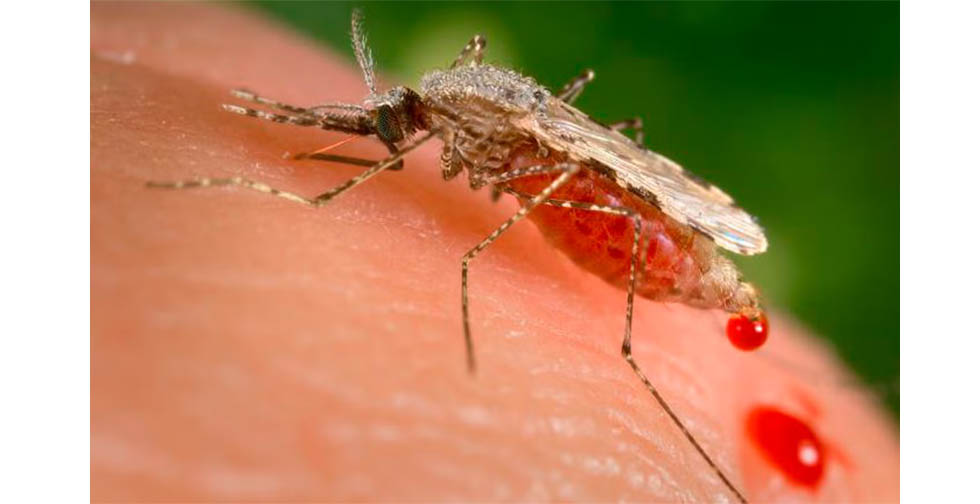
Samuel Kadungure
News Editor
MANICALAND is grappling with an unprecedented threat of malaria transmission and mortality after recording 9 926 malaria cases and 20 deaths from January this year, exacerbated by infestation of resistant mosquitoes, travelling to hotspots and recent excessive rainfall that leading to accumulation of stagnant water in mining areas that created ideal breeding conditions for mosquitoes.
The presence of anopheles fenestus — a breed of mosquito resistant to insecticides — has hit and spread across Manicaland, resulting in unprecedented cases of malaria prevalence, transmission and mortality.
Regardless of control measures like the use of insecticide-treated nets, chemotherapy and mosquito repellents, eradication of malaria has proved insurmountable, with Mutare — which, among other major cities, used to be malaria-free — now notorious for being the ‘‘biggest contributor’’ of the malaria burden in the province.
Manicaland Provincial Medical Director (PMD), Dr Munyaradzi Mukuzunga on Tuesday said a total of 9 926 malaria cases have been recorded since the beginning of the year, compared to 2 734 cases during the same period in 2024, presenting Government with a mammoth task to meet Sustainable Development Goals regarding health delivery.
Dr Mukuzunga said the spike in malaria cases has also resulted in a significant increase in fatalities, with 20 malaria-related deaths recorded to date.
However, the deaths could be underreported as some go unreported due to religious and cultural conspiracies in the province.
Most of the malaria deaths are among children under five years of age, who together with pregnant women, are most at risk.
Incidences of malaria peak between February and May in the province.
Dr Mukuzunga urged communities in high-risk areas to take preventive measures, including the use of mosquito nets, avoidance of stagnant water, and seeking immediate medical attention if they experience malaria symptoms such as fever, chills, and body aches.
The most affected areas include Ngorima, Chikukwa, Vhimba, Nyahode, Tilbury (Chimanimani), Paidamoyo, Junction Gate (Chipinge), parts of Mutasa and Mutare districts.
Chief of Party of Africa University’s Zimbabwe Entomological Support Programme in Malaria (AU/ZENTO), Professor Sungano Mharakurwa on Tuesday attributed the surge to incessant rains with bouts of sunshine, coupled with withdrawal of funding under the US President’s Malaria Initiative (PMI) to the malaria reference insectary unit at the university, which had grown into a major hub for the research of mosquitoes in Zimbabwe, feeding into the Ministry of Health and Child Care’s National Malaria Control Programme.
The unit was revered for collecting, cataloguing and breeding mosquitoes for malaria research.
“Two things happened this year — we had heavy rains similar to what we had in 2017. That could be one contributing factor. The rains were really good and inter-spaced, with bouts of sunlight, naturally conducive to malaria transmission.
“The second, and most important, was the issuance of stop work orders, and abrupt termination of a number of programmes essential to malaria research. One of them is the ZENTO programme in malaria, supported by USAID that was abruptly terminated.
“The termination unfortunately coincided with the peak of malaria transmission in the country. We were forced to stop on January 24, and the peak malaria transmission spans from February to May. So it coincided with the onset of the peak malaria season. The work we do is giving the National Malaria Control Programme technical data on malaria transmitting mosquitoes. That information is like intelligence in the war against malaria.
“We provide intelligence that guides the National Malaria Control Programme in their life-saving (mosquito control) interventions. When that was terminated, it has become difficult because they do not have that intelligence anymore. That information also involves which chemicals are effective, and which ones the mosquitoes developed resistance to, which species of mosquitoes are transmitting malaria, where are they biting people (indoors or outside) and the peak biting times. Even when we give them the most basic, they would score huge successes against malaria,” said Professor Mharakurwa, adding that ZENTO made breakthrough researches in Binga (2023) and Mutasa (2013).
“We had almost a national disaster in Binga in 2023, and we went there with the National Malaria Control Programme, did our investigations, and gave them the technical information, and since then, it became very peaceful, but I do not know how the situation is this year. In Mutasa, we gave that information, and they changed policy in 2014, which turned the tide against malaria in the district. It went down from number one to three, and Manicaland went down to number three.
“So for me, this is one of the negative impacts of the foreign aid termination.
There is also another malaria programme — ZAPIN 2 — which distribute nets, and also supports case management, among a whole portfolio of malaria interventions, that was terminated. When we provide intelligence for the Ministry of Health and Child Care to combat malaria, Zapin 2 will also contribute with support for interventions. This is something I really feared would happen.
“It was the wrong time to terminate the programmes. I know that there are some representations to try and see if these programmes can be restored, but who knows? I do not have anything against President Trump’s administration, except to say this is one of the adverse effects, and hope they will reconsider resuscitating these life-saving programmes,” he said.
Professor Mharakurwa said they found areas that were showing resistance to fludora fusion, an insecticide used for malaria vector control, specifically for indoor residual spraying (IRS) in Chipinge.
Fludora fusion combines two active ingredients — deltamethrin and clothianidin — to combat insecticide resistance and provide robust, long-lasting protection against mosquitoes, but was not being effective in the district.
“We detected resistance to the chemicals that make this insecticide. The two chemicals were not very effective in Chipinge,” he said, adding that the Southern Africa International Centre of Excellence for Malaria Research (ICEMR) was able to detect the actual mosquito spreading malaria in Mutasa.
“We found that it was anopheles fenestus, and further found that it was resistant to the family of insecticides that were being used. The ministry then changed policy and there was a 65 percent drop in malaria cases in Mutasa.
“We have another research project which looked at malaria in the City of Mutare. We looked at the risk factors in the city. One of the most serious risk factors in Mutare and elsewhere is the artisanal miners. They are really ganged to malaria for whatever reasons. They are up to 30 times more likely to be malaria victims than everybody else. The way they work, they have the breeding sites, sometimes work at night, and they are bitten there. The other risk was the travel to malaria areas within Zimbabwe and Mozambique. There is also local malaria in Mutare now.
“There is no doubt, of course, that we are connected as we have relatives across Mozambique, and there is a lot of travel in-between, with some people getting malaria that side and coming back with the disease, and vice-versa.
“Travel is a hazard, be it to Mozambique or into malaria parts of Zimbabwe. One can also catch malaria that way. We have collaborations with the research community in Mozambique and, interestingly, everything we say about them, they say about us. They regard the malaria from Zimbabwe as the most terrible. I do not really believe Mozambique is to blame for what is really happening here,” he said.
The Ministry of Health and Child Care has already proposed that Treasury presents a supplementary budget to address the impact of the withdrawal of United States funding for the health sector.


 Online Reporter