Online Reporter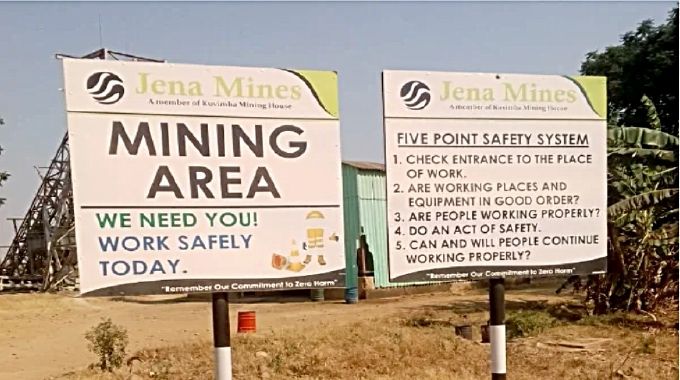
Victoria Mabhayila [email protected]
Zimbabwe stands at a defining moment in its mining history. From the gold-rich belts of Mashonaland and Midlands to the lithium deposits of Goromonzi and Buhera, mining is increasingly becoming a key driver of economic growth.
The sector contributes significantly to foreign currency earnings, employment creation, infrastructure development, and national revenue. Government projections continue to position mining as a cornerstone of Zimbabwe’s economic transformation agenda.
Yet beneath this promise of prosperity lies a critical question: at what environmental and social cost should mineral wealth be extracted? Mining can uplift communities, stimulate local economies, and attract foreign investment.
However, when poorly planned or inadequately regulated, it leaves behind polluted rivers, degraded landscapes, displaced communities, and long-term environmental damage. This is why Environmental Impact Assessments (EIAs) remain one of the most important tools in promoting responsible and sustainable mining.
An EIA is more than a legal requirement; it is a planning and decision-making process that identifies potential environmental and social impacts before a project begins. It allows risks to be anticipated, communities to be consulted, alternatives to be evaluated, and mitigation measures to be developed. In Zimbabwe, prescribed mining projects are legally required to undergo an EIA before commencement. While some investors may view the process as an administrative hurdle, the reality is that EIAs often save companies, communities, and governments from far greater costs in the future.
The importance of EIAs becomes clear when considering the wide range of mining impacts: land clearing destroys vegetation and habitats; excavation destabilises soils, increasing erosion; tailings contaminate rivers and groundwater; dust emissions affect air quality; and noise disrupts communities. Without adequate planning, these impacts can persist for decades after a mine has closed.
Zimbabwe has already witnessed the consequences of neglecting EIAs. The Marange diamond fields (2006-2010) generated significant revenue but also caused environmental degradation, water pollution, loss of grazing land, and displacement of communities. The Marange experience highlighted that economic benefits alone do not guarantee sustainable development and that where environmental and social concerns are ignored, communities bear costs long after mineral deposits are exhausted.
By contrast, the Jena Gold Mine study in 2025 revealed persistent challenges such as mercury contamination and deforestation, but within a stronger legal framework that now requires EIAs before permits are issued. This evolution shows that EIAs have shifted from overlooked paperwork to legally binding instruments for accountability and sustainability. Proper implementation ensures communities are consulted, ecosystems protected, and mining projects remain economically viable.
The impacts of inadequate planning extend beyond local communities. Water pollution affects entire catchments and downstream users, threatening agriculture, domestic supply, and industrial activity. Contamination through acid mine drainage or chemical spills undermines food security, public health, and productivity. EIAs play a critical role here, enabling developers to design effective mitigation measures such as water treatment systems, waste management facilities, rehabilitation plans, biodiversity conservation programmes, and community engagement strategies.
Beyond environmental protection, EIAs also serve a vital social function. Mining often affects nearby communities i.e. farmers may lose grazing land, households may face relocation, and infrastructure may be strained. Through stakeholder consultation, EIAs provide a platform for communities to voice concerns and contribute to decision-making. This engagement is essential for securing a “social licence to operate”, without which projects risk protests, legal challenges, and reputational damage.
From a business perspective, EIAs are not merely obligations but strategic investments. The cost of remediation after damage is far higher than prevention. Regulatory penalties, litigation, delays, and negative publicity can erode profitability and investor confidence. Companies that integrate environmental considerations into planning are better positioned to manage risks and attract investment. In today’s era of Environmental, Social, and Governance (ESG) standards, responsible environmental management has become a competitive advantage.
This is particularly relevant for Zimbabwe’s rapidly expanding lithium sector. Global demand for lithium has surged due to its role in electric vehicles, renewable energy storage, and consumer electronics. Zimbabwe, with some of Africa’s largest hard-rock lithium deposits, is emerging as a major player in this market. Yet lithium extraction involves large-scale excavation, land clearing, water use, and waste generation all of which pose risks if not carefully managed. Communities may face changes in land access, water availability, and livelihoods.
The lessons from Marange and Jena underline the need for proactive planning in lithium mining. Every new project should be supported by a comprehensive EIA that goes beyond compliance — evaluating cumulative impacts, long-term sustainability, climate risks, and ensuring meaningful community participation. Strong monitoring must continue throughout the mine’s life, and not end once approvals are granted.
The April 2024 High Court ruling reinforced this direction, declaring that mining operations could lose permits if they commenced without an EIA certificate. This judgment reaffirmed EIAs as a legal prerequisite under the Environmental Management Act and signalled stricter enforcement across the sector.
Ultimately, the advantages of thorough EIAs far outweigh the costs. Projects benefit from improved planning, reduced risks, stronger stakeholder relationships, and greater investor confidence. Communities gain a voice in decisions affecting their lives, while ecosystems receive protection through informed management. Conversely, the absence of robust EIAs leads to environmental damage, public opposition, legal disputes, reputational harm, and costly remediation.
As Zimbabwe expands its mining sector, sustainable development must remain central. Mineral resources are finite, but environmental damage can persist for generations. Responsible mining requires safeguarding the natural systems and communities that support human well-being. EIAs provide the foundation for this balance by anticipating risks, promoting accountability, and ensuring that development today does not compromise tomorrow’s opportunities.
The effectiveness of an EIA depends not only on the quality of the assessment itself but also on continuous environmental monitoring throughout the life cycle of a mining project. Ongoing monitoring ensures that predicted impacts remain within acceptable limits and that mitigation measures are effectively implemented. In a country blessed with abundant mineral wealth, the true measure of success will not be how much is extracted, but how responsibly it is done. Every mining project needs an Environmental Impact Assessment, because sustainable development begins long before the first blast, excavation, or shipment of ore. It begins with understanding impacts, managing risks, and protecting the future.