


 Vusumuzi Dube
Rutendo Nyeve, Features Reporter
ZIMBABWE, like a number of countries in sub-Saharan Africa, has always considered the institution of traditional leadership as central to the governance of communities in the nation.
While traditional authorities take various forms and shapes in many African countries, in Zimbabwe, the structures and systems of the institution of leadership in Ndebele, Shona, Kalanga, Tonga and Venda ethnic communities have some remarkable differences even though they also depict certain similarities.
The institution of traditional leadership comprises chiefs, headmen and village heads. Village heads are physically the closest to the people and thus, have the most interactions with the citizens in rural areas.
Prior to the colonisation of Zimbabwe, elementary history has it that the institution of traditional leadership was the sole governance structure with legitimacy to govern derived from tradition and culture. Traditional leaders had fused ‘governmental’ powers and authority. These included judicial, administrative and political powers.

Soon after colonisation in 1890, the colonial government dismantled, and in some cases replaced, traditional governance structures with ‘modern’ State institutions as it sought to advance its interests and exercise firm control over the ‘African’ population.
The colonial rule embarked on a diversity of measures that corrupted the institution of traditional leadership. One of these measures which the Chief’s Council President Chief Fortune Charumbira always cried foul over was the confiscation of land.
However, the attainment of independence and the ultimate land reform programme came as a relief to the traditional leadership as it set in motion the restoration of the traditional leadership back to their pragmatic positions.
The restoration saw the country’s first constitution drafted solely by Zimbabweans positioning traditional leaders as a vital cog and key institution in safeguarding the culture and heritage of the country.
Zimbabwe adopted a new Constitution in 2013 which, among other things, recognises the role of the institution of traditional leadership which operates alongside modern state structures. While strengthening the role and status of the institution, the Constitution also regulates the conduct of traditional leaders. The Constitution observes traditional leaders as important authorities that undertake important responsibilities especially in rural areas where 67 percent of the population resides. Traditional leaders deliver various government responsibilities in some parts of the nation where the State has no or a limited presence. Their legitimacy, control and influence in rural areas remains widespread demonstrating remarkable resilience, despite facing various threats.

Perhaps that is the reason why successive governments in the colonial and post-independence period might have sought to maximise the traditional leader’s strengths for their narrow political interests. However, the Second Republic has shunned that practice opting to strengthen the institution by highly valuing it. This has been through capacitating them with motor vehicles, involving the whole traditional leadership in broader national events contrary to having chiefs alone, installing inaugural chiefs in previously marginalised communities like the San as well as extending Isiphala Senkosi to the downstream traditional leadership institution among other initiatives.
The past two months have seen a hive of activity within the traditional leadership corridors. The Southern region of the country witnessed more events which among other issues reaffirmed the Second Republic’s commitment towards valuing the traditional leadership.
Perhaps the eye opener to the people of Matabeleland and the entire nation, which revealed how the Second Republic had taken deliberate steps to value traditional leadership was witnessed on 28 May 2022. This was the day when Vice President Dr Constantino Chiwenga attended the late Chief Mabhikwa’s burial in Lupane, Matabeleland North.
In June during the same year, Dr Chiwenga visited the Nhlamba homestead in Gwanda, Matabeleland South province following the death of Chief Nhlamba to pay his respect. It was quite shocking to some that the Presidium of the nation had chosen to mourn and bid farewell to the Chiefs.
Fast forward to March 2023, President Mnangagwa convened the Annual Chiefs Conference in Bulawayo which for the first time was attended by headmen. This was to ensure information dissemination to villagers would be done swiftly and efficiently. It was also a deliberate effort by the Second Republic to value the traditional leadership institution which is not only composed of Chiefs but Headmen and Village Heads as well. The conference also saw more than 50 Chiefs receiving motor vehicles purchased by Government.
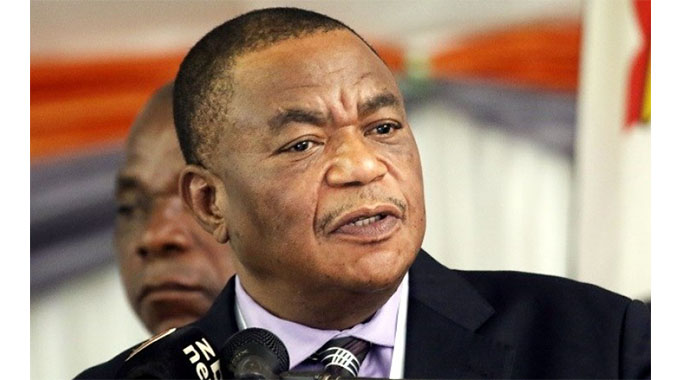
Last Saturday, Chief Maduna became the first Chief to be installed as a Chief by the President of the country.
The gesture by the President not only affirmed the Second Republic’s commitment to restoring the dignity of Chiefs but reaffirmed the institution’s role in bringing the Government closer to the communities.
“Traditional leaders are a vital cog and key institutional component in development, as they nurture people driven and grassroots innovations with regards to improving the quality of lives of communities,
“It is through our traditional leaders that Government is brought closer to communities, to make it more accessible; responsive and accountable. This reinforces community resilience anchored by our traditional leaders, who are the custodians of our land, culture and natural resource endowments of our beloved motherland, Zimbabwe,” said President Mnangwagwa in Filabusi last week.
The installation of Chief Maduna was the 11th in two months (March and April) in the Southern region of the country. Four other chiefs were installed in February. According to the Ministry of Local Government and Public Works, three chiefs were appointed on December 28 2022. Chief Gudo of Masvingo Province, Chief Sikangele and Chief Sinamagonde were then installed during March.
Chief Mukanganwi who was appointed on 6 December 2022 was installed on 22 March while Chief Budzi was installed the following day. Of note was the historic and joyous moment for the San community as Government installed the inaugural Chief Goledema on 30 March. This was a day after the installation of Chief Mahlathini, from Tsholotsho. Mr Christopher Dube (59) became the first chief from the San community after they lobbied Government to have a traditional leader.
The San community which is found on the outskirts of Bulilima District, Matabeleland South and Tsholotsho District in Matabeleland North had lived under the dominion of the Kalanga and Ndebele communities for the past century. However, the respect for traditional leadership being exhibited by the Second Republic saw the community being appointed their own chief.
The Second Republic also re-introduced Isiphala Senkosi and extended it to all traditional leaders. Isiphala Senkosi is a grain reserve that is located within chiefs’ homesteads and provides food for vulnerable members of the community.
The Isiphala Senkosi programme was reserved for chiefs, but now also covers 500 headmen and 36 000 village heads –@nyeve14



 Bongani Ndlovu
 Online Reporter