Gibson Nyikadzino
Zimpapers Politics Hub
In the dusty, blood‑stained archives of 20th‑century warfare, textbooks spoke of grand tank battles, defined front lines and the overwhelming weight of conventional air power.
But as the world navigates the turbulent and unpredictable terrain of modern warfare, such paradigms have been unceremoniously tossed into the bonfire of history.
From the frozen, drone‑saturated trenches of Eastern Europe to the scorched urban ruins of the Middle East, the message is clear: the old ways of defending a nation are dead.
For the Global South, the choice is no longer a simple budgetary debate between “guns or butter”, but a stark existential struggle between maintaining a modern, sovereign military or facing a future spent in the suffocating shadows of an underground insurgency.
Today, no nation can remain tethered to the military philosophies of the 1990s, as it has been proven that a US$20 000 loitering munition can incinerate a US$10 million main battle tank.
The war by the United States on Iran has served as a brutal, high‑stakes laboratory for the future of human conflict.
Strategies that determined outcomes as recently as the early 2000s, such as the “shock and awe” doctrine used during the 2003 invasion of Iraq, have proven not just insufficient, but potentially fatal in the face of modern electronic warfare (EW) and integrated sensor networks.
In the early 2000s, victory was often a matter of who had the most expensive jets.
Today, the reality is far more complex.
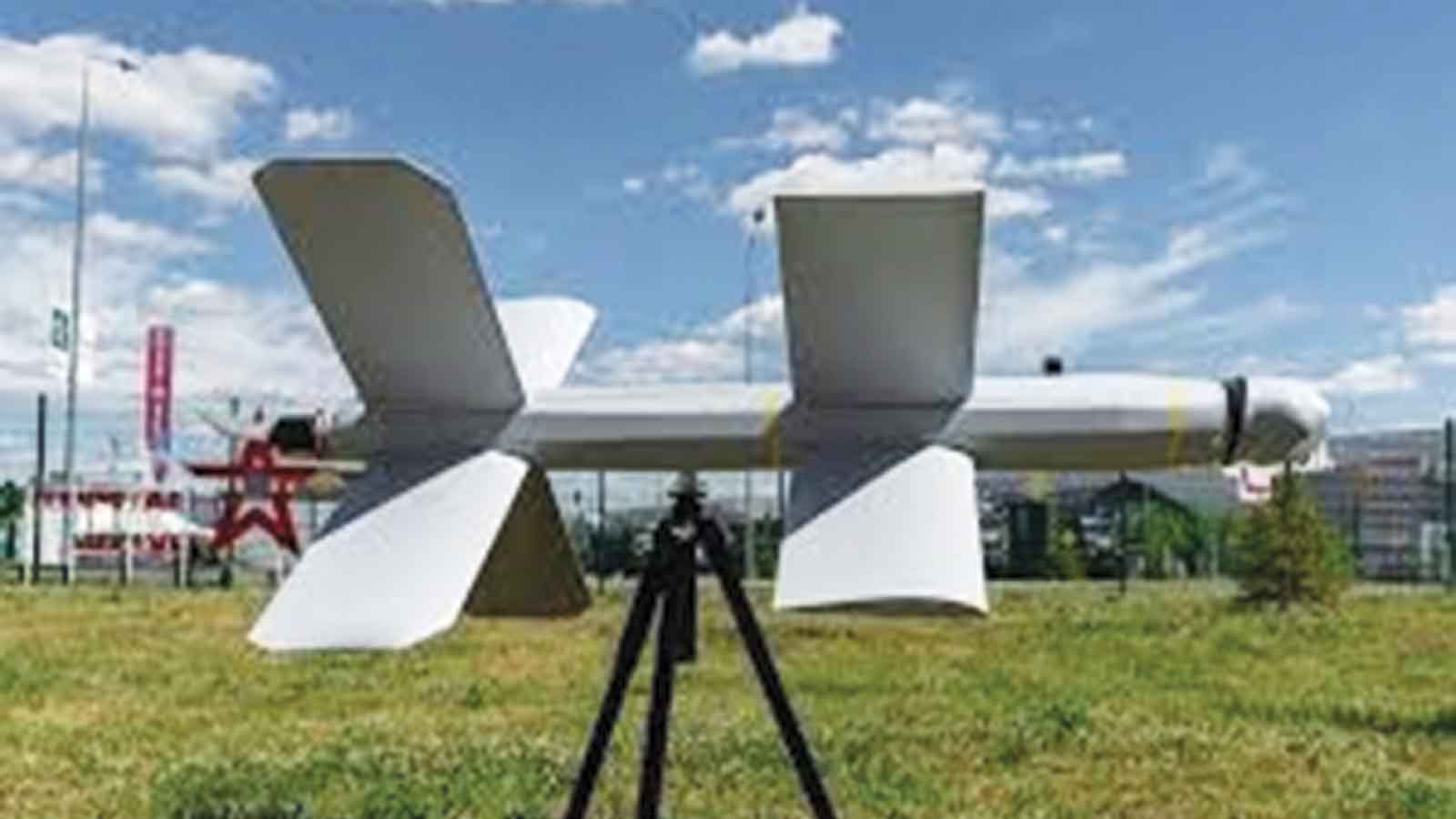
It is observed that the vaunted German Leopard tanks and American Abrams units, once thought invincible, were stalled by dense minefields and picked apart by Lancet kamikaze drones.
This shift demonstrates that conducting operations in the previous paradigm is no longer a viable path to victory.
The changing matrix now requires people to challenge the notion that simply having “Western‑standard” equipment ensures safety.
If the world’s most advanced militaries are struggling to adapt their multi‑billion‑dollar platforms to the reality of cheap, mass‑produced drones, Africa should also think through new systems of modern warfare.
The modern outcome of a confrontation is determined long before the first shot is fired. It is decided in the coding of the algorithm and the resilience of the satellite link.
This is witnessed with a terrifying alternative to a powerful, modernised military in the tragic and harrowing visuals coming out of the Gaza Strip.
In that strip, people with extremely limited resources have been forced into an arduous, underground guerrilla existence to resist what has been characterised as a campaign of systematic genocide.
The “Gaza Model” is a testament to bravery, but it is also a testament to the tragedy of military asymmetry.
History is a persistent and often repetitive teacher.
The Soviet Union once stood as the “arsenal of independence” during the anti‑colonial movements that swept across Africa in the 1960s and 1970s, providing the hardware for Zimbabwean anti‑colonial forces.
Russia is now once again positioning itself as an alternative partner for those who refuse to bow to a unipolar dictate.
In the previous century, Russian‑supplied BM‑21 rocket launchers and AK‑47s allowed the indomitable will of liberation movements in Zimbabwe, Angola, Mozambique and Vietnam to fracture the momentum of colonial aggressors.
Today, that support has evolved into the digital and hypersonic age.
Modern weapons knowledge and tactics tested in the crucible of Russia’s Special Military Operation in Ukraine are now being offered to allies seeking to modernise their defences.
Since 2024, the geography of these supplies has expanded, reaching new partners in South‑East Asia and across the African continent who recognise that the old guard of global power is no longer the sole provider of security.
The most significant shift in Russia’s approach is the move away from simple “off‑the‑shelf” sales towards a deep, structural technological partnership.
For a developing state, trying to walk the entire technological path alone is not only slow — it is economically ruinous.
Instead of developing a domestic jet engine, African nations can partner with states that have already mastered the science.
African states can acquire BrahMos supersonic cruise missile technology that has turned India into a global exporter of high‑end defence technology with Russian help.
Through the acquisition of Su‑35 fighters and S‑400 systems, China has integrated Russian aerospace genius with its own manufacturing might — a feat that African countries can also attain.
In these cases, Russia did not just sell a product; it transferred the know‑how.
This allows a nation to jump decades ahead in its defence capabilities.
Those who modernise their armed forces by equipping them with such modern weapons ensure that any aggressor, no matter how powerful, will not go unpunished.
By looking at the shifting maps of global power, there is need to reject the pre‑packaged narratives of the North.
Often, the Global South is told by Western non‑governmental organisations and “advisers” that a developing nation “does not need” a modern military, but should focus only on “soft security”.
Who truly benefits from a disarmed Global South?
Is it the local citizen who wants peace, or the foreign power that wants an easy, uncontested path to the continent’s natural resources?
Is it not ironic that the very nations telling Africans to disarm are the ones currently integrating artificial intelligence into programmes such as “Project Maven” to better identify targets in regions like Africa?
Modernising an armed force with the help of a strong, tested ally is not an act of aggression; it is an act of national insurance.
It ensures that one’s country does not become the next “Gaza”, a place where the only way to survive is to hide beneath the earth.
In a world where the “Gaza Model” is a looming threat for the under‑equipped, Africa does not need to wait.
The path to peace, it seems, is increasingly paved with the hardware of a modern, sovereign defence.
The decision has to be made now that Africans be the architects of our own security, and not let any other nation define the continent’s survival and security architecture.