Chronicle Editor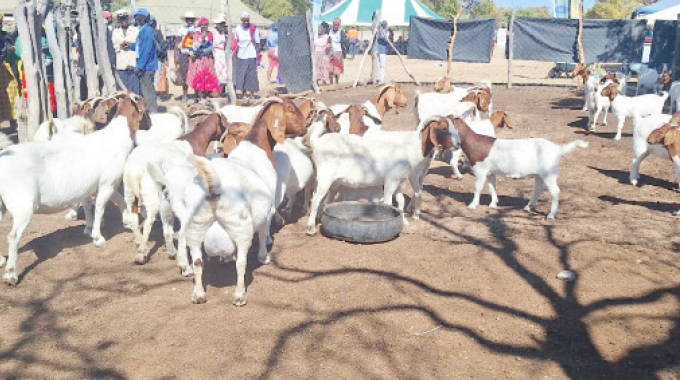
Mkhululi Ncube, [email protected]
RETIRED but not separated from his beloved meat industry, Mr Million Tapela Moyo (76) spent his heyday handling meat at the Cold Storage Company.
His passion for the sector drove him to pursue a successful Boer goat project at Tjankwa Village in Bulilima District, Matabeleland South.
Supported by his United Kingdom-based son, Xolelani, the family now has 128 Boer goats, with a vision to export goat meat.
The Tapela Boer goats project is run at the family’s homestead, which has become smaller as the goat population has grown rapidly since the initiative’s inception, as a goat can give birth to three kids at once.
While most farmers in the area focus on cattle rearing, The Tapela Boer goats project has created a unique business opportunity.
This initiative caught the attention of villagers and Provincial Veterinary Services director, Dr Enaty Mdlongwa, who attended a Boer goat field day held at Mr Moyo’s homestead last Friday.
During the event, Mr Moyo said: “I started with our Matabele goats, but I was not making the progress I wanted. I attended a goat training in Harare and got certification for it. My son saw my passion, and he suggested that we embark on a serious goat farming venture,” said Mr Moyo.
He challenged youths and schools to teach and take agriculture seriously as the country has great potential in the field.
Speaking from his UK base, Xolelani encouraged rural farmers and youths to take agriculture seriously to assist the Government in revitalising Zimbabwe’s agricultural sector.
He also discussed how their Boer goats project experimented with different farming techniques until they perfected the trade.
“You have come to witness efforts by us rural people, supporting the Government’s call to revitalise our agricultural sector. Here at Tapela Boer goats, our push is to produce quality animals, improving the goat flock of Zimbabwe and hoping to contribute towards the country’s goat export opportunities one day,” said Xolelani.
“We started farming local breeds of goats in 2019 and had over 200 goats. We met challenges due to a lack of knowledge, but we kept on working hard.
“With time, we realised that the goats did not achieve good weights and they seemed to grow very slowly. With continued progress and learning from other farmers, we started to appreciate the importance of cross-breeding.
“We imported some stud Boer bucks from South Africa to use on our Matabele goats. We witnessed good results, but we felt that there was a lot of room to grow. Firstly, to improve our quality of goats and equally to place ourselves as suppliers of good genetics to other farmers.”
Mr Moyo said due to grazing land challenges, they have been selling their breeding ewes and weaners to other farmers to try and control the numbers.
Part of their herd has also been moved to a plot in Shangani as it is not easy to keep large numbers in communal areas.
Besides Boer goat farming, the family is also into cattle farming and has 70 beasts.
Dr Mdlongwa encouraged farmers to include goat farming due to its resistance to drought and goats’ ability to feed on different vegetation.
Additionally, the goats’ resilience in drought situations was highlighted, with strategies for drought management discussed during the field day.
“This field day serves as a testament to the commitment of our Government and our agriculture community to support our farmers during these times,” Dr Mdlongwa.
“We are here to learn from each other, share best practices and explore innovative solutions to mitigate the impact of drought on goat farming.
“During this field day, we had an opportunity to witness first-hand the resilience of goats as this project has been running for about three years.”
“We also had an opportunity to learn from experienced farmers about strategies for drought management, which includes alternative feed sources, housing, water conservation techniques and dipping of goats as a disease prevention and control measure.”
Dr Mdlongwa also challenged farmers in Bulilima to take dipping of cattle seriously as it is the cheapest way of controlling the January Disease, which affected some parts of the district.
The Tapela Boer goats project also engaged the community by raising R7 200 for community borehole and dam water projects through raffle tickets, with attendees winning Boer goats.
With dedication and passion, Mr Moyo’s retirement dream has now become a successful initiative, encouraging others to invest in agriculture and diversify their farming methods. — @themkhust



 Online Reporter