Online Reporter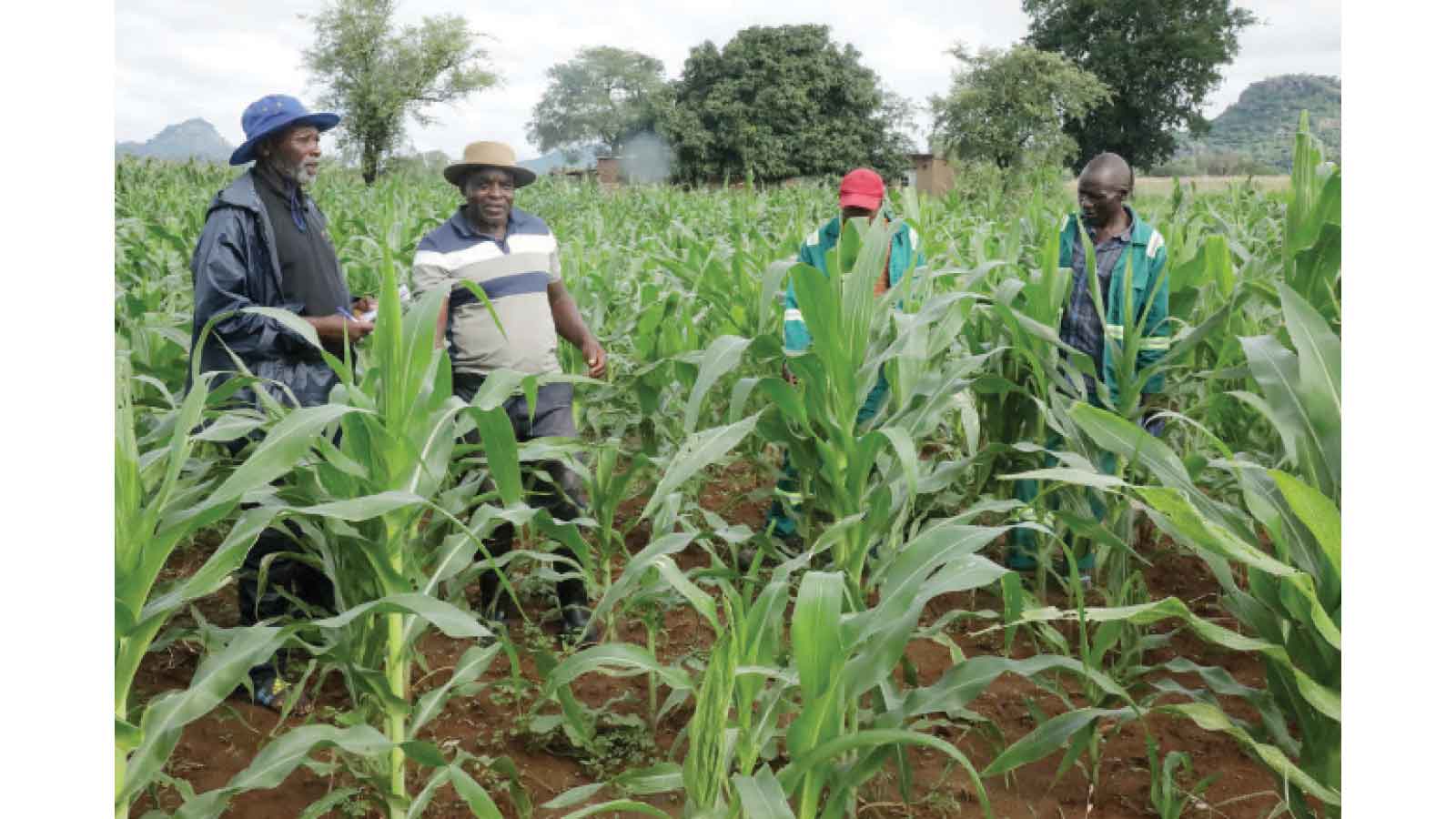
Theseus Shambare
AFTER the recent mid-season dry spell, recent rains, which are expected to continue this week, have eased farmers’ anxieties amid renewed expectations of a bumper crop for the 2025/2026 season.
Much of the country received steady early rains, encouraging planting even in areas traditionally considered too dry for certain crops.
In Matabeleland North, for instance, 40 hectares of flue-cured tobacco have been planted – evidence of the continued expansion of the lucrative crop into non-traditional regions. But optimism faded over the past two weeks as prolonged sunny conditions set in across much of the country. Farmers were forced to suspend critical activities such as weeding and application of fertiliser.
The dry spell came at a time when some crops were in vegetative stage, while others were tasselling, triggering widespread concern, especially among smallholder farmers who are heavily reliant on rain-fed agriculture. However, the Meteorological Services Department (MSD) has since made assurances that the rains are returning.
The forecast aligns with projections from the 32nd Southern African Regional Climate Outlook Forum (SARCOF-32), which indicated that countries in the Southern African Development Community, including Zimbabwe, should expect normal to above-normal rainfall between February and June.
The MSD says a return to normal rainfall patterns began on Friday, offering renewed hope for crops that had begun to show stress under dry conditions. The MSD forecasted mixed weather conditions from yesterday to Wednesday, with scattered showers mainly in central and northern Zimbabwe, and drier conditions in the south.
Central areas, including Harare, Chinhoyi, Marondera, Kadoma, Kwekwe and Gweru, are expected to receive intermittent light to moderate rainfall, especially early in the period, with some centres seeing heavier showers towards mid-week. Bindura is forecast to be among the wetter towns, with rainfall increasing towards Wednesday.
In contrast, southern regions such as Masvingo and Gwanda are expected to remain largely dry and sunny, while Bulawayo and Lupane may see isolated showers early on before turning drier.
In an interview with The Sunday Mail, MSD head of forecasting Mr James Ngoma described the dry spell as a typical seasonal pattern.
“The systems are very normal during this period. We know that peak rainfall occurs from December into January, and it suddenly dries up for a few weeks,” he said.
“This is what we call the mid-season dry spell. Rains are expected to resume this week and continue through February and March, complementing farmers’ efforts.”
In a separate interview, Permanent Secretary in the Ministry of Lands, Agriculture, Fisheries, Water and Rural Development Professor Obert Jiri said the dry spell should be viewed as a natural and even necessary phase of the rainfall season.
“We are pleased that MSD has confirmed the return of rains. Farmers and authorities have played their part; now we wait for nature to complement these efforts. We have left no stone unturned in our quest for food security everywhere, every day,” he said.
The country’s food security position, he said, remains stable ahead of the upcoming harvest.
“Zimbabwe remains food secure. Our Strategic Grain Reserve currently stands at 187 204 tonnes, including 39 000 tonnes of maize, 118 000 tonnes of wheat and other grains,” he said.
“We have acquired additional trucks and established distribution points nationwide in anticipation of a bumper harvest. Our priority is ensuring no Zimbabwean goes hungry.”
Early findings from the Crops, Livestock and Fisheries Assessment One (CLAFA1) support the bullish outlook.
Crops are generally in good condition and national planting targets have largely been exceeded.
The country has achieved 103 percent of its maize target of 1,8 million hectares, 132 percent of the rapoko target and more than 100 percent of targets for tobacco and groundnuts.
At the provincial level, performance has also been strong.
In Mashonaland West province, acting director of Agricultural and Rural Development Advisory Services (ARDAS) Mrs Evelyn Ndoro said farmers exceeded provincial targets in maize, groundnuts and tobacco.
Sorghum is nearing the target of 46 000 hectares, with 42 000 hectares already planted, while cotton production has lagged because of limited seed availability.
“The crops are generally looking good and farmers are supplementing with top-dressing fertilisers, thanks to recent rains,” she said.
Manicaland province is reporting similarly robust progress.
Maize planting has reached 274 839 hectares, 3 percent above the provincial target of 265 000 hectares.
Provincial ARDAS director Mr Nhamo Mudada said crops planted in mid-November are in good condition, with some benefiting from supplementary irrigation and expected yields exceeding eight tonnes per hectare.
“We are excited by the progress of our summer cropping season and are aiming to fill the newly expanded silos in Mutare with the expected harvest,” he said.
With rainfall expected to stabilise, planting targets surpassed in most crops and grain storage and distribution systems strengthened, Zimbabwe enters the second half of the 2025-2026 agricultural season with renewed confidence and rising hopes for a bumper harvest.