Vusumuzi Dube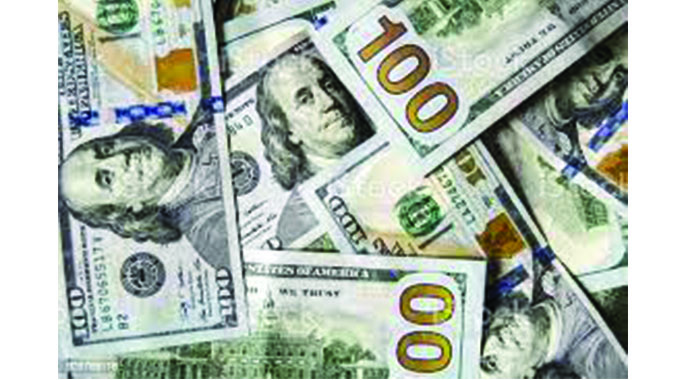
Ekasi Stories with Clifford Kalibo
ACCORDING to the Collins English Dictionary and the Cambridge Dictionary, a bonus is a gift to reward performance, either paid by a private employer or by a government, and a bonus is an extra amount of money given to someone as a reward for work or as encouragement, respectively.
November is traditionally the month for bonus payouts. During the yesteryears, November would bring with it an unprecedented thick atmosphere of excitement. So great would be the November excitement that one could almost “touch” it with his or her hands.
As from 15 November or thereabouts, when the teachers and the PTC (Posts and Telecommunications) staff got paid their bonuses, the city centre and the townships would roar into activity.
Other companies like the Cold Storage Company, Electricity Supply Commission (ESC) and the Bulawayo City Council would follow suit as from 20 November, and Government civil servants would receive their packages shortly after that. The Railways employees got paid around 28 and 30 November for the lower grades and higher grades respectively.
By now the big shops in town would be in full throttle business as the shops would be full to capacity with shoppers. People would be seen pushing trolleys full of groceries. Bonus time was the time for buying Christmas groceries and other goodies.
It was also the time that parents would take their children to town to buy clothes to be worn on Christmas Day, which we would call, “imphahla ze Khisimusi”. For the kids, it was a must to have “impahla ze Khisimusi”, and one would cry his or her lungs out if you did not have new clothes to wear on Christmas Day.
Mini-cabs would be in good business all month-long, shuttling passengers to and for various locations. People would rarely use commuter cars, “imitshova”, which were by then Peugeot 404s and 504s, or the ROC (Rhodesia Omnibus Company) buses when they received their bonuses.
Bars such as the Exchange Bar and the Empire Bar would be packed to full capacity with imbibers. The Exchange Bar was the rendezvous for teachers and other Government employees, where they would converge on the men’s bar also known as the “Exchange Special”.
There also was the common bar, which was for both male and female patrons. You could clearly see everyone enjoying their bonuses, talking in loud and excited voices as they quenched their thirst. Every hour or so, free snacks would be dished to the patrons, chicken feet, chicken necks, gizzards, “ingingila”, and roasted peanuts.
Across several streets was the Palace Hotel where guys were also blowing their bonuses, either seated in the Dragon Bar or in the green garden. The bonus was indeed being enjoyed immensely.
Business was equally brisk for shebeens in the townships during the bonus month. The writer remembers vividly one such place in Tshabalala Township, which was known as “koMasiwela”. It was my favourite spot as I was by then working within the vicinity, and we would meet there during lunchtime for a few wise waters with my teacher friends who were based at a local secondary school. One of those teachers used to call that “liquid lunch”.
We would go back to our respective workplaces in a slightly tipsy mood. Some of the guys would not “make it back” to work as they would have taken the “liquid lunch” a bit in excess. I recently met this old teacher friend of mine, who is now retired, and staying in Tsholotsho. We had a good laugh as we reminisced the good old bonus days and the “liquid lunch” “koMasiwela”.
This friend was one of those who usually would not make it back to work, and his slogan was: “There is no hurry to go back to school, after all abantwana sebeqedile ukubhala ama exams”. “Yekela sikholise i bonus yethu.” After work we would converge back “koMasiwela” to drink full time till late into the night.
We could afford to drink till late because we had all been recently paid our bonuses, and beer by then was quite affordable, and a quart of beer by then was only 15 cents!
While others were busy enjoying their bonuses, it was not so rosy for some financially reckless guys, who had over the year been taking out loans, “isimbazo” from loan sharks, “omatshonisa”. Come November, the loan shark would be demanding his payment back in full. The poor miserable guys would hand over the entire bonus to the loan shark, and remain with nothing with which to buy the family Christmas goodies.
As we all know, “isimbazo” is cancerous, once you are in it, it is very difficult to stop borrowing. It is proverbially like “riding the tiger” or “holding the tiger by the tail.” So, the poor guy who has just paid his entire loan to ‘‘matshonisa”, asks for yet another loan to cover up for expenses at home and to buy clothes for Christmas for his kids, “imali yokukhaviza edeni”, as the guys call it.
He would be given a fresh loan of which he would be paying monthly interests, known as “abantwana,” and the entire loan, that is the principal plus interest would be required to be paid up in November. The interest rate was usually very high, and would be often pegged at fifty percent of the principal.
November 2022 is here with us and please spend your bonuses wisely, as you enjoy reading this article. Till we meet again next Sunday for yet another exciting episode of Ekasi Stories.
Feedback: Clifford Kalibo/Phone: 0783856228 / 0719856228/WhatsApp: 0779146957/Email: [email protected]


 Online Reporter