Sundaymail Editor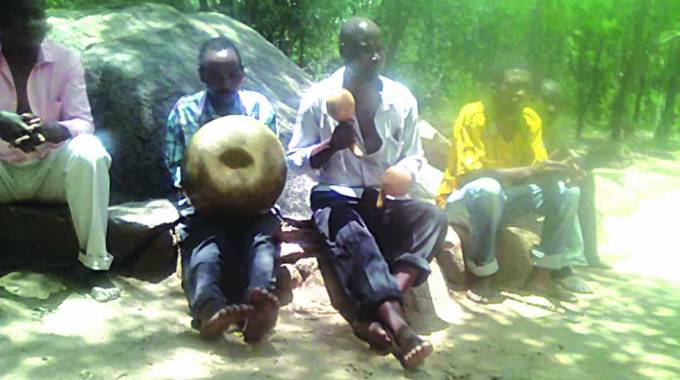
Stranger than Fiction
Tendai Chara
DID you know that Sekuru Mushore, the late spirit medium and custodian of the sacred Nharira Hills near Norton, was at one time a school teacher?
According to those that were close to the spirit medium, Sekuru Mushore also shunned the use of vehicles and allegedly travelled to as far as Bulawayo and Chinhoyi for traditional religious ceremonies on foot.
How the spirit medium would achieve such a seemingly impossible feat boggles the mind, leaving many doubting the authenticity of such sojourns. For decades, it is alleged that the spirit medium, who did not wear shoes or even sandals, traversed the width and breath of the country barefoot.
Always dressed in traditional skin clothes, he avoided most modern things, among them watches and even tap water. Mystery at one time surrounded the whereabouts of Sekuru Mushore after he was not seen in public for close to a year, heightening speculation that he had passed on and that his immediate family had secretly buried him in the Nharira Hills.
Sekuru Mushore first rose to national prominence in the early 1960s when he moved into the sacred Nharira Hills, which are located on Saffron Walden Farm, about 20 kilometres west of Harare. This heroic act by the spirit medium ignited a bitter wrangle with the white commercial farmer who owned the piece of land on which the hills stand.
The colonial regime reacted swiftly and brutally, evicting the spirit medium in 1964. Unmoved, the spirit medium was back at the hills after independence as he, together with 200 of his relatives, once again returned to the hills in 1992.
It is argued by some that this marked the onset of the land reform programme, with Nharira Hills being the cradle of this land redistribution exercise. The footage of land-hungry Zimbabweans marching towards the Nharira Hills, with Sekuru Mushore, clad in his traditional animal skin clothes in tow will forever remain etched in the minds of many.
For decades, Sekuru Mushore and the Nharira Hills have been synonymous with mysterious happenings. Apart from his gruelling encounters with the former white farmers, nothing much is known about this religious icon.
But who was Sekuru Mushore and what prompted him to dump the teaching profession and settle on a secluded hill? We sat down with Israel Pasipanodya Kawanzaruwa, the late spirit medium’s eldest son, who took his time to unravel previously unknown information regarding the revered spirit medium.
“First and foremost, my late father’s real name was Jacob Tatungamira Kawanzaruwa. Sekuru Mushore is the name of the spirit medium, and not my father, as a person,” Kawanzaruwa revealed.
A polygamist, Sekuru Mushore had 11 wives and 36 children. Contrary to what many people believed, Sekuru Mushore was educated and was at one time a teacher at St Michael’s Primary School in Mhondoro.
Although the spirit medium was associated with such serious traditional issues as rainmaking ceremonies and skirmishes with former white farmers, he “sometimes” led a normal life.
“Most of the time he would be at the shrine. However, on rare occasions, he would find time to listen to country music. One of his favourite songs was the late Oliver Mtukudzi’s hit song Neria,” added Kawanzaruwa.
Kawanzaruwa confirmed that the late spirit medium made long journeys to Bulawayo and Chinhoyi on foot.
“It is true that he shunned modern transport and could go to Chirorodziva in Chinhoyi and Matopos in Bulawayo on foot. He was a spirit medium and for us to get a better understanding, there is need for people to see him as a spirit medium,” Kawanzaruwa said.
According to Kawanzaruwa, Sekuru Mushore might have used an underground tunnel which he said links the Nharira Hills to the Chirorodziva Caves in Chinhoyi, some 118km away.
Sekuru Mushore is remembered for doing mysterious things. One of the mysteries which was confirmed by locals involved an incident at Saffron Walden Farm, on which the Nharira Hills are located.
The white commercial farmer owner woke up one day to discover that his thriving tobacco crop had been uprooted and neatly piled on the edge of the field. This was after the farmer had chased away Sekuru Mushore and his aides from the rainmaking shrine. After recalling the spirit medium, it is said the tobacco crop mysteriously returned to its former condition.
Following this incident, the white commercial farmer never made further attempts to evict the spirit medium from his farm. Instead, the farmer willingly donated beasts that were slaughtered during rain-making ceremonies.
Up until this day, the circumstances surrounding his death are a source of intense rumours and speculation.
The exact date and place of the spirit medium’s burial remains a closely guarded secret.
Kawanzaruwa could not offer much insight into the date and how the spirit medium died.
“Mambo wedu akapinda mudombo saka takanga tisisavaone taakungonzwa inzwi ravo chete. Pachivanhu chedu zvakadai zvikaitika tinobva taziva kuti vaenda kunyikadzimu.” (He went into a cave and we could not see him but only hear his voice. In our culture, when this happens, we know that our king would have joined the afterlife.)
Kawanzaruwa explained why his late father did not wear modern clothes and shoes.
“What happened was that he would always develop a mysterious skin disease each time he wore clothes and shoes. A spirit medium was consulted and my father was told not to wear shoes and clothes,” said Kawanzaruwa.
Sekuru Mushore reportedly shunned modern foods with millet and herbs constituting his diet.
Although he shunned modern gadgets, he owned a car, tractor and a mine in Mhondoro.
An accomplished farmer in his own right, he reportedly never rode the car which was used by his family.
Apart from being a traditional and cultural icon, Sekuru Botemupote, as he was also known, was, without doubt, an enigma.


 Online Reporter