Online Reporter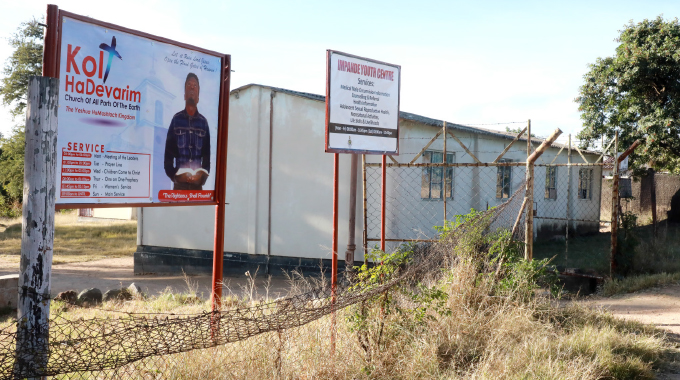
Mthabisi Tshuma, Zimpapers Arts and Entertainment Hub
FOR decades, cultural veterans have raised the alarm over the slow demise of youth centres in Bulawayo and across Zimbabwe — spaces that once pulsed with creative energy and nurtured some of the country’s most iconic talents.
In the 1960s and 70s, during Zimbabwe’s liberation struggle, the white settler government established community youth clubs. After Independence, these centres blossomed into creative and sporting oases for young Zimbabweans.
In Bulawayo alone, centres such as Silwane (Old Pumula), Indlovu (Tshabalala), Tshaka (Makokoba), Luveve, Iminyela, Lobengula, and Magwegwe buzzed with life. Harare had Amai Musodzi Hall, CJ Hall and Stodart Hall. In Norton, Ngoni Hall served a similar purpose.
These centres acted as incubators for both artistic and athletic talent. Through storytelling, traditional dance, music and craft-making, they preserved indigenous cultures while instilling a strong sense of identity and pride in young people. They also provided safe spaces for youth to gather, especially after school hours, helping to steer them away from risky behaviours such as drug abuse and delinquency. Beyond that, the centres served as community hubs, offering platforms for social dialogue, health and wellness campaigns, environmental education, peer counselling and mentorship.
From these humble spaces emerged titans: Lovemore Majaivana, Don Gumbo, Black Umfolosi, Dorothy Masuka, Safirio Madzikatire, and Oliver Mtukudzi. In sport, names like Langton “Schoolboy” Tinago, Artwell Mandaza and the Chieza family, honed their skills in these very centres.
So, what went wrong? Today, most of these once-vibrant halls sit idle — monuments of a forgotten era, echoes of a time when creativity and community thrived within their walls. Shifting social and cultural dynamics, persistent neglect, and a chronic lack of funding have all contributed to their slow descent into obscurity.
Yet recently, a familiar heartbeat was felt once again. When the Bulawayo Culture Month celebrations took over Lobengula Hall earlier this month, the atmosphere was palpably electric. Crowds, mostly local residents, poured in to enjoy music, dance, theatre and storytelling. And just like that, a quiet hope emerged: could this mark the long-awaited revival of our youth centres?
“The energy at Lobengula Hall was electric, like the past and future meeting in one moment,” said one festival attendee.
Speaking during the celebrations, Minister of State for Bulawayo Provincial Affairs and Devolution, Judith Ncube, shared uplifting news.
“The Government has allocated funds to establish, renovate and equip cultural centres across the country. These centres will serve as hubs for preserving and promoting Zimbabwe’s diverse cultural heritage,” she said.
For 64-year-old Mrs Sithembile Moyo, those words stirred memories — and hope.
“I remember that my siblings and I didn’t perform well in our studies and because of that, our parents would send us away from home during the day, to take part in activities at the youth centres.
“My sister and I were drawn to theatre, while our brothers chose to do karate. Although none of us pursued those fields professionally, there were many other talented individuals involved,” said Mrs Moyo.
To the younger generation, the potential of these centres goes far beyond nostalgia. Awandile Ranganai, a teenager from Makokoba, sees them as a solution to social decay.
“Some of my friends smoke mbanje because they’re bored and have nowhere to go. If we had safe spaces to learn new skills, our future would be brighter.”
Award-winning creative director and Umkhathi Theatre Works co-founder, Matesu Dube agrees.
“Youth centres can be transformed into creative ecosystems through collaboration. As custodians of culture, we have the power to breathe life into our heritage using art, music and tech-driven storytelling.
“They must be revived and equipped with modern tools to connect with today’s youth. When revitalised and technology-enabled, youth clubs can serve as safe spaces for expression, cultural education and innovation — preserving identity while nurturing progressive, creative communities,” said Dube.
Future Dube, director of Khaya Arts — whose troupe lit up the stage at the event — believes their grassroots work is already making an impact.
“We’ve made Tshabalala Hall our home. It’s become part of our identity. Seeing Lobengula Hall come alive like this gives me hope we can replicate this energy across the city.”
So, is this the beginning of a new era? That depends on what happens next. A revived Lobengula Hall could spark a movement — one that restores arts and sports to the heart of community life. It is time to imagine it and live it, not merely as a festival theme, but as a genuine national cultural revival. Because within these halls lie the dreams of tomorrow’s legends.
@mthabisi_mthire