Online Reporter
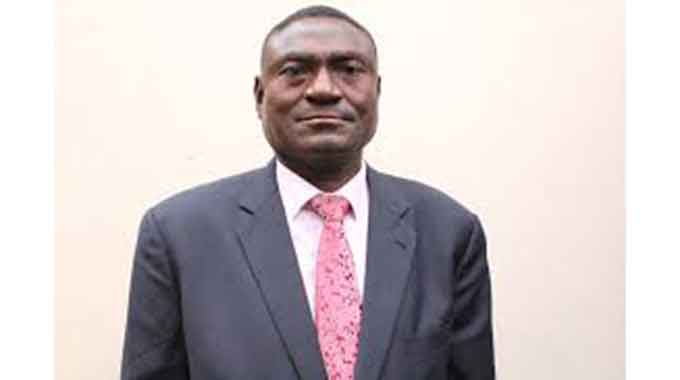
WE conclude our interview with former freedom fighter Cde Jabulani Petshu Sibanda, whose pseudonym during the liberation struggle was Cde Qinisela Ncube. During the war against the rebel Ian Smith regime, Cde Petshu Sibanda served as an intelligence officer in ZAPU’s intelligence wing, the National Security and Order (NSO), after receiving specialised training at ZAPU-ZPRA’s intelligence school, known as Moscow, in Zambia.
In previous instalments with our Assistant Editor, Mkhululi Sibanda (MS), Cde Petshu Sibanda reflected on his upbringing in the Gwatemba farming area, then an African Purchase Area in Insiza District, Matabeleland South Province. He spoke about how his father, Petshu Sibanda, a prominent businessman in the 1960s and 1970s, supported the liberation struggle, and how four sons from the family joined the armed struggle, with two joining ZANLA in Mozambique and two, including himself, joining ZPRA in Zambia. Last week, he recounted the disappearance of his father, who was abducted by armed men in June 1979 and whose remains have never been found. Today, he continues his account, focusing on how other families in Gwatemba suffered at the hands of Rhodesian security forces.
MS: In our last interview, you spoke about the pain of not knowing where your father is buried. May we continue from there?
Cde Petshu Sibanda: As I said previously, my father was abducted at night by unidentified armed men who pretended to be seeking provisions. He was never seen again. What remains troubling is that while both ZPRA and ZANLA guerrillas frequently visited his businesses in Mberengwa and Filabusi, there were groups whose behaviour was inconsistent with that of genuine freedom fighters. When we returned home, we were told that certain armed groups would arrive at our farm in Gwatemba, stay for days and even demand the use of vehicles. I strongly suspect these were Selous Scouts, the Rhodesian unit that operated as pseudo-guerrillas. Sadly, Gwatemba also witnessed the brutal killing of two elderly and respected community members.
MS: Please continue.
Cde Petshu Sibanda: Rhodesian security forces killed Khutshwekhaya Ndlovu, the father of the late National Hero and Bulawayo’s first black Mayor, Naison Khutshwekhaya Ndlovu. The Ndlovu family were our neighbours and relatives. They had contributed five grandsons to the liberation struggle through Khutshwekhaya’s eldest son, Mlobi. The five young men — Tennyson, popularly known as Thambolenyoka, his twin brother Taizen, Charles, Major and Mitsho, all joined ZPRA in Zambia. Their cousin, Letherns, was also a guerrilla fighter. Because of the family’s involvement in the struggle and Khutshwekhaya’s support for the cause, Rhodesian forces descended on the family farm. They found him ill and sleeping on a reed mat within the homestead. They shot him at close range. It was a cold-blooded murder. From the Ndlovu farm, the Rhodesian security forces proceeded to the farm belonging to the parents of the late National Hero, Dumiso Dabengwa. Dumiso’s father, Mavakatsha Dabengwa, had purchased a farm in Gwatemba, although the family originally came from Ntabazinduna in Matabeleland North Province. When the soldiers arrived, they found Dumiso’s mother, uMaTshuma, and shot her at close range. It was another ruthless killing of an innocent elderly civilian.
MS: What happened to Dumiso Dabengwa’s father?
Cde Petshu Sibanda: By the time those murders were committed, Mavakatsha had already passed away. I cannot remember the exact dates of the killings. However, Mavakatsha had been chairman of the Gwatemba Farmers’ Association. When Dr Joshua Nkomo was released from Gonakudzingwa Restriction Camp, he addressed a rally in Gwatemba and later visited the Dabengwa family farm. The Rhodesians were monitoring these activities closely. It also did not help that Dumiso had risen to become head of intelligence within ZPRA in Zambia. His mother’s murder was linked to her son’s association with the liberation struggle.
MS: You previously mentioned seeking assistance from political leaders to locate your father’s remains. Tell us more.
Cde Petshu Sibanda: The late Vice-President Dr Joshua Nkomo was deeply concerned about my father’s disappearance. He initiated the process for us to obtain a burial order. He arranged transport for me in one of his Mercedes-Benz vehicles so that I could travel to Gwanda and meet the Officer Commanding Matabeleland South Province, Senior Assistant Commissioner Ngwabi. I was accompanied by his aides, Cde Shava and Cde Siphazi (Nehemiah Nyathi). Dr Nkomo had also enlisted the assistance of the late National Hero Cde Sikhwili Moyo, affectionately known as Madlezibabayo. From Gwanda, I proceeded to Filabusi Police Station, where Inspector Baleni, the Officer-in-Charge, assisted with processing the necessary documentation. Dumiso Dabengwa also played a significant role by corresponding with the then Registrar-General, Tobaiwa Mudede. After completing the formalities, I travelled to Bulawayo and met Dr Nkomo at the Rainbow Hotel, where I briefed him over lunch in the Presidential Suite. I felt greatly honoured by his kindness and support.
MS: Last week, you spoke about your service in the Zimbabwe National Army. When did you retire?
Cde Petshu Sibanda: From the Military Police at One Brigade I was transferred to the Presidential Guard (PG) in Harare. At that time, members of the Presidential Guard still wore the standard infantry beret. The distinctive gold beret was introduced in 1988 while I was serving there. Before its introduction, we underwent intensive reorientation training in Nyanga, followed by further training at Wafa Wafa in Kariba under instructors from the Commando Regiment and Parachute Regiment. The training was extremely demanding. On our way to Wafa Wafa the army trucks dropped us at a place called Nyamakate where we were addressed by Major Tshipa aka Cde John Nyamupingidza. Cde Nyamupingidza now a retired Colonel was a Major in the Para Regiment.
He told us we would only march five kilometres to the camp. It was a bluff as in reality, it was a gruelling trek of nearly 100 kilometres through difficult terrain. Our group consisted of former ZPRA and ZANLA fighters, ex-Rhodesian soldiers and young soldiers from 6 Brigade. The younger soldiers initially set a fast pace, those young boys started singing as we walked, their song was “Chakaipa mukoma tanga waroora”.
We walked up and down the hilly terrain and there was no camp in sight. The 6 Brigade boys outpaced us and were leading while we the veterans took the march in our stride. Major Tshipa and some officers from both One Commando Regiment and Para Regiment were part of the march.
Around 12pm the young soldiers were beginning to tire while we the former guerillas were gaining ground on them. Former ZANLA guerillas were singing a song that went by “Zvimbambaira wobhu Cde Tongo” while the song initiated by former ZPRAs was “Leli ilizwe lile ngozi, hawu, hawu”, but as the march wore on, many became exhausted while the former guerrillas drew on their wartime endurance. We finally arrived at Wafa Wafa after nearly 24 hours of continuous marching. The training that followed was among the toughest experiences of my military career. It equipped us with invaluable skills and broadened our military knowledge.
MS: So finally when did you get to Wafa Wafa?
Cde Petshu Sibanda: We got there after 5pm the following day. We took 24 hours to get there. By the time we reached the camp the former guerillas were leading while the youngsters were playing the catch up game with us.
There at Wafa Wafa we were taken through an arduous training exercises, so I can safely say I am a commando. We learnt a lot there, in fact it was an eye opener. Commando training is not a picnic. From Wafa Wafa we returned to Inyanga. After returning to Nyanga, we participated in a large-scale fire and manoeuvre demonstration involving fighter aircraft, artillery and infantry units. Our commander at the time was Colonel Happyton Bonyongwe, now retired as a Major-General. Thereafter, I returned to the Presidential Guard and remained in the Zimbabwe National Army until my retirement in 1992.
MS: What did you do after leaving the army?
Cde Petshu Sibanda: I entered politics full-time through Zanu-PF. I rose through the ranks and served as Matabeleland South Provincial Secretary for Information and Publicity before becoming Provincial Secretary for Lands. I led farm occupations in Insiza District during the land reform programme. I remain pleased that the late President Robert Mugabe pursued land reform with determination. President Mnangagwa has continued that vision by supporting new farmers and encouraging investment partnerships. Today, I concentrate on crop production and livestock farming at my farm in Shangani, Insiza District.