Anashe Mpamombe
By planting according to their agro-ecological regions and prevailing weather conditions, Zimbabwean farmers can turn the 2026/2027 agricultural season into an opportunity for resilience rather than another struggle against drought.
The rains have begun falling across parts of Zimbabwe, bringing renewed hope to farmers preparing for the 2026/2027 summer cropping season.
However, while the sight of rain-soaked fields is encouraging, farmers must resist the temptation to rush into planting without considering their geographical location, soil conditions and prevailing weather outlook.
The beginning of the rainy season presents an opportunity, but it also demands careful planning and informed decision-making.
Recent rainfall figures released by the Meteorological Services Department (MSD) indicate significant variations in rainfall distribution across the country.
Bikita recorded 91mm on Sunday, while Kutsaga received 82mm, Buhera 54mm, and Logan Park, Harare Royal Golf Club and Wedza each recorded 46mm.
Although these figures are encouraging, particularly for farmers in areas that have experienced dry conditions, a single heavy rainfall event does not necessarily signal the beginning of a reliable rainy season.
The challenge facing farmers this season is compounded by forecasts pointing towards normal to below-normal rainfall, with the possibility of a strong El Niño influencing rainfall patterns.
This means agricultural decisions must be guided by scientific information, preparedness and the realities of individual farming regions.
The message should be clear: farmers must plant according to their agro-ecological regions, not simply because it has rained.
Zimbabwe’s five natural farming regions have different rainfall patterns, temperatures, soil characteristics and agricultural potential.
Consequently, a planting strategy that works in the high-rainfall areas of the north and east may not be suitable for the drier southern and western parts of the country.
Understanding these differences is essential if farmers are to minimise losses and improve productivity.
In natural Regions I and II, where rainfall is generally more reliable and agricultural potential is relatively high, farmers can prioritise maize production, particularly early and ultra-early maturing varieties in response to anticipated rainfall challenges.
These regions traditionally support a wider range of crops, including maize, tobacco, horticultural crops and other high-value agricultural commodities.
However, even farmers in these relatively favourable areas must remain cautious about the possibility of mid-season dry spells.
The temptation to plant long-season maize varieties should be weighed against the seasonal outlook.
Early-maturing varieties offer a practical way of reducing exposure to late-season moisture shortages, although farmers should consult agricultural extension officers on varieties suited to their specific local conditions.
Natural Region III presents a different situation. With moderate rainfall and periodic dry spells, farmers need to diversify their cropping systems rather than depend exclusively on maize.
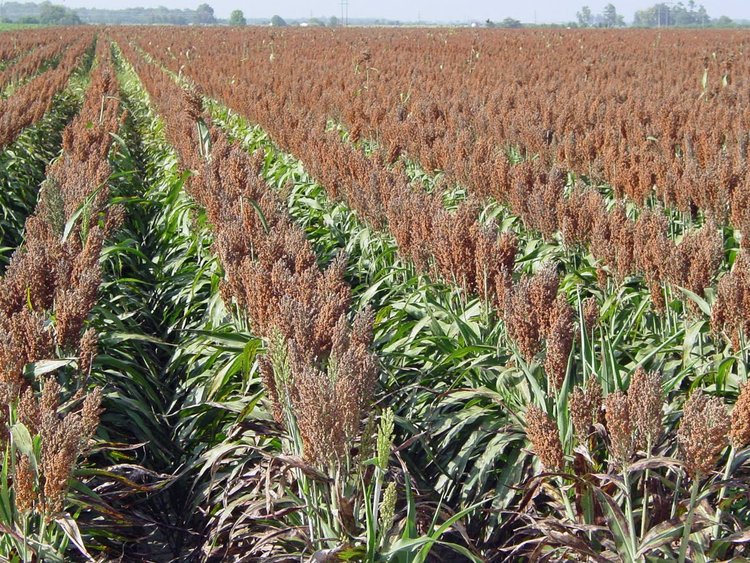
Maize can still form part of the farming system where conditions permit, but it should be complemented by drought-tolerant crops such as sorghum, pearl millet, finger millet and cowpeas.
Diversification reduces the risks associated with depending on a single crop and gives households alternative sources of food and income when rainfall conditions become unfavourable.
For farmers in Natural Regions IV and V, the need for climate-smart agricultural decisions is even greater. These areas are characterised by low and unreliable rainfall, frequent dry spells and high temperatures, making rain-fed maize production particularly risky.
Sorghum and millet should therefore become central to agricultural planning in these regions.
These traditional grains are better adapted to water-stressed environments and can provide households with a more dependable source of food under challenging rainfall conditions.
Cowpeas and other suitable drought-tolerant legumes also deserve greater attention because they contribute to household nutrition, provide income opportunities and improve soil fertility through biological nitrogen fixation.
Farmers should not view the promotion of traditional grains as a retreat from modern agriculture. Rather, it represents a practical response to changing climatic conditions and a recognition that food security depends on producing crops suited to the environment.
Farmers in Natural Regions III, IV and V should also take seriously Government’s position that maize is not being distributed under the Presidential Input Programme in these regions.
This reinforces the importance of matching agricultural inputs to local agro-ecological conditions.
Equally important is the timing of planting. In his recent interview with The Sunday Mail, Permanent Secretary in the Ministry of Agriculture, Mechanisation and Water Resources Development, Professor Obert Jiri, urged farmers to plant after receiving the first effective rains of between 20mm and 40mm.
This is an important distinction because scattered showers can create a false sense of security.
A few millimetres of rain may wet the soil surface without providing sufficient moisture to support successful germination and crop establishment.
Farmers should, therefore, monitor cumulative rainfall, soil moisture and local weather forecasts before committing their seed.
The recommendation to target December as the main planting window should be considered alongside adequate soil moisture and prevailing local conditions, rather than treated as an inflexible date for every farming area.
The recent heavy rainfall recorded in Bikita and other areas must not lead farmers into assuming that the entire season will be wet.
Rainfall distribution is often uneven, and a good start does not guarantee a good harvest.
Farmers should remain alert to weather updates and be prepared to adjust their agricultural activities as conditions change.
Beyond crop selection and planting dates, soil and water conservation must become a priority.
The Pfumvudza/Intwasa programme provides an important framework for improving water management and strengthening agricultural production under changing climatic conditions.
According to figures provided by Professor Jiri, 14 779 621 Pfumvudza/Intwasa plots had been prepared by late October 2026, representing 92.4% of the national target of 16 million plots.
This demonstrates considerable progress, but field preparation must translate into productive agricultural activities.
Farmers must maintain the principles of conservation agriculture, including minimum soil disturbance, mulching and water harvesting.
Potholing and other appropriate water-harvesting techniques help capture rainfall and improve its infiltration into the soil instead of allowing valuable water to run off.
Mulching is equally important because it reduces evaporation, moderates soil temperatures and helps retain moisture around developing crops.
In areas receiving heavy downpours, farmers must also ensure proper drainage to prevent waterlogging, crop damage and soil erosion.
Another important consideration is the growing role of irrigation in reducing dependence on unpredictable rainfall.
Government reportedly developed 67 129 hectares of irrigation in 2026, representing the highest annual increase in the country’s history.
Farmers with access to irrigation should consider using it strategically, particularly for horticulture, high-value crops and longer-season maize varieties where water availability can be assured.
However, irrigation must be managed sustainably through appropriate scheduling and water-saving technologies.
Agricultural extension services also have a critical role to play.
Zimbabwe has 5 057 agricultural business advisory officers, with a deployment model placing three extension officers in every ward.
Farmers should make full use of these officers when selecting seed varieties, determining planting dates, applying fertiliser and identifying crop pests and diseases.
More than 4 000 farmer field schools also provide opportunities for practical learning, knowledge-sharing and the adoption of climate-smart farming methods.
Agricultural decisions should be informed by professional advice rather than hearsay or practices copied from neighbouring communities with different climatic conditions.
Ultimately, the 2026/2027 season requires a change in mindset. Farmers must move away from the assumption that maize is the only measure of agricultural success.
A diversified farming system, built around suitable crops, effective water management and sound agronomic practices, offers a stronger foundation for household and national food security.
The rains are an opportunity, not a guarantee.
Farmers must understand their regions, listen to weather advisories, consult extension officers and choose crops that can withstand the conditions expected in their areas.
The success of this season will not simply be determined by how much rain falls, but by how intelligently that rain is used.
The guiding principle must be simple: plant the right crop, in the right region, at the right time, using the right methods.
That is how Zimbabwe can build resilience, protect household food supplies and strengthen national food security in an increasingly unpredictable climate.